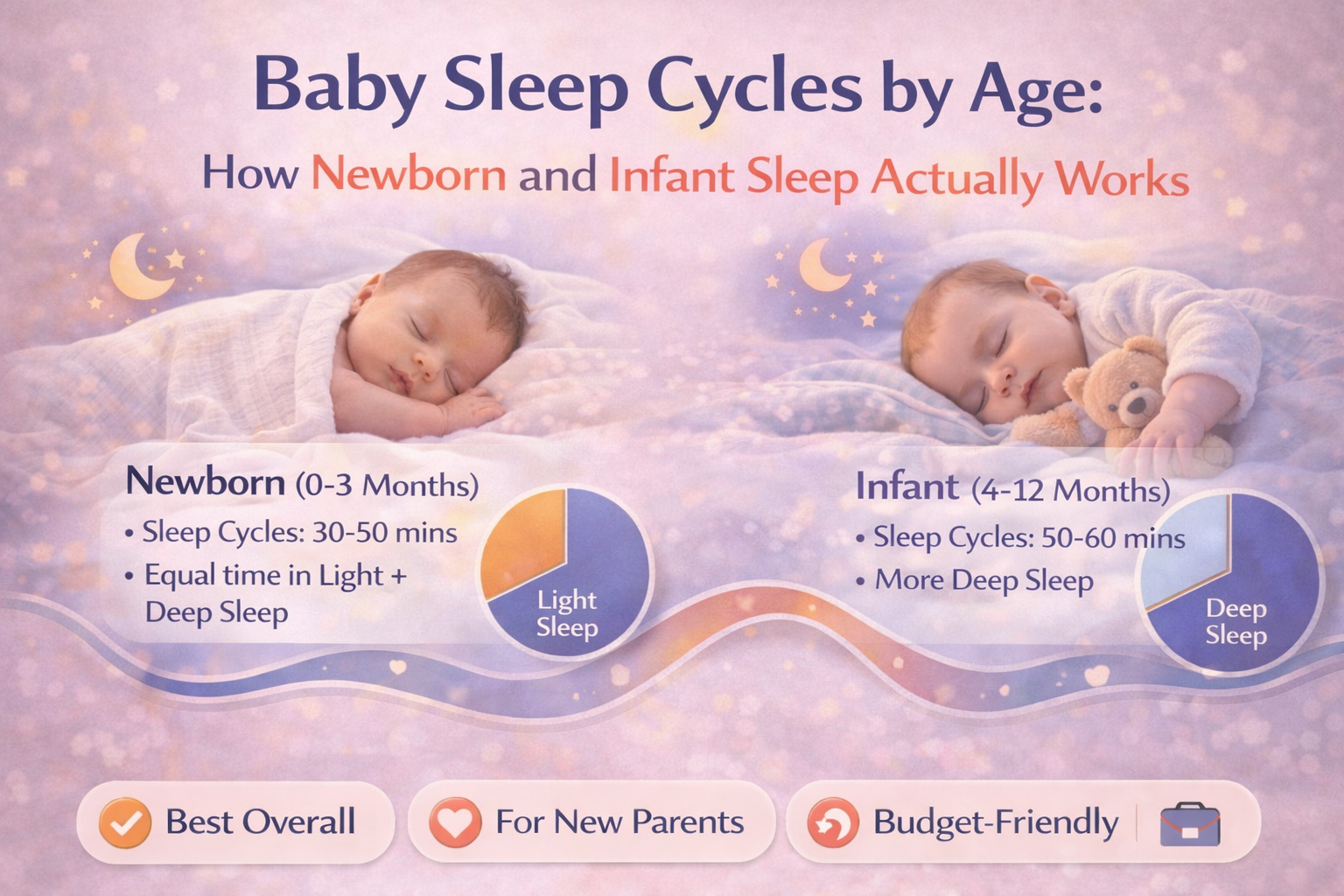
Baby Sleep Cycles by Age: How Newborn and Infant Sleep Actually Works
Baby sleep cycles by age are the missing piece most parents are never taught, yet they explain nearly everything about how babies sleep in the first year. Why your newborn wakes every hour. Why your baby suddenly sleeps better at three months and then worse again later. Why naps feel unpredictable. And why sometimes your baby wakes up even though nothing seems wrong.
The truth is simple but not obvious. Babies are not bad sleepers. They are simply sleeping exactly as their biology is designed to work.
In the early months, sleep is fragmented, active, and constantly shifting. As babies grow, their sleep cycles mature, lengthen, and become more structured. But this transition does not happen overnight. It happens gradually, and often unevenly.
At Safebabylab, we see that once parents understand how sleep cycles actually work, everything changes. Instead of chasing perfect sleep, they begin to work with their baby’s natural rhythm. And that is where real progress happens.
This guide breaks down baby sleep cycles by age, what is normal at each stage, and how to support better sleep without forcing unrealistic expectations.
Quick Answer: Baby Sleep Cycles by Age
Baby sleep cycles change a lot during the first year. Newborn sleep cycles are usually short and can last around 40 to 50 minutes, while older babies gradually develop longer and more predictable sleep patterns.
In the early months, babies spend more time in active sleep, which means they may move, make sounds, or wake more easily. As they grow, their sleep becomes more organized, with longer stretches of night sleep and clearer nap patterns.
Here is the simple version:
Newborns often have short, irregular sleep cycles
By 3 to 4 months, sleep starts becoming more predictable
By 6 months, many babies connect sleep cycles more easily
By 9 to 12 months, sleep may become more stable, although wakeups can still happen
Baby sleep changes are normal, but if you are worried about your baby’s breathing, feeding, weight gain, or unusual sleep behavior, it is always best to speak with your pediatrician.
Baby Sleep Cycles by Age
Understanding baby sleep cycles by age becomes much easier when you see how they change over time. Each stage brings different patterns, and knowing what to expect can help reduce stress and confusion.
| Age | Sleep Cycle Length | What to Expect |
|---|---|---|
| Newborn (0–2 months) | 40–50 minutes | Irregular sleep, frequent waking, more active sleep |
| 2–3 months | 45–60 minutes | Slightly longer cycles, still unpredictable |
| 4–6 months | 60–90 minutes | More structured sleep, possible sleep regression |
| 6–9 months | 60–90 minutes | Better cycle linking, longer night sleep |
| 9–12 months | 70–120 minutes | More stable sleep, fewer night wakings (but still normal) |
These ranges are general guidelines. Every baby develops at a different pace, and variations are completely normal.
What a Baby Sleep Cycle Really Looks Like
A baby sleep cycle is not the same as an adult sleep cycle, and this is one of the main reasons babies wake more often.
Instead of moving quickly into deep sleep, babies spend a larger portion of their cycle in active sleep. During this phase, it is normal to see small movements, facial expressions, or hear light sounds. This does not mean your baby is fully awake.
A typical baby sleep cycle includes two main phases:
Active sleep
This is a lighter stage of sleep where babies may move, twitch, or make noises. It is easier for them to wake up during this phase.
Quiet sleep
This is a deeper stage where breathing becomes more regular and movement is minimal.
A full cycle moves between these phases and then starts again. For newborns, this entire process is shorter and less stable, which is why they often wake at the end of each cycle.
As babies grow, their sleep cycles become longer and more organized. They gradually spend more time in deeper sleep and become better at connecting one cycle to the next.
Understanding this helps explain why frequent waking is normal in early months. It is not necessarily a problem, but a natural part of how baby sleep develops.
Baby Sleep Cycles by Age: The Newborn Phase (0–3 Months)
BDuring the newborn phase, baby sleep cycles are short, irregular, and driven by feeding needs rather than a day and night routine.
At this stage, a typical sleep cycle lasts around 40 to 50 minutes. Babies move quickly between lighter and deeper sleep, but they spend a larger portion of time in active sleep. This is why newborns often move, make sounds, or appear restless even while they are asleep.
Frequent waking is completely normal in this phase. Newborns are not expected to connect sleep cycles yet, and most will wake at the end of each cycle to feed or settle again.
It is also normal for sleep to feel unpredictable. Babies may sleep in short stretches throughout the day and night, with no consistent schedule. This gradually improves as their internal rhythm develops over time.
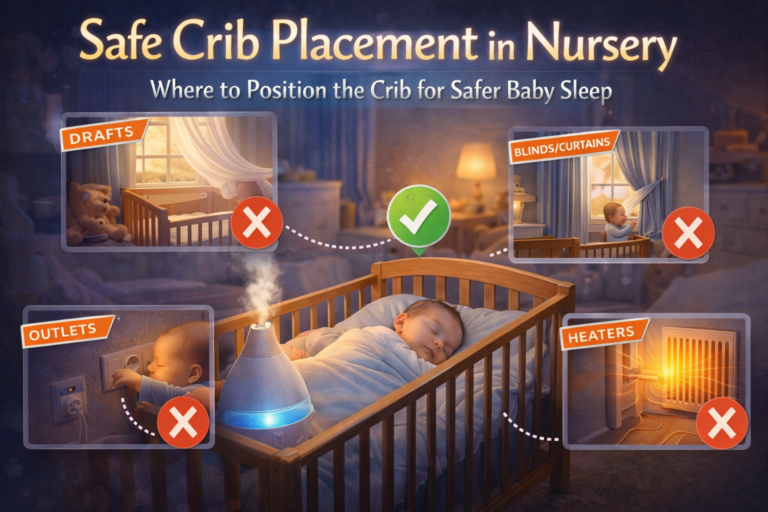
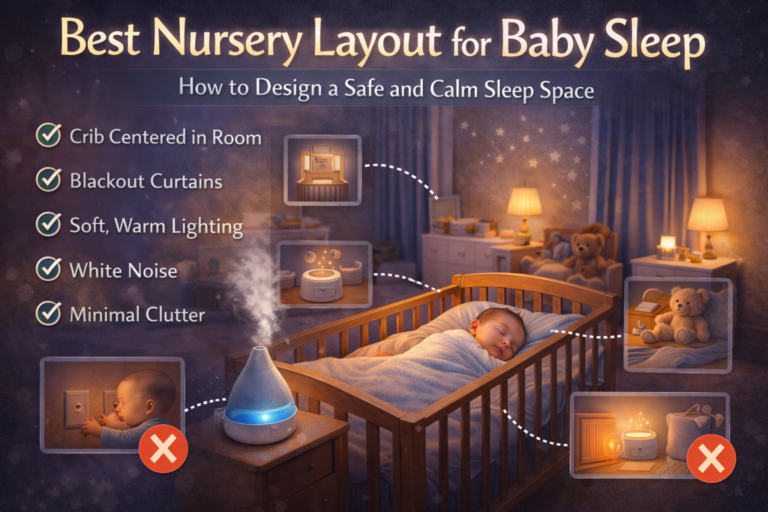
For parents, the focus during this stage is not on longer sleep, but on creating a safe and consistent sleep environment. This includes placing your baby on their back, using a firm sleep surface, and keeping the sleep space clear.
If you are using a baby monitor during this stage, a stable connection and clear view can help you stay aware of your baby’s movements without needing to check constantly. You can also read our guide on baby monitor safety tips to make sure your setup supports safe sleep practices.
Newborn sleep can feel challenging, but these patterns are a normal part of development and will begin to change as your baby grows.
The Transition Phase (3–6 Months)
Between 3 and 6 months, baby sleep cycles begin to change in a noticeable way. This is often called a transition phase because sleep starts to become more organized, but it is still not fully stable.
During this stage, sleep cycles typically lengthen to around 60 to 90 minutes. Babies begin to spend more time in deeper sleep and develop a pattern that is closer to how older children and adults sleep.
At the same time, this is when many parents notice more frequent waking, especially around the 4 month mark. This is often linked to what is commonly called the 4 month sleep regression.
The reason for this is not that sleep is getting worse, but that it is changing. As babies move into more structured sleep cycles, they are more likely to wake briefly between cycles. Since they are not yet able to consistently connect those cycles on their own, they may fully wake up instead.
You may notice:
- more predictable sleep cycles, but shorter stretches of uninterrupted sleep
- increased night waking compared to earlier weeks
- changes in nap patterns during the day
This phase can feel confusing because sleep may seem to improve and then suddenly become more challenging.
The key during this stage is consistency. A calm sleep environment, regular routines, and realistic expectations can help support your baby as they learn to move between sleep cycles more smoothly.
Although it may feel like a setback, this stage is an important step toward more stable and longer sleep over time.
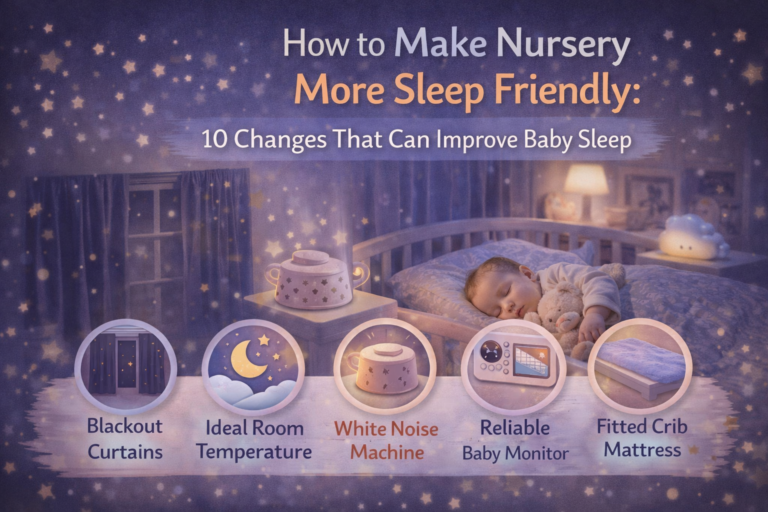
Lighting, noise, and temperature should remain stable to support this transition. This is why posts like nursery lighting for baby sleep and nursery noise levels for sleep become especially relevant here.
The Structuring Phase (6–9 Months)
Between 6 and 9 months, baby sleep cycles become more structured and easier to recognize.
At this stage, sleep cycles are usually around 60 to 90 minutes, and many babies begin to connect one cycle to the next more consistently. This often leads to longer stretches of sleep, especially during the night.
However, this does not mean that night waking disappears completely.
Even though sleep is more organized, babies can still wake between cycles. The difference is that they are now more capable of settling back to sleep without fully waking, depending on the situation.
You may notice:
- longer stretches of nighttime sleep
- more predictable nap times during the day
- fewer full wakeups, but occasional brief stirring
This phase often feels more stable compared to earlier months, but there can still be disruptions. Developmental milestones, teething, or changes in routine can temporarily affect sleep.
The focus during this stage is to support consistency while allowing your baby to practice connecting sleep cycles naturally. A calm sleep environment and predictable routine can help reinforce these patterns over time.
Sleep is becoming more structured, but it is still developing. Occasional wakeups are normal and do not mean something is wrong.
The Maturing Phase (9–12 Months)
Between 9 and 12 months, baby sleep cycles become more stable and predictable, but they are still developing.
At this stage, sleep cycles are typically around 70 to 120 minutes, which is closer to adult sleep patterns. Many babies are able to connect multiple cycles during the night, leading to longer and more consistent sleep stretches.
Even so, occasional waking is still completely normal.
Babies at this age are going through rapid development. Learning to crawl, stand, and explore their environment can affect sleep, even if their sleep cycles are more mature. Separation awareness can also play a role, especially during nighttime.
You may notice:
- longer stretches of uninterrupted sleep
- more consistent bedtime and nap routines
- brief awakenings between cycles, often followed by self-settling
This phase often feels more predictable, but it is not perfectly stable. Sleep can still be influenced by growth, routine changes, or developmental milestones.
The goal is not to expect perfect sleep, but to support a consistent routine that allows your baby to connect sleep cycles more naturally.
By this stage, sleep is becoming more organized and reliable, but flexibility is still important as your baby continues to grow.
Why Babies Wake Between Sleep Cycles
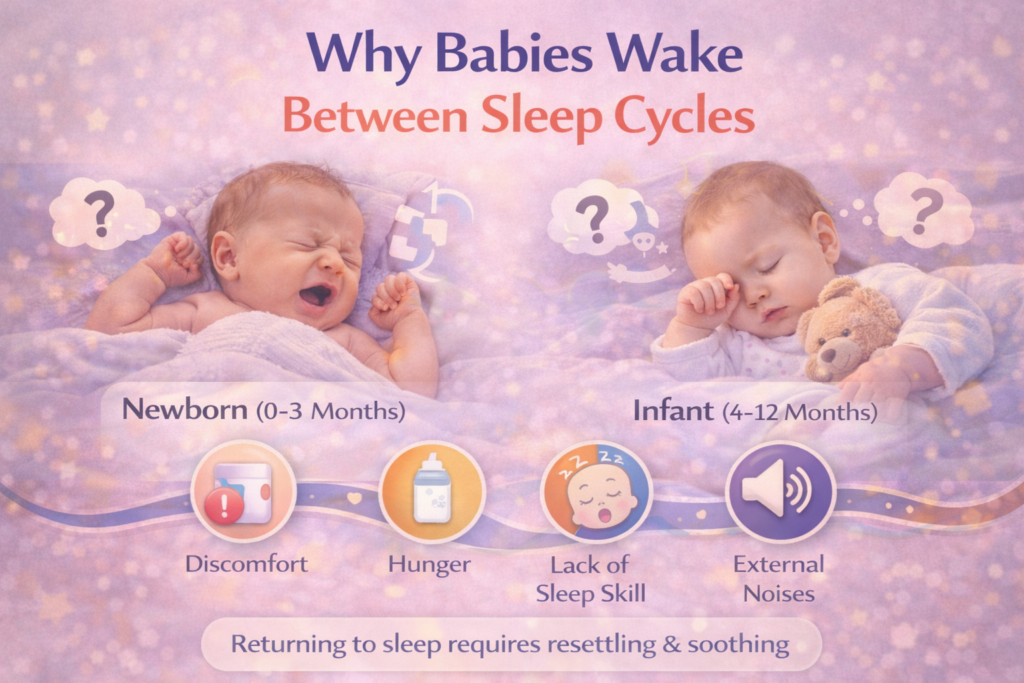
Waking between sleep cycles is one of the most common concerns parents have, but it is also completely normal.
As explained earlier, baby sleep cycles are shorter than adult cycles, especially in the first months. At the end of each cycle, babies naturally enter a lighter stage of sleep. This is a normal transition point where they may briefly wake before starting the next cycle.
The key difference is what happens next.
Some babies are able to move into the next cycle without fully waking, while others need help settling back to sleep. This is why you may notice your baby waking frequently, even if they were sleeping well earlier in the night.
Several factors can influence this:
Sleep environment
Light, noise, or changes in the room can make it harder for babies to stay asleep during these transitions.
Developmental stage
As sleep cycles mature, babies become more aware during these brief awakenings, which can lead to more noticeable wakeups.
Hunger or discomfort
In younger babies, feeding needs are a common reason for waking between cycles.
Sleep associations
If a baby relies on a specific condition to fall asleep, such as being held or fed, they may need that same condition to return to sleep after each cycle.
It is important to understand that waking itself is not the problem. It is a normal part of how sleep works.
Over time, as babies grow and their sleep becomes more structured, many begin to connect cycles more easily and wake less often. Until then, frequent waking can be expected and does not mean something is wrong.
The goal is not to eliminate every wakeup, but to support a sleep environment and routine that helps your baby move between cycles more smoothly.
The Hidden Role of the Sleep Environment
Sleep cycles do not exist in isolation. They are influenced by the environment surrounding the baby.
Common disruptions between cycles include:
- temperature changes
- sudden noise
- light exposure
- discomfort
For example, a baby who falls asleep in a warm room may wake when the temperature drops during the night.
This is why understanding signs baby is too hot or too cold at night is so important.
Similarly, airflow matters.
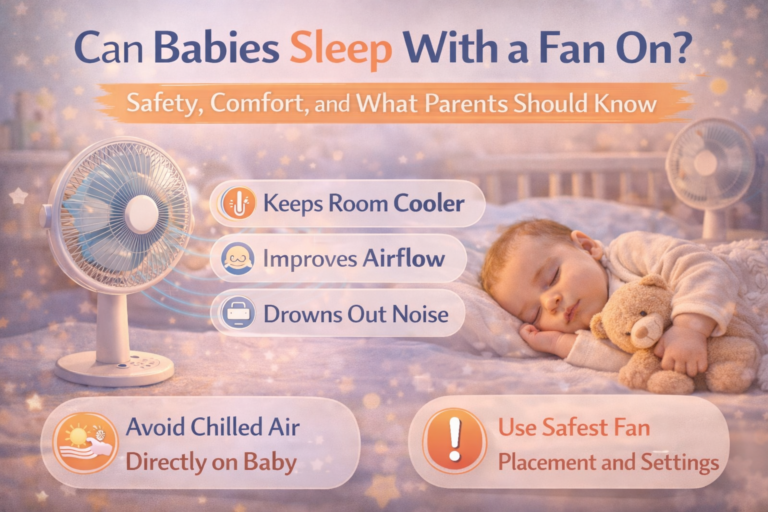
A poorly ventilated room may feel comfortable at bedtime but become stuffy overnight. This is where can babies sleep with a fan on becomes relevant.
At Safebabylab, we often see that improving environmental stability leads to better sleep without any changes to routines.
Why Sleep Feels Worse Before It Gets Better
Many parents notice the same pattern. Sleep seems to improve for a while, and then suddenly becomes more difficult again.
This can feel confusing and frustrating, but in most cases, it is a normal part of development.
As babies grow, their sleep cycles are changing. They are moving from shorter, simpler cycles to longer and more structured ones. During this transition, they become more aware during the lighter stages of sleep, which makes waking between cycles more noticeable.
This is why sleep can feel worse before it improves.
Instead of sleeping through these transitions, babies may fully wake up more often. At the same time, their brains are developing rapidly, which can also affect how easily they settle back to sleep.
Other factors can add to this:
Developmental milestones
Learning to roll, sit, crawl, or stand can temporarily disrupt sleep.
Changes in routine
Adjustments in naps or bedtime can affect how smoothly sleep cycles connect.
Increased awareness
As babies grow, they become more aware of their surroundings and may react more during the night.
It is important to understand that this phase does not mean something is wrong. In many cases, it is a sign that your baby’s sleep is maturing.
With time, consistency, and a stable sleep environment, most babies begin to connect sleep cycles more easily. What feels like a setback is often part of the process that leads to more predictable sleep.
How to Support Better Sleep Without Forcing It
Parents often look for quick fixes, but sleep improvement is usually gradual.
The most effective strategies focus on support rather than control.
This includes:
- maintaining consistent bedtime conditions
- keeping the environment stable
- avoiding overstimulation before sleep
- allowing brief pauses before intervening
At Safebabylab, we recommend observing patterns rather than reacting immediately.
Sometimes babies need a moment to transition between cycles on their own.
How Baby Monitors Help You Understand Sleep
A baby monitor can be a helpful tool when you are trying to understand your baby’s sleep patterns, especially during the early months.
Instead of relying only on memory or guessing, a monitor allows you to observe what actually happens between sleep cycles. You may notice small movements, brief awakenings, or changes in breathing that are part of normal sleep but would otherwise go unnoticed.
This can help you better understand the difference between light sleep and full waking.
For example, many babies move or make sounds during active sleep, which can look like they are awake. Without a monitor, it is easy to assume they need help, even when they are still asleep. With a clear view, you can often give your baby a moment to settle on their own.
Over time, this helps you recognize patterns.
You may start to notice how long your baby’s sleep cycles are, when they are more likely to wake, and how their sleep changes as they grow. This can make it easier to adjust routines and respond more confidently during the night.
A monitor can also support safer sleep awareness. Being able to check on your baby without entering the room helps reduce unnecessary disturbances, especially during lighter stages of sleep.
If you are choosing a monitor for this purpose, a stable connection and clear video can make a big difference. You can also explore our guide to the best baby monitors without WiFi if you prefer a simple setup with a private, direct connection.
Used in the right way, a baby monitor is not just for watching. It becomes a tool that helps you understand how your baby sleeps and how their patterns change over time.
Common Mistakes Parents Make About Sleep Cycles
Understanding sleep cycles helps avoid common mistakes.
These include:
Expecting adult like sleep too early
Newborns are not capable of long uninterrupted sleep.
Intervening too quickly
Some babies can resettle if given a moment.
Changing routines too often
Consistency matters more than perfection.
Ignoring environment
Sleep conditions affect every cycle.
The Long Term Perspective on Baby Sleep
Sleep in the first year is not linear.
There are phases of improvement, disruption, and adjustment.
The goal is not perfect sleep.
The goal is:
- understanding patterns
- supporting development
- creating a stable environment
When parents align expectations with biology, sleep becomes less stressful.
Final Thoughts
Baby sleep cycles change significantly during the first year, and understanding those changes can make a big difference in how you approach sleep.
What may feel like unpredictable or difficult sleep is often a normal part of development. Short cycles, frequent waking, and shifting patterns are all expected as your baby grows and learns to move between sleep stages.
Instead of focusing on perfect sleep, it can be more helpful to focus on consistency, a safe sleep environment, and realistic expectations for each stage.
Over time, most babies develop longer and more stable sleep cycles. What feels challenging in the early months often becomes more predictable as sleep matures.
Tools like baby monitors can help you better understand these patterns, but they are there to support your awareness, not replace it.
If you are ever unsure about your baby’s sleep, especially if something feels unusual or concerning, it is always a good idea to speak with your pediatrician.
In the end, understanding how sleep works can help you respond with more confidence and less stress, which is often what matters most during this stage.
FAQ
How long is a baby sleep cycle?
A baby sleep cycle usually lasts between 40 and 60 minutes in the early months. As babies grow, sleep cycles become longer and can reach 60 to 90 minutes or more. The exact length depends on age and development.
Why does my baby wake every hour?
Babies often wake every hour because they are transitioning between sleep cycles. At the end of each cycle, they enter a lighter stage of sleep and may briefly wake. This is normal, especially in the first year.
Do babies learn to connect sleep cycles?
Yes, babies gradually learn to connect sleep cycles as they grow. This process happens naturally over time as their sleep becomes more structured and they spend more time in deeper sleep.
Is waking at night normal?
Yes, waking at night is completely normal, especially during the first year. Babies may wake for feeding, comfort, or simply because they are transitioning between sleep cycles.
When do babies sleep longer stretches?
Many babies begin sleeping longer stretches between 3 and 6 months, but this can vary. Sleep patterns continue to develop throughout the first year, and occasional waking is still normal.
Why does my baby sleep well one week and worse the next?
Baby sleep often changes due to development, growth, and routine adjustments. Periods of disrupted sleep are common and usually happen as sleep cycles mature.
What is the difference between active and quiet sleep?
Active sleep is a lighter stage where babies may move, twitch, or make sounds. Quiet sleep is deeper and more still, with regular breathing. Babies spend more time in active sleep in the early months.
Should I worry if my baby wakes often at night?
Frequent waking is usually normal, especially in younger babies. However, if you notice unusual breathing, feeding issues, or something that concerns you, it is always best to speak with your pediatrician.