When to Stop Using a Baby Monitor: Age, Safety, and Real Parent Guidelines
When to stop using a baby monitor is a question many parents don’t think about at first. In the early months, a monitor feels essential. It provides reassurance, helps you track sleep, and gives you peace of mind during the night. But as your baby grows, that need begins to change.
The challenge is that there is no single age where every parent should stop. Instead, the right moment depends on development, sleep patterns, home setup, and your comfort level.
At Safebabylab, we see that many parents continue using a baby monitor far longer than necessary, while others stop too early and feel anxious. The key is understanding what actually matters, so you can make a confident decision without guesswork.
This guide explains when to stop using a baby monitor, what signs to look for, and how to transition safely.
Is There a “Right Age” to Stop Using a Baby Monitor?
The short answer is no. There is no universal age that applies to every child.
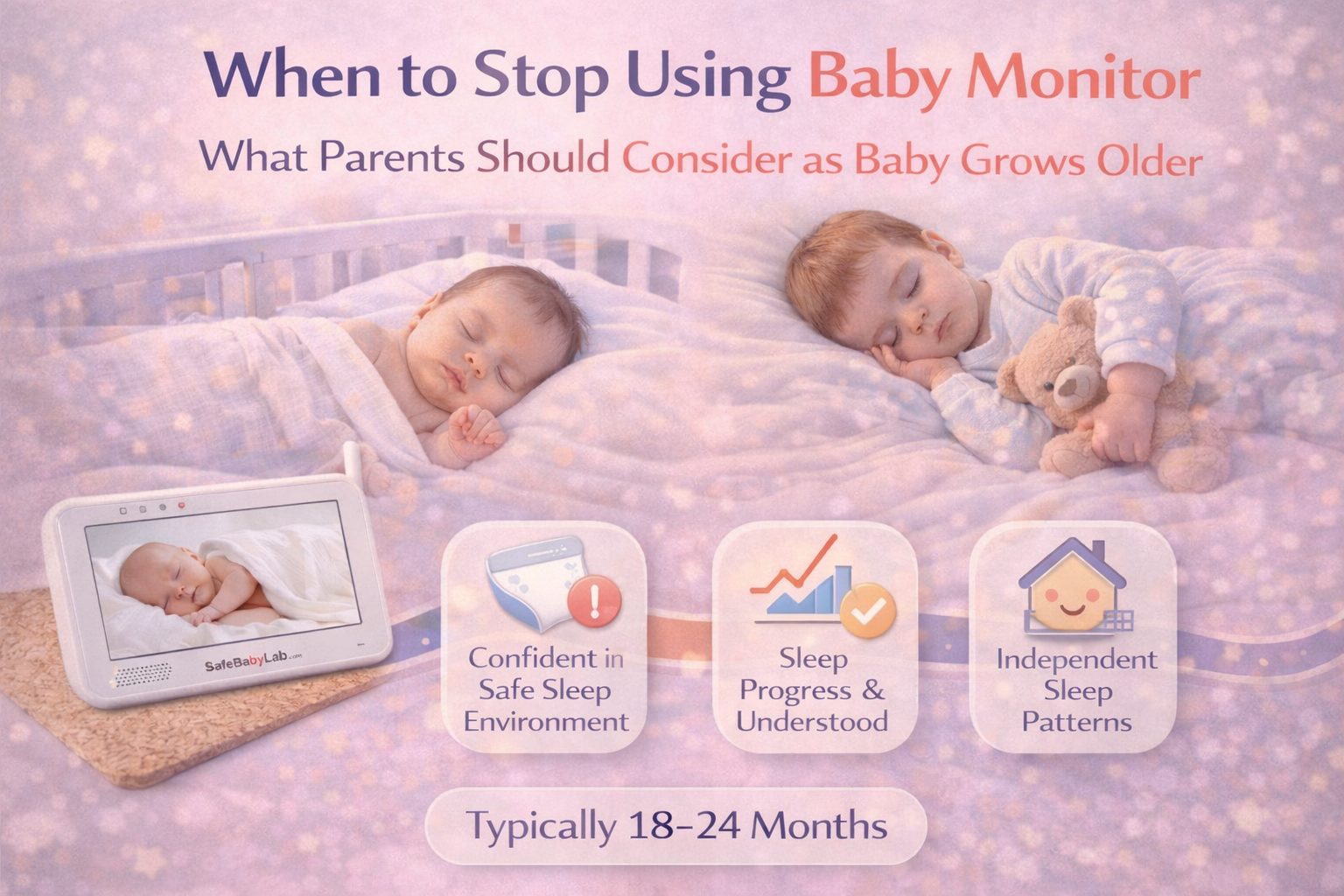
However, most families naturally stop using a baby monitor somewhere between:
- 1.5 to 3 years old
That said, this range varies based on several factors:
- whether your child sleeps in a separate room
- how deeply your child sleeps
- whether your home layout requires monitoring
- your level of comfort as a parent
For some, the monitor becomes unnecessary after the first year. For others, especially in larger homes, it remains useful longer.
Why Parents Use a Baby Monitor in the First Place
Understanding when to stop using a baby monitor starts with understanding why it was needed.
In the early months, monitors help parents:
- hear crying or movement
- monitor breathing and sleep patterns
- respond quickly at night
- reduce anxiety
This is especially important during the newborn phase, when sleep is unpredictable and frequent waking is normal.
As explained in our guide on baby sleep cycles by age, babies wake often because their sleep cycles are short. Monitoring helps parents understand these patterns.
The Transition Point: When Needs Start to Change
Around the end of the first year, several things begin to shift.
Babies:
- sleep longer stretches
- wake less frequently
- become more physically mobile
- develop more consistent sleep routines
At this stage, the role of the monitor changes.
It becomes less about constant observation and more about occasional reassurance.
Signs It May Be Time to Stop Using a Baby Monitor
Rather than focusing on age alone, it is better to look for clear signs.
1. Your Child Sleeps Through the Night Consistently
If your child rarely wakes or calls out, the monitor becomes less necessary.
2. You Can Hear Them Without a Monitor
In smaller homes or apartments, a monitor may not be needed if you can hear your child naturally.
3. Your Child Can Call for You
As children grow, they can communicate clearly when they need help.
4. Reduced Parental Anxiety
One of the biggest roles of a monitor is emotional. When you no longer feel the need to check constantly, it may be time to stop.
5. Stable Sleep Environment
If your child’s sleep environment is consistent and safe, monitoring becomes less critical.
Situations Where You May Want to Keep Using It Longer
Even if your child is older, there are situations where keeping a monitor makes sense.
Large Homes
If bedrooms are far apart, a monitor helps you respond quickly.
Multiple Floors
It can be difficult to hear a child from another level of the house.
Sleep Transitions
During changes like moving to a toddler bed, temporary monitoring can help.
Health Concerns
Some parents prefer continued monitoring for added reassurance.
Psychological Side: Why Letting Go Feels Hard
Stopping use is not just a practical decision. It is emotional.
Parents often feel:
- anxious without visual confirmation
- unsure if they will hear their child
- worried about missing something
At Safebabylab, we see that this transition is often about confidence, not necessity.
The monitor becomes a habit, not a requirement.
How to Transition Away From a Baby Monitor
If you are unsure, you don’t have to stop suddenly.
Step 1: Use Audio Only
Turn off video and rely on sound.
Step 2: Reduce Checking Frequency
Avoid constant screen checking.
Step 3: Try Monitor-Free Naps
Start with daytime sleep.
Step 4: Gradual Removal
Stop using it at night once comfortable.
When You Should NOT Stop Yet
There are cases where stopping too early may not be ideal.
You may want to continue using a monitor if:
- your child still wakes frequently
- you cannot hear them from your room
- they are in a different part of the house
- you rely on it for peace of mind
There is no benefit to removing it too early if it still helps.
Do You Still Need Video Monitoring?
As children grow, video becomes less important.
Most parents transition to:
- audio only
- or no monitor at all
This is especially true once the child:
- can move independently
- can call for help
- has predictable sleep patterns
How Your Home Setup Affects the Decision
Your home plays a major role.
In a small apartment:
- monitor may become unnecessary early
In a large house:
- monitor may remain useful longer
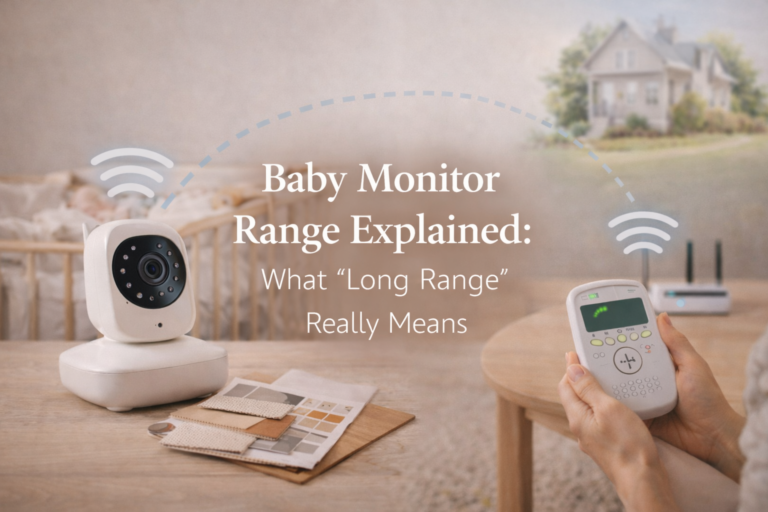
This is why guides like best baby monitor long range are relevant for some families.
The Role of Baby Monitors After Infancy
Even after infancy, monitors can still be useful in certain situations:
- during illness
- during sleep regressions
- during travel
However, they are no longer essential.
Are Baby Monitors Safe to Use Long Term?
Yes, especially non-WiFi monitors.
If you are concerned about exposure or privacy, choosing a baby monitor without WiFi reduces risks.
Common Mistakes Parents Make
Stopping Too Early
This can lead to unnecessary anxiety.
Keeping It Too Long
At some point, it becomes a habit rather than a need.
Overchecking
Constant monitoring can increase stress rather than reduce it.
Final Thoughts
When to stop using a baby monitor is not about hitting a specific age. It is about recognizing when your child no longer needs constant monitoring and when you feel confident without it.
For most families, this transition happens gradually between the first and third year. The key is to observe your child, your environment, and your own comfort level.
At Safebabylab, we believe that baby monitors are a powerful tool in the early stages, but like many parenting tools, they are meant to support you temporarily, not permanently.
FAQ
When should I stop using a baby monitor
Most parents stop between 1.5 and 3 years, depending on the situation
Is it safe to stop using a baby monitor at 1 year
Yes, if your child sleeps well and you can hear them
Do toddlers need baby monitors
Usually not, unless there are specific reasons
Can I switch to audio only
Yes, many parents do this as a transition
Is it bad to keep using a baby monitor too long
Not bad, but often unnecessary