Baby Sleep Environment Explained: Temperature, Light, Noise, and Safety for Better Sleep
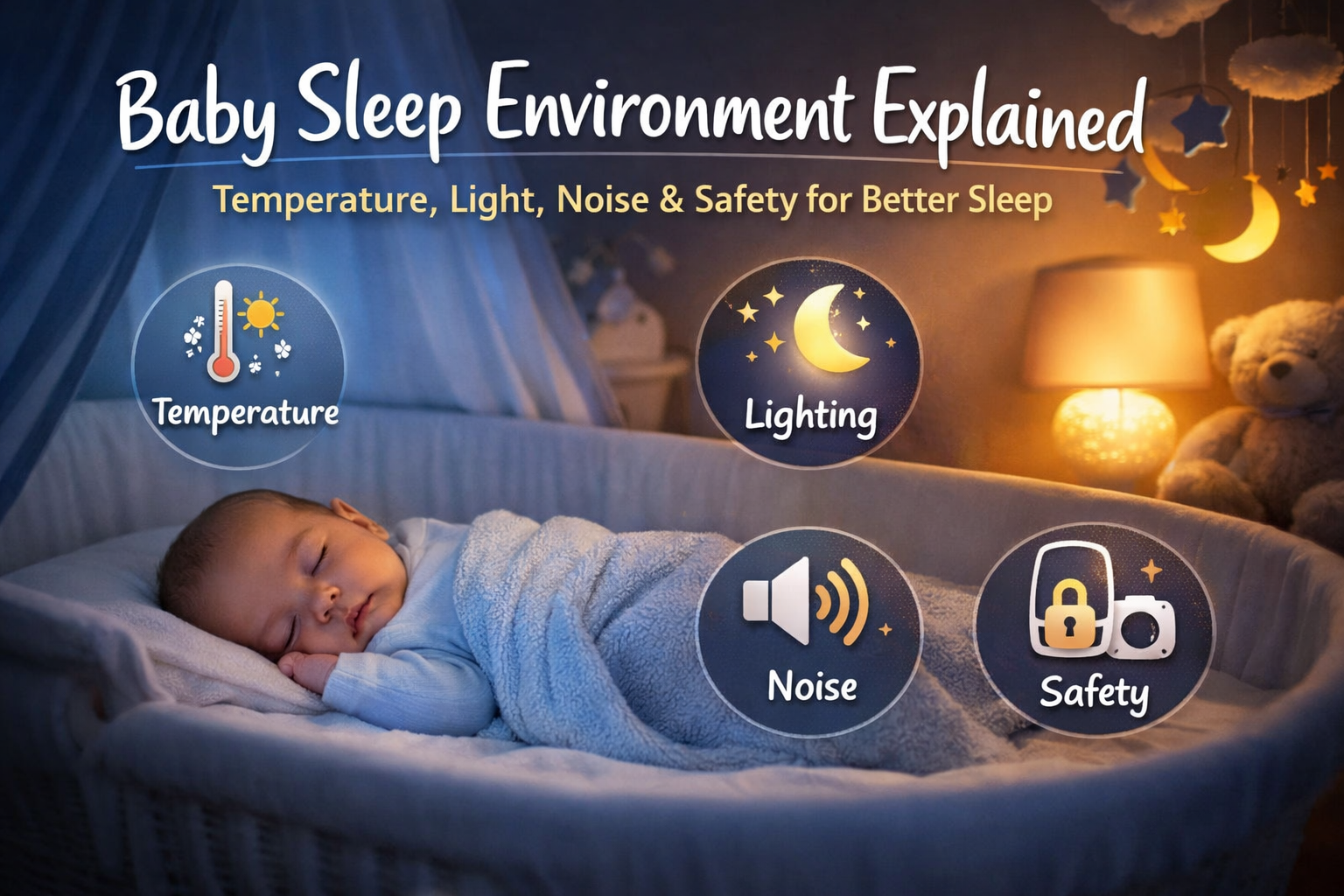
When parents think about improving a baby’s sleep, they often focus on feeding schedules or sleep routines first. However, one of the most important factors is the environment in which a baby sleeps. The baby sleep environment includes room temperature, lighting, sound levels, air quality, and overall room setup. All of these elements influence how safely and comfortably a baby sleeps.
Baby monitors allow parents to observe sleep and respond quickly when needed, as explained in our best baby monitor without wifi guide, but monitoring alone does not create good sleep conditions. A well-designed sleep environment helps babies settle more easily, wake less frequently, and maintain healthier sleep patterns.
This article explains how each part of the sleep environment works and how parents can create conditions that support safe and consistent sleep.
Why the Sleep Environment Matters for Babies
Babies experience sleep differently from adults. Their nervous systems are still developing, and they are more sensitive to external changes such as temperature shifts, brightness, or sudden sounds. Small environmental disruptions that adults barely notice can wake a baby completely.
A stable environment helps regulate a baby’s internal clock and promotes longer sleep cycles. When temperature, lighting, and sound remain consistent, babies learn to associate their surroundings with rest and security.
Parents often notice through tools discussed in baby monitor range explained that babies move or wake during environmental changes. This shows how closely sleep quality connects to surroundings rather than routine alone.
Ideal Room Temperature for Baby Sleep
Temperature plays one of the biggest roles in safe sleep. Babies cannot regulate body heat as effectively as adults, which makes overheating a real concern.
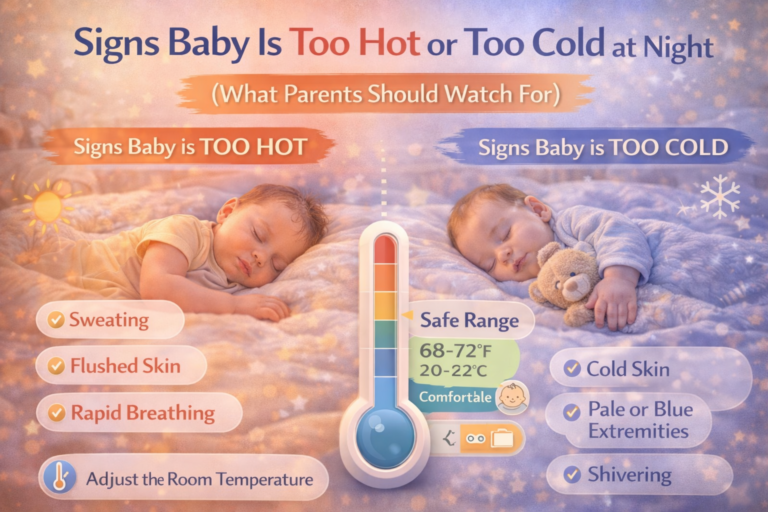
Most pediatric sleep recommendations suggest keeping a baby’s room between 68°F and 72°F (20°C to 22°C). This range helps maintain comfort without increasing overheating risk.
Signs a room may be too warm include sweating, flushed cheeks, or restless sleep. A room that is too cold can cause frequent waking and discomfort.
Parents should avoid heavy blankets and instead dress babies in breathable sleepwear appropriate for the room temperature.
Lighting and Darkness in the Nursery
Light strongly influences sleep hormones, even in newborns. Exposure to bright light signals wakefulness, while dim environments encourage melatonin production.
During nighttime sleep:
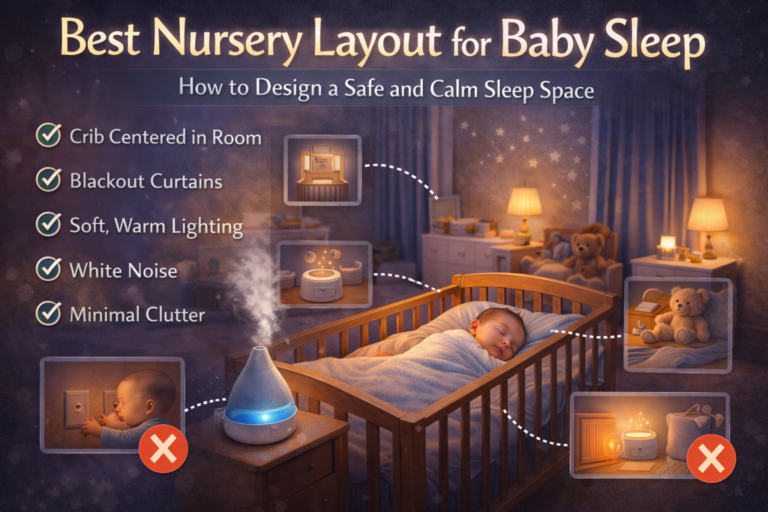
- Keep lights soft and warm
- Avoid overhead lighting during night feeds
- Use blackout curtains if outside light enters the room
Many parents observe through setups described in do baby monitors work through walls that babies sleep more steadily when visual stimulation is reduced.
White Noise and the Sound Environment
Newborns are accustomed to constant sound from the womb. Complete silence can feel unfamiliar and may cause babies to wake more easily.
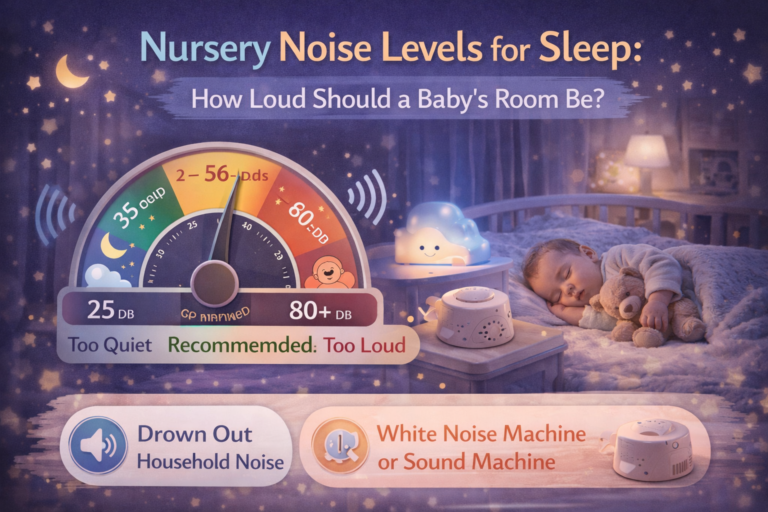
Gentle, consistent background noise can help mask sudden sounds such as doors closing or household movement.
Key guidelines include:
- Keep sound levels moderate
- Avoid placing sound devices too close to the crib
- Maintain consistent volume throughout the night
Consistency matters more than silence.
Air Quality and Humidity in Baby Rooms
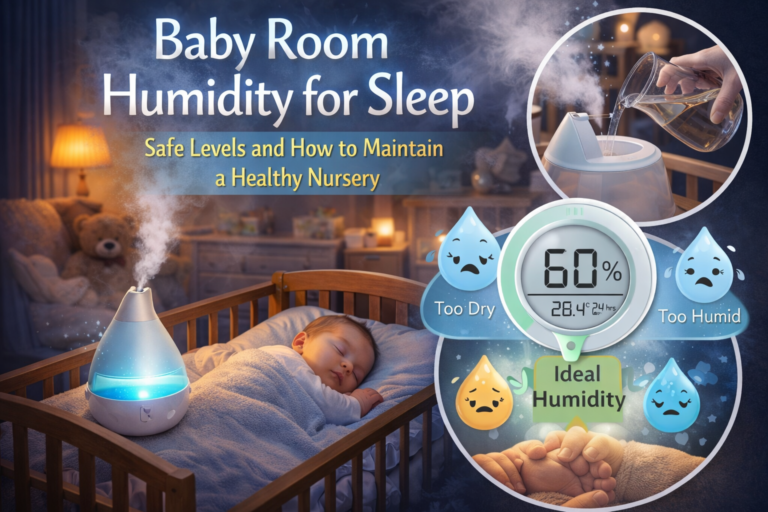
Air quality is an often overlooked part of sleep safety. Dry air can irritate airways, while excessive humidity may encourage mold growth.
A comfortable humidity level usually falls between 40 percent and 60 percent. Maintaining balanced air conditions helps babies breathe comfortably and reduces nighttime irritation.
Proper ventilation and clean bedding contribute to healthier sleep conditions.
Safe Crib Placement and Monitoring
Room layout affects both safety and sleep quality. The crib should be placed away from windows, cords, heaters, and direct airflow from vents.
Parents often adjust positioning after learning baby monitor placement mistakes most parents make, since camera angles and room setup influence both monitoring effectiveness and sleep comfort.
The goal is visibility for parents while maintaining a calm environment for the baby.
Creating Consistency in the Sleep Environment
Consistency is one of the strongest predictors of good sleep. Babies learn patterns quickly when environmental cues remain stable.
Helpful habits include:
- Maintaining similar lighting each night
- Keeping temperature stable
- Using consistent background sound if chosen
- Avoiding frequent room rearrangements
Predictable surroundings help babies fall asleep faster and stay asleep longer.
Common Sleep Environment Mistakes Parents Make
Many sleep challenges come from small environmental issues rather than major problems.
Common mistakes include:
- Overheating the room
- Using bright lights during nighttime care
- Changing sleep locations frequently
- Introducing too many visual distractions near the crib
- Poor monitor placement
Adjusting these factors often improves sleep without changing routines.
How Baby Monitoring and Environment Work Together
Baby monitors provide reassurance and awareness, but they work best when combined with a supportive sleep environment. Monitoring allows parents to observe patterns, while environmental adjustments prevent disruptions before they happen.
A healthy sleep environment supports both safety and independence, helping babies develop stable sleep habits over time.
FAQ About Baby Sleep Environment
What is the ideal temperature for a baby’s room?
Most experts recommend keeping the room between 68°F and 72°F (20°C to 22°C). This temperature range helps prevent overheating while keeping babies comfortable during sleep.
Should a baby sleep in complete darkness?
A dark or dim environment helps promote melatonin production and supports longer sleep cycles. Total darkness is not required, but consistent low lighting is beneficial.
Is white noise safe for babies?
Yes, when used at moderate volume and placed at a safe distance from the crib. Consistent background noise can help babies sleep by masking sudden sounds.
Does room humidity affect baby sleep?
Yes. Humidity between 40 percent and 60 percent helps maintain comfortable breathing conditions and reduces irritation caused by dry air.
Do baby monitors improve sleep quality?
Baby monitors do not directly improve sleep, but they help parents observe patterns and respond quickly. Combined with a proper sleep environment, they contribute to safer and more predictable sleep.