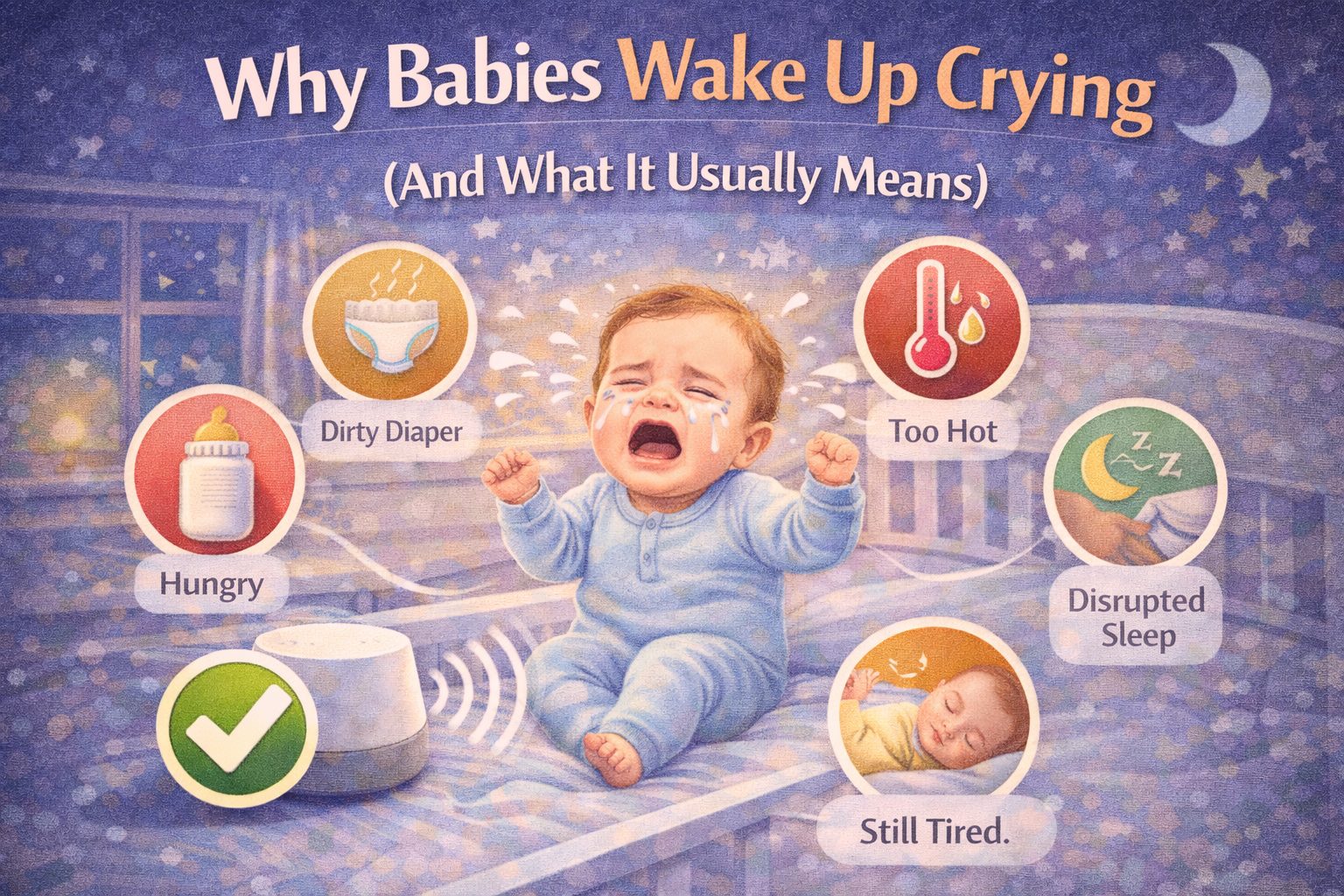
Why Babies Wake Up Crying (And What It Usually Means)
Why babies wake up crying is one of those questions that hits hardest at 2:37 a.m., when you’re standing in the dark, half asleep, trying to figure out whether something is wrong or whether this is just… another baby thing.
The short, honest answer is this:
Most of the time, it’s completely normal.
Babies don’t wake up the way adults do. Their sleep is lighter, more active, and much more chaotic. And crying is often not a sign of a problem – it’s just the only way they know how to move from one state to another.
Let’s talk about what’s actually going on.
The Part Nobody Explains Well Enough
Adult sleep is smooth. You drift off, you wake up, and that’s mostly it.
Baby sleep is different.
Babies:
- Move a lot
- Make noise
- Partially wake up
- Drift back to sleep
- And sometimes cry in the middle of all that
A lot of “wake-ups” are not real wake-ups at all. They are transitions between sleep cycles.
Sometimes the baby goes through that transition quietly.
Sometimes… not.
The Most Common Reason: Light Sleep and Transitions
Babies spend much more time in light, active sleep than adults do.
During these phases:
- They move
- They make faces
- They breathe differently
- They sometimes cry or whine
Often:
They are not fully awake. They are just passing through a lighter stage of sleep.
If you wait a moment, many babies:
- Settle on their own
- And continue sleeping
When Crying Is Just Confusion
Another very common scenario:
The baby:
- Comes out of deep sleep
- Is not fully awake
- Not fully asleep either
- And feels… confused
Imagine waking up in a dark room and not quite knowing where you are.
Babies don’t have:
- Memory
- Context
- Or understanding of what just happened
Crying is often just:
“Something changed and I don’t like it.”
Physical Discomfort Is the Second Big Reason
Sometimes, crying really is about discomfort.
Common causes:
- Gas
- A wet diaper
- Being too hot or too cold
- An awkward sleeping position
- Teething (for older babies)
In these cases:
- The crying usually:
- Does not fade on its own
- Gets more intense
- Sounds more distressed
That’s one of the key differences.
The Difference Between “Sleep Crying” and “I’m Awake” Crying
Sleep crying often:
- Starts suddenly
- Sounds upset
- But:
- Comes and goes
- Or fades after a short time
Awake crying usually:
- Builds
- Becomes more consistent
- Comes with:
- Open eyes
- More purposeful movement
Learning to tell these two apart:
Hunger: Yes, But Not Every Time
Hunger is an important cause of night waking, especially for:
- Newborns
- Younger babies
But:
- Not every night cry is hunger
- Not every sound means “feed me”
If your baby:
- Was fed recently
- Is growing well
- And often settles without feeding
Then many of these wake-ups are probably:
Just normal sleep transitions.
Why Going in Too Fast Can Make It Worse
A very common pattern:
- Baby makes noise
- Parent rushes in immediately
- Turns on light, picks up baby, talks
- Baby is now fully awake
What might have been:
- A 20-second transition
Turns into: - A 40-minute wake window
Sometimes the kindest thing you can do:
Is wait 30–60 seconds and see what happens.
When You Should Always Go In
This article is not about ignoring your baby.
Always respond immediately if:
- The cry sounds:
- Panicked
- Painful
- Unusual
- Or:
- Your instinct tells you something is wrong
You know your baby better than any guide ever will.
The Big Picture: This Is Normal
Babies:
- Do not sleep like adults
- Do not wake like adults
- And do not transition between sleep stages quietly like adults
Waking up crying:
Is a normal part of immature sleep systems learning how to work.
It gets better with time.
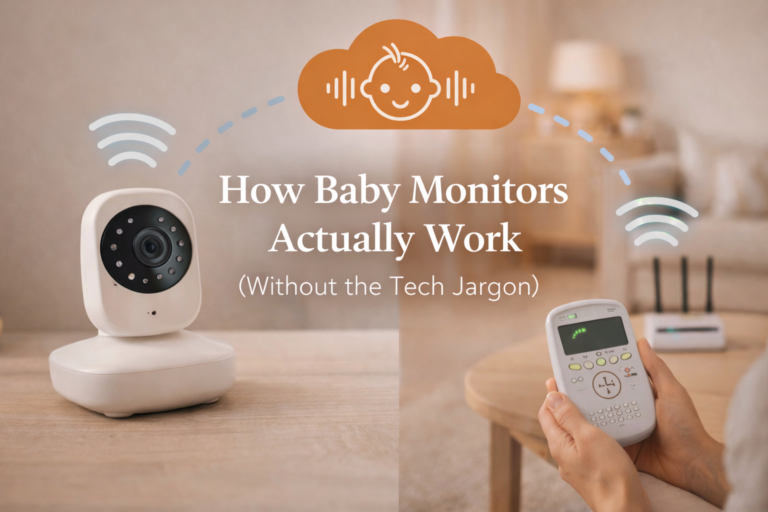
How a Baby Monitor Fits Into This
Many parents notice:
- Without a monitor:
- They assume every sound means the baby is fully awake
- With a monitor:
- They can see:
- The baby is still half asleep
- Or already settling again
- They can see:
That visual context often:
- Prevents unnecessary interventions
- And helps everyone sleep more.
So, Why Do Babies Wake Up Crying?
Most of the time:
- Because:
- They’re between sleep cycles
- Or briefly confused
- Or mildly uncomfortable
Less often:
- Because something is truly wrong
Learning the difference:
Is one of the quiet skills of early parenthood.
Final Thoughts
At 3 a.m., everything feels urgent.
But many night cries are not emergencies.
They are just babies learning how to sleep.
Sometimes, the best response is:
- A short pause
- A look or listen
- And then, only if needed, stepping in
That alone can change your nights more than any gadget ever will.
Why do babies wake up crying for no reason?
Often they are transitioning between sleep cycles or briefly confused, not fully awake or in distress.
Is it normal for babies to cry in their sleep?
Yes. Many babies cry, whine, or make noise during active sleep without actually waking up.
How can I tell if my baby is really awake?
If the eyes are open, crying is consistent, and movements are purposeful, the baby is likely awake.
Should I always pick up my baby when they cry at night?
Not always. If the crying is brief and fades, the baby may resettle on their own. If it escalates or sounds distressed, you should respond.