Is It Safe to Leave a Baby Monitor On 24/7? What Parents Should Know
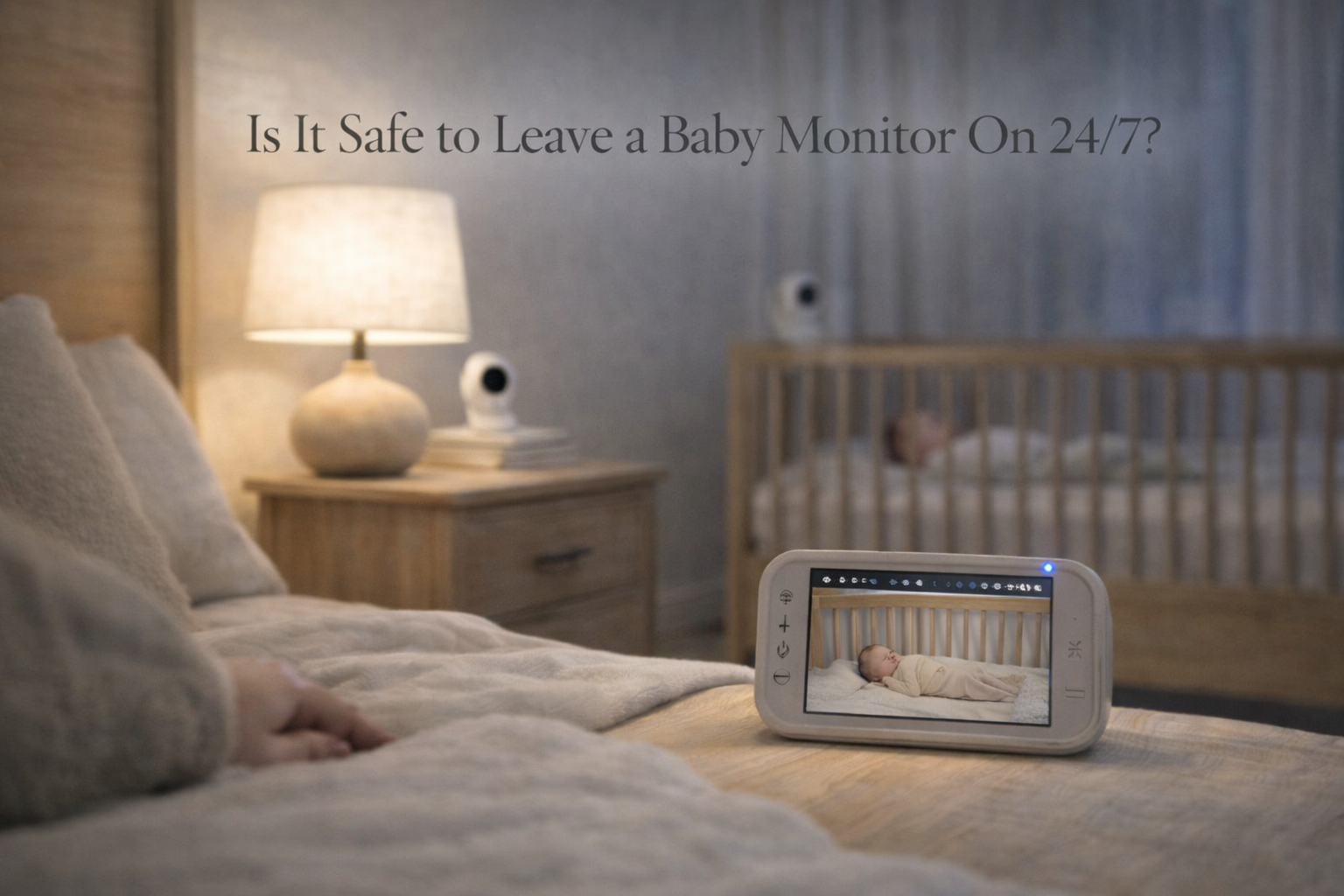
Is it safe to leave a baby monitor on 24/7? Many parents don’t even plan to use their monitor constantly it just happens naturally. You set it up for nighttime, then you start using it during naps. Then you leave it on while folding laundry. Then you realize it’s been running nonstop for days.
For some parents, leaving the monitor on all the time feels like a comfort. If your baby naps unpredictably or you’re constantly moving between rooms, turning the monitor on and off feels like one more mental task you don’t have the energy for.
But it also raises valid concerns. Parents wonder whether continuous use could cause overheating, shorten the life of the device, increase RF exposure, drain batteries, or create privacy risks especially with WiFi-based monitors.
The short answer is that baby monitors are designed for long-term use, and for most families, leaving them on continuously is generally safe. But like any electronic device, safety depends on setup, placement, ventilation, and security practices.
This article explains what happens when a baby monitor runs 24/7, what risks are real, which concerns are mostly myths, and how parents can use a monitor safely without adding unnecessary stress.
Why Parents Leave Baby Monitors On All the Time
There’s a practical reason parents do this: newborn life is unpredictable.
Babies don’t follow schedules at first. Some nap for 20 minutes. Some nap for two hours. Some wake up, fuss, fall asleep again, and then wake up fully. Parents quickly learn that constantly switching the monitor on and off feels pointless.
Leaving the monitor on 24/7 can feel easier because:
- you don’t forget to turn it on at night
- you don’t miss early fussing during naps
- you can glance quickly without walking into the room
- you feel more confident doing chores
- you can rest without constantly “checking” the nursery
For parents managing postpartum recovery or sleep deprivation, convenience matters. The question is whether that convenience comes with meaningful risks.
Is It Safe to Leave a Baby Monitor On 24/7 From a Heat or Fire Risk Perspective?
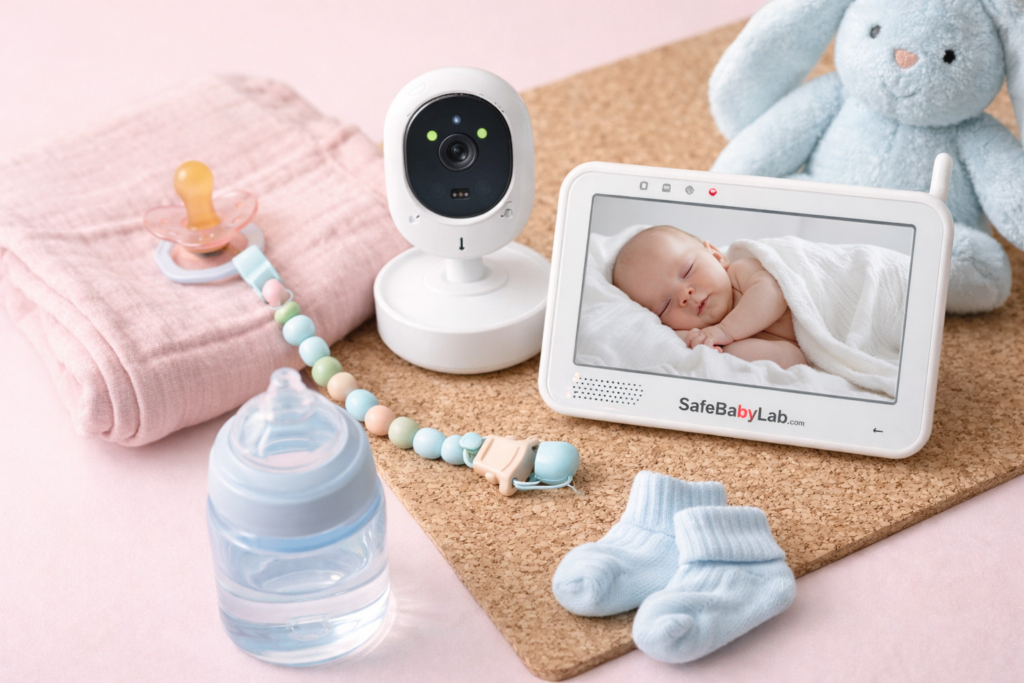
For most modern baby monitors, the risk of overheating is low, but not zero.
Baby monitors are designed to run continuously. Many are marketed specifically for overnight monitoring, which implies hours of constant operation. Manufacturers expect the device to stay on.
However, overheating becomes more likely when parents accidentally create unsafe conditions.
When overheating risk increases
A baby monitor camera may overheat if it is:
- placed in direct sunlight near a window
- placed near a radiator or heater
- mounted in a tight enclosed shelf with no airflow
- covered by curtains, fabric, or decorative items
- plugged into an incompatible power adapter
- used with damaged cords or adapters
The safest setup is usually a wall-mounted camera or a camera placed on an open shelf with good ventilation.
If your camera feels warm, that’s normal. If it feels hot to the touch, smells unusual, or shuts off unexpectedly, it should be unplugged and checked immediately.
In normal conditions, leaving a baby monitor on 24/7 is not considered a fire hazard, but parents should treat it like any other plugged-in device: stable placement, good airflow, and proper cords.
Is It Safe to Leave a Baby Monitor On 24/7 for Newborns?
Parents often worry about continuous exposure, especially during the newborn stage when babies sleep so much.
Newborns can sleep 14–17 hours per day. That means a baby monitor running continuously may be transmitting audio and video signals near the baby for long periods.
This leads to concerns about RF exposure, sometimes called EMF.
Most baby monitors emit low-level RF signals similar to WiFi and Bluetooth devices. Current mainstream guidance does not classify typical baby monitor exposure as dangerous, but many parents still prefer a cautious approach.
The most important factor is distance.
Placing the camera at least 3 feet away from the crib dramatically reduces exposure and is generally considered a reasonable safety practice.
If you want a deeper breakdown of EMF and radiation concerns, your article Baby Monitor Radiation: Should Parents Be Concerned? is a perfect internal link here, because it covers the topic in a calm, detailed, parent-friendly way.
Continuous Streaming vs Sound Activation: Exposure and Practical Use
Leaving a monitor on 24/7 doesn’t always mean it’s transmitting at full power continuously.
Some monitors stream constantly. Others use VOX mode or sound activation.
In sound activation mode, the monitor may reduce transmission when the room is quiet, which can reduce constant streaming and also reduce noise for parents.
However, VOX mode must be used carefully. If sensitivity is too low, parents may worry the monitor could miss quiet crying.
Your related post Can Baby Monitors Miss Crying? What Happens in Real Use fits naturally here because it explains the real-world behavior of sound activation and why settings matter.
For parents leaving the monitor on 24/7, VOX mode can be a useful compromise: the monitor stays ready but doesn’t create constant audio output or continuous streaming.
What About WiFi Baby Monitors and Privacy?
If there is one real risk of leaving a baby monitor on 24/7, it is privacy especially with WiFi-based cameras.
WiFi monitors connect to the internet. That means they can potentially be accessed remotely through an app.
In most cases, reputable brands use encryption and secure systems. But vulnerabilities can happen if parents use weak passwords or never update firmware.
If your camera is on 24/7, it means the device is always connected, always active, and potentially always accessible if security is poor.
That doesn’t mean WiFi monitors are unsafe. It means they require responsible setup.
Parents should take basic steps such as:
- using a strong unique password
- enabling two-factor authentication if available
- updating firmware regularly
- using a secure WiFi network (WPA2 or WPA3)
- avoiding sharing login credentials casually
If you’re concerned about hacking or internet privacy, non-WiFi monitors may feel more comfortable.
Your pillar page Baby Monitors: The Complete Guide for Parents is a strong internal link here because it explains WiFi vs non-WiFi monitoring and helps parents understand what risks are real and what features matter most.
Does Leaving a Baby Monitor On 24/7 Shorten Its Lifespan?
Yes, continuous use can shorten lifespan over time, but most monitors are designed for heavy use.
Any electronic device has components that wear down, especially batteries and power adapters.
Common wear points include:
- rechargeable batteries in parent units
- charging ports
- power cables and adapters
- camera sensors that run constantly
- screen brightness and backlight systems
This doesn’t mean parents should avoid continuous use. It simply means that a monitor used 24/7 for two years may need replacement sooner than one used only at night.
But many parents find the convenience worth it.
Battery Issues: Parent Unit vs Camera
Parents often misunderstand which part of the system matters most.
Parent unit batteries
Most non-WiFi video monitors have a parent unit with a rechargeable battery. If it runs 24/7, battery wear may increase. Some parents keep the unit plugged in most of the time.
This is usually fine, but batteries can degrade over time.
Camera batteries
Many baby monitor cameras do not have batteries. They must stay plugged in. If your camera has a battery, it may degrade faster with continuous use.
If your monitor has a battery-powered camera, leaving it on 24/7 may require frequent recharging, which can reduce battery lifespan.
Does Leaving a Baby Monitor On 24/7 Affect WiFi Speed?
For WiFi monitors, yes, it can.
A WiFi camera streaming video continuously uses bandwidth. If you leave it on 24/7, your router is handling constant traffic.
This can affect:
- streaming performance on TVs
- gaming lag
- video calls
- smart home camera systems
- overall WiFi stability
This is especially noticeable in homes with older routers or weak WiFi coverage.
If your WiFi slows down when the monitor is running, it may be worth lowering video quality settings or disabling continuous streaming when it’s not needed.
Your cluster post Can Baby Monitors Interfere With WiFi or Other Devices? supports this topic perfectly and would be an ideal internal link in this section.
Is It Safe to Leave a Baby Monitor On 24/7 If It Records?
Many parents worry that leaving the monitor on means it’s recording everything.
In most cases, baby monitors do not record unless recording is enabled. But some WiFi monitors offer continuous recording, cloud storage, or event-based clips.
If recording is active, leaving the monitor on 24/7 may create:
- large amounts of stored footage
- privacy concerns
- subscription costs
- cloud data exposure
Parents should review recording settings and understand whether footage is being stored locally or in the cloud.
Your post Do Baby Monitors Record Video or Audio? What Parents Should Know is a strong internal link here, since it explains how recording works and what parents should check in their settings.
Should You Turn the Monitor Off During the Day?
Some parents prefer to turn the monitor off during the day when they’re in the same room as the baby or when the baby is awake.
That can reduce unnecessary device usage and may ease anxiety around constant monitoring.
But many parents leave it on simply because it’s easier.
There is no single “right” answer. The healthiest approach is the one that supports your daily routine and reduces stress.
If leaving it on makes you calmer and helps you function, that matters.
If leaving it on makes you check constantly and feel anxious, turning it off during certain hours may actually improve your mental well-being.
A Balanced Approach: Leaving the Camera On, But Using Smarter Settings
Parents who want the convenience of 24/7 monitoring without the downsides often use a balanced setup:
- camera stays on
- parent unit stays on but screen brightness low
- VOX mode enabled overnight
- notifications enabled only for crying or motion
- recording disabled unless needed
- video checked only when necessary
This gives parents peace of mind without creating a constant state of alertness.
If you want a broader perspective on monitor usage patterns and what matters most for real households, Baby Monitors: The Complete Guide for Parents is a natural internal link here because it supports the idea that monitoring should match lifestyle, not marketing features.
Final Thoughts
So, is it safe to leave a baby monitor on 24/7? For most families, yes baby monitors are designed for continuous use and are generally safe when placed correctly and used responsibly.
The biggest safety concerns are not the monitor being “on.” They are practical issues like cord hazards, poor ventilation, weak WiFi security, and unnecessary recording settings.
With safe placement, secure passwords, and thoughtful settings, leaving a monitor running all day and night can be a helpful tool rather than a source of stress. The goal is not constant surveillance. It’s peace of mind that supports healthy parenting.
FAQ
Is it safe to leave a baby monitor on all day and night?
Yes, most baby monitors are designed for continuous operation. Parents should ensure the camera is placed securely, cords are out of reach, and the device has proper ventilation.
Can leaving a baby monitor on 24/7 cause overheating?
It can if the monitor is placed near heat sources, covered by fabric, or used in a poorly ventilated space. Wall-mounting or open-shelf placement usually prevents overheating.
Does leaving a baby monitor on increase radiation exposure?
A monitor emits RF signals when transmitting, but exposure decreases greatly with distance. Keeping the camera at least 3 feet from the crib is a common precaution.
Is it unsafe to leave a WiFi baby monitor on all the time?
WiFi monitors are generally safe, but parents should use strong passwords, update firmware, and secure their network to reduce privacy and hacking risks.
Will leaving a baby monitor on 24/7 damage the device?
Continuous use may shorten battery lifespan over time, especially for parent units. However, most monitors are designed to handle long-term use.