Safe Crib Placement in Nursery: Where to Position the Crib for Safer Baby Sleep
Safe crib placement in nursery design is one of the most important safety decisions parents make when preparing a baby’s sleep space. While choosing a crib and mattress receives a lot of attention, where the crib sits inside the room also affects safety, sleep quality, and monitoring visibility. The location of the crib can influence airflow, lighting exposure, and the baby’s distance from potential hazards.
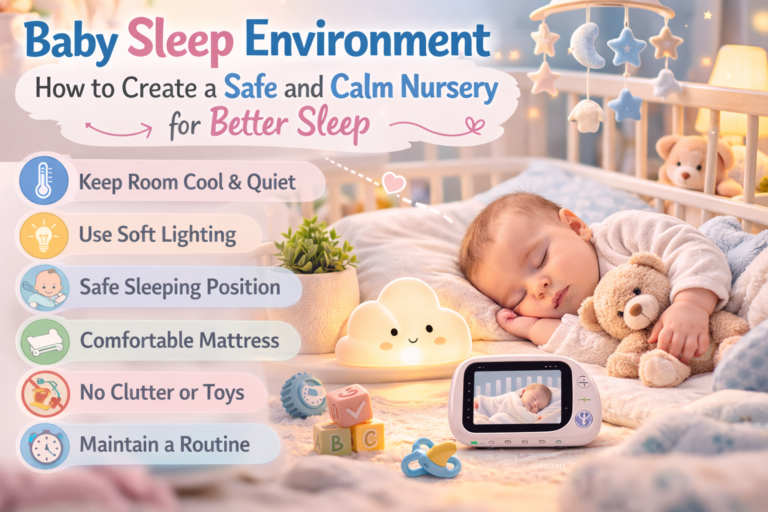
A balanced sleep environment involves more than furniture arrangement. Temperature, lighting, sound stability, and room layout all work together to create safe sleep conditions. As explained in our baby sleep environment explained guide, babies sleep best when the environment remains calm, predictable, and free from unnecessary stimulation.
Understanding safe crib placement helps parents design a nursery that supports both comfort and safety from the very first night.
Why Crib Placement Matters for Baby Sleep
A crib placed in the wrong location can expose babies to temperature changes, bright light, cords, or unsafe objects. Even small positioning mistakes can increase risks or cause unnecessary sleep disruptions.
Proper crib placement helps achieve several goals:
- reducing potential hazards
- maintaining stable room temperature
- minimizing bright light exposure
- improving monitoring visibility
- creating a calm sleep area
Parents who monitor sleep using setups described in best baby monitor without wifi often notice that babies sleep more calmly when the crib area remains visually simple and free of distractions.
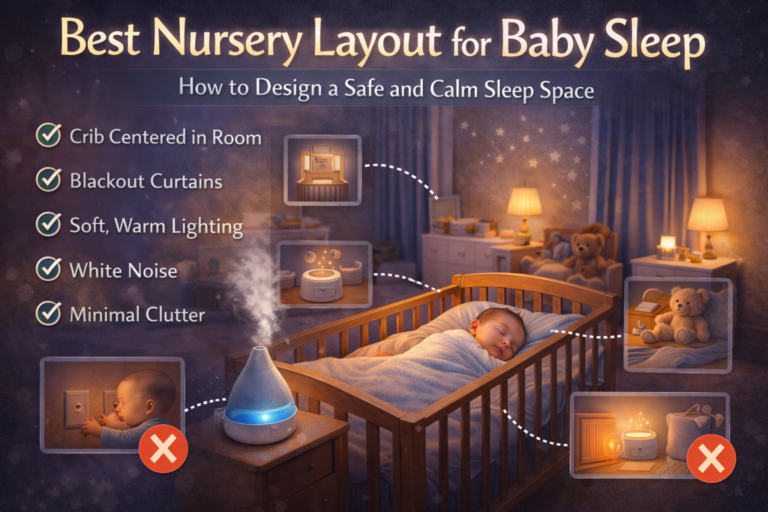
Safe Crib Placement in Nursery Layouts
Safe crib placement in nursery rooms usually follows several practical guidelines used by pediatric safety experts.
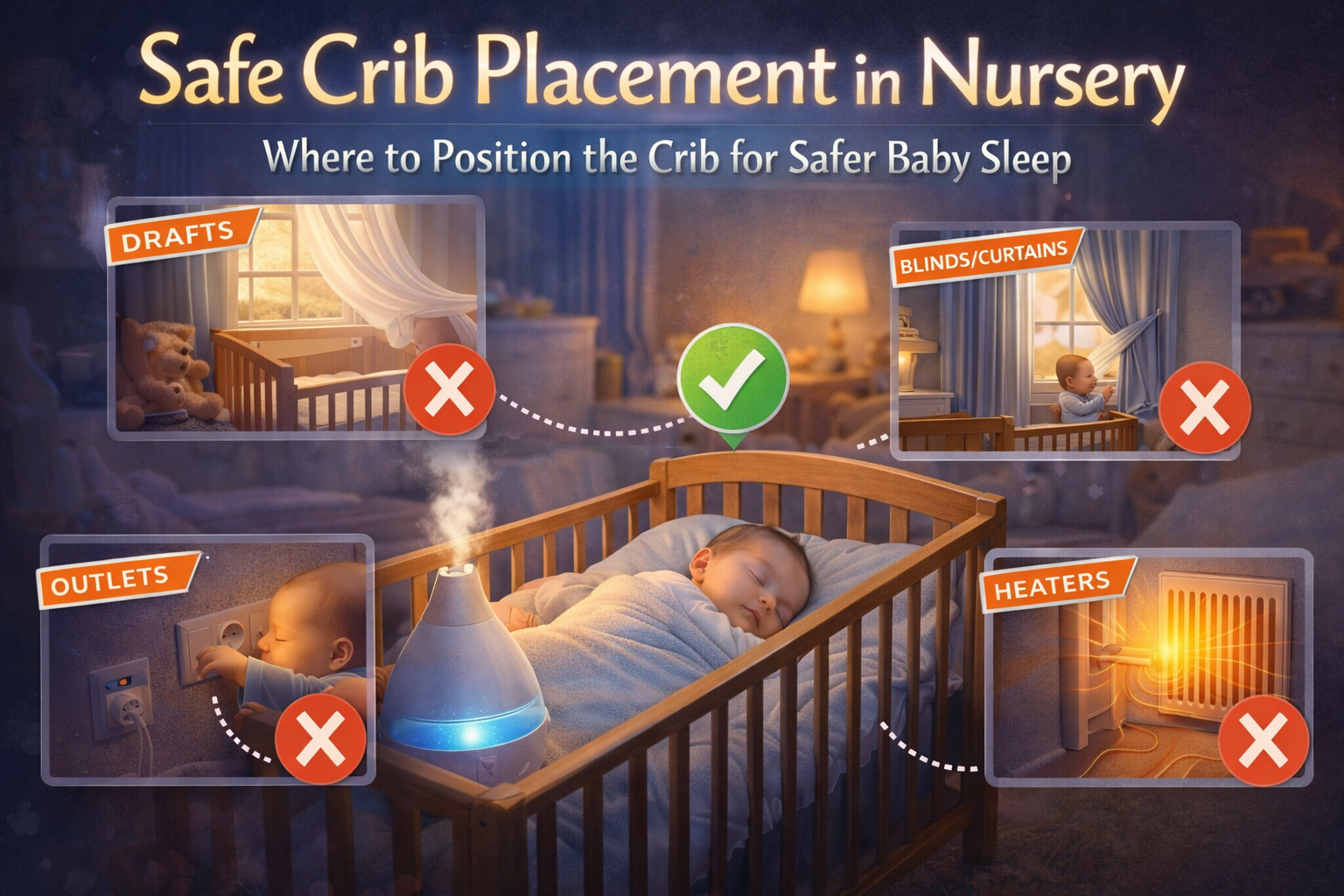
The crib should be positioned:
- away from windows
- away from curtain cords or blinds
- several feet from heaters or vents
- away from wall decorations that could fall
- in a clear area free of furniture edges
The safest setup often places the crib along an interior wall where temperature remains stable and external light is limited.
A simple layout also allows better visibility from the door or from monitoring cameras.
Avoid Placing the Crib Near Windows
Windows may seem like a natural location for cribs because they allow fresh air and natural light. However, they introduce several potential hazards.
Risks near windows include:
- temperature fluctuations
- direct sunlight exposure
- curtain cords or blinds
- drafts during cold weather
Even when windows appear safe, airflow changes may disturb sleep cycles. Keeping the crib several feet away from windows creates a more stable sleeping environment.
Keep the Crib Away From Heating and Cooling Sources
Heating vents, radiators, and air conditioning units can create uneven temperature zones inside the nursery.
Babies placed too close to these sources may experience:
- overheating
- cold drafts
- inconsistent air circulation
- disrupted sleep cycles
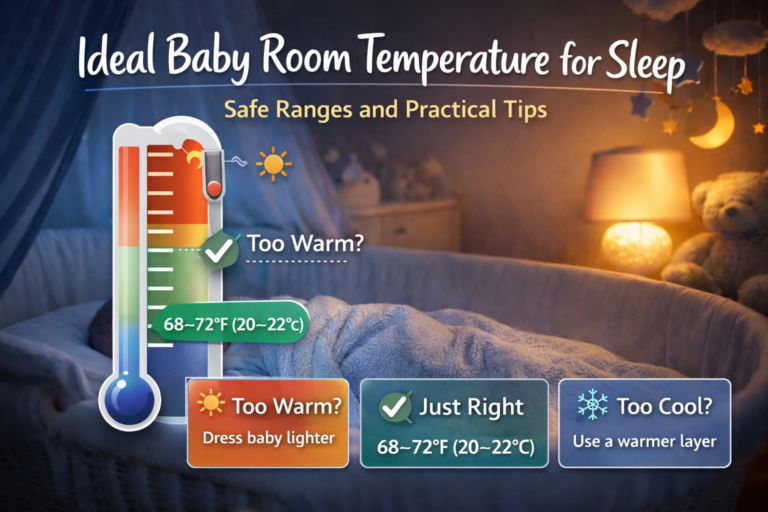
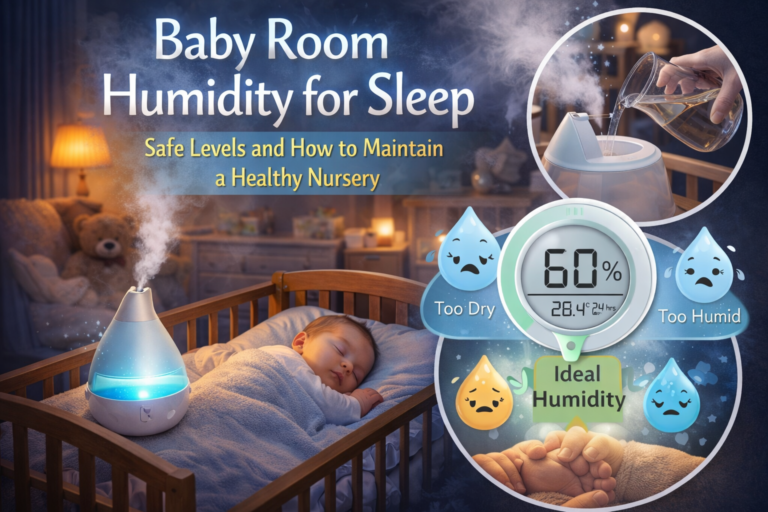
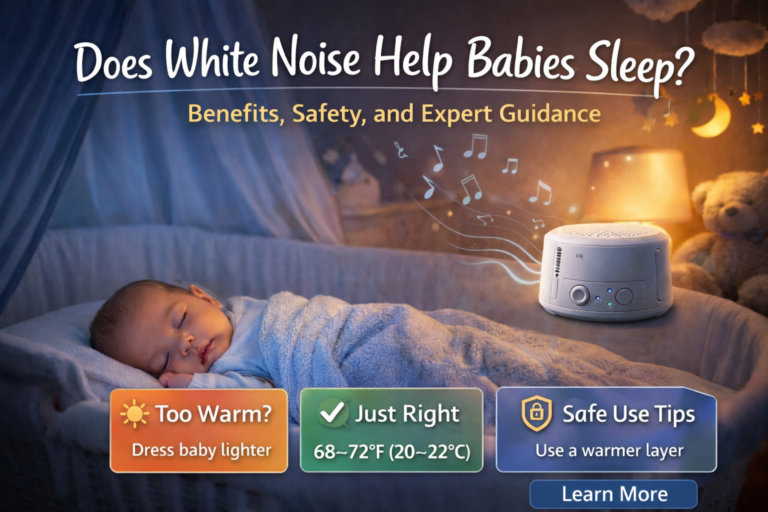
Maintaining distance from these areas helps stabilize temperature, which is especially important when managing factors explained in baby room humidity for sleep where balanced air conditions support comfortable breathing.
Maintain Clear Space Around the Crib
The safest nursery layouts leave open space around the crib.
Avoid placing nearby:
- bookshelves
- dressers
- lamps with cords
- hanging decorations
- heavy wall frames
Keeping the area simple prevents climbing hazards and reduces visual stimulation that may disturb sleep.
A minimal layout also makes nighttime monitoring easier.
Crib Placement and Baby Monitor Positioning
Crib placement directly affects how well baby monitors capture movement and sound. A poor angle or blocked view can reduce monitoring effectiveness.
Parents using long range monitors, such as those discussed in best baby monitor long range, often position cameras opposite the crib to maintain a clear view of the sleep space.
Helpful positioning tips include:
- placing cameras above crib level
- avoiding direct light glare
- keeping monitors outside the crib reach
- maintaining a wide viewing angle
A clear view helps parents observe sleep patterns while keeping equipment safely out of reach.
Avoid Placing the Crib Directly Against Walls With Decorations
Wall decorations may appear harmless but can create unexpected risks.
Items to avoid above the crib include:
- framed artwork
- shelves
- wall lamps
- heavy décor pieces
Even securely mounted objects may loosen over time. Keeping the crib slightly away from decorated walls eliminates this possibility.
A plain wall behind the crib is usually the safest choice.
Lighting and Crib Placement
Lighting also affects where the crib should be positioned.
Direct lighting sources near the crib can cause:
- overstimulation during bedtime
- early morning wake ups
- glare in baby monitor cameras
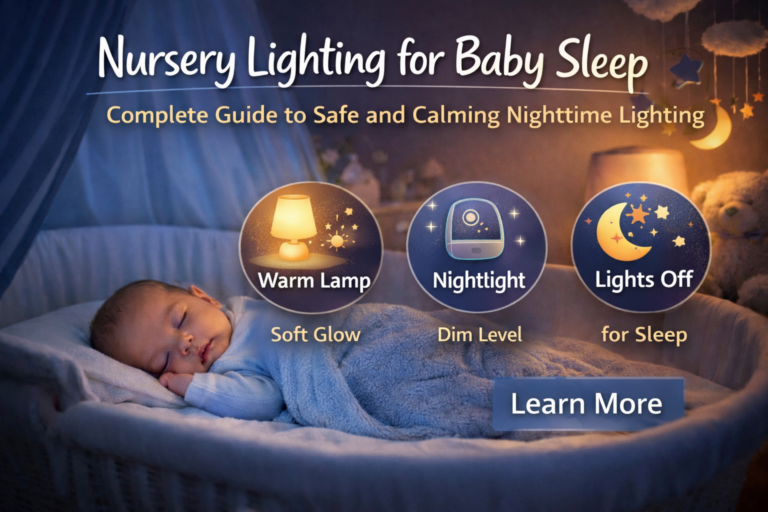
As explained in nursery lighting for baby sleep, dim warm lighting supports better sleep cues. Positioning the crib away from bright lights helps maintain those conditions.
Blackout curtains can further stabilize lighting without placing the crib near the window itself.
Crib Placement and Parent Accessibility
Parents should also consider accessibility during nighttime care.
The crib should allow easy access for:
- nighttime soothing
- feeding
- diaper changes
- monitor adjustments
Placing the crib where parents can safely reach the baby without navigating furniture improves both convenience and safety.
Good visibility from the nursery door is often ideal.
Designing a Calm Sleep Zone
The area surrounding the crib should feel visually calm.
Helpful design habits include:
- neutral colors
- minimal wall patterns
- limited decorative objects
- soft indirect lighting
Reducing stimulation near the crib helps babies associate that area with sleep rather than activity.
Parents often notice calmer bedtime transitions when the crib area remains simple and consistent.
Common Crib Placement Mistakes Parents Make
Many nursery setups look attractive but create unnecessary risks.
Frequent mistakes include:
- placing the crib under windows
- positioning near heaters
- hanging decorations above the crib
- placing monitors too close
- creating cluttered sleep zones
Correcting these mistakes improves both safety and sleep quality.
How Crib Placement Supports Healthy Sleep
When the crib sits in a stable part of the nursery, babies experience fewer environmental disturbances.
Benefits of proper crib placement include:
- fewer temperature changes
- reduced visual distractions
- better monitor visibility
- safer sleep environment
- calmer bedtime routines
These small environmental improvements often lead to longer sleep stretches and fewer nighttime awakenings.
Final Thoughts
Safe crib placement in nursery design is one of the simplest ways parents can improve both safety and sleep quality. By keeping the crib away from windows, cords, heating sources, and heavy decorations, parents create a secure and calm sleep zone.
A well positioned crib also improves visibility for baby monitors and helps maintain a stable environment that supports healthy sleep patterns. Combined with proper lighting, humidity, and temperature control, thoughtful crib placement helps babies rest comfortably and safely throughout the night.
Frequently Asked Questions
Where should a crib be placed in a nursery?
The crib should be placed away from windows, cords, heaters, and heavy wall decorations.
Is it safe to put a crib next to a window?
It is generally safer to keep cribs several feet away from windows to avoid drafts, cords, and sunlight exposure.
How far should a crib be from a heater?
Ideally several feet away to prevent overheating or uneven temperature exposure.
Should a baby monitor be placed above the crib?
Monitors should be positioned above crib level but out of the baby’s reach.
Does crib placement affect baby sleep?
Yes. A calm, stable sleep area helps reduce disturbances and supports longer sleep cycles.