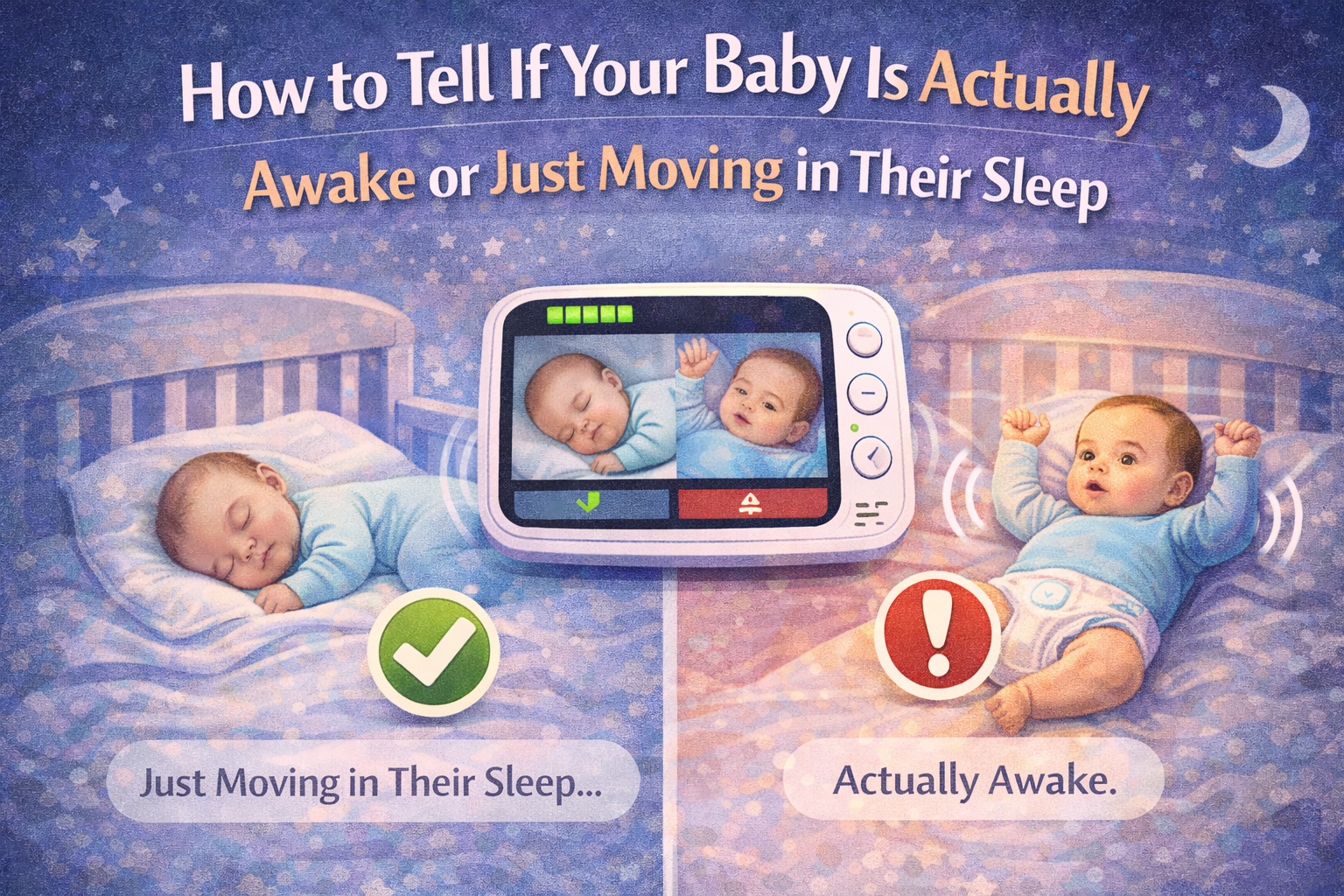
How to Tell If Your Baby Is Actually Awake or Just Moving in Their Sleep
How to tell if your baby is actually awake is one of those questions almost every parent learns the hard way-by walking into the room too early and accidentally waking a baby who would have fallen back asleep on their own.
Babies are noisy sleepers. They move, stretch, grunt, and sometimes even cry a little without truly waking up. Learning to tell the difference can save you a lot of unnecessary night wake-ups-for both you and your baby.
Let’s go through what’s normal, what it looks like when a baby is really awake, and when it’s better to wait a moment before going in.
Why Babies Move and Make Noise in Their Sleep
Adult sleep is relatively quiet and still. Baby sleep is not.
During sleep, babies often:
- Wiggle their arms and legs
- Turn their head from side to side
- Make sucking motions
- Grunt, whine, or briefly cry
- Open their eyes for a second and close them again
A lot of this happens during active sleep, which is a normal and important part of infant sleep cycles.
This means:
Noise and movement alone do not mean your baby is awake.
The Biggest Mistake Parents Make
The most common pattern looks like this:
- You hear noise in the baby’s room
- You assume the baby is waking up
- You go in immediately
- The baby fully wakes up because of the disturbance
In many cases, if you had waited:
- The baby would have settled back into sleep on their own.
Signs Your Baby Is Probably Still Asleep
Your baby is likely still sleeping if:
- Their eyes are:
- Closed
- Or only briefly fluttering open
- The movements are:
- Random
- Jerky
- Not purposeful
- The sounds are:
- Grunts
- Whimpers
- Short, inconsistent cries
- The noise:
- Comes and goes
- Does not build in intensity
In simple terms:
The baby looks like they’re “passing through” something, not fully waking up.
Signs Your Baby Is Actually Awake
Your baby is more likely awake if:
- Their eyes are:
- Open
- And staying open
- Their movements:
- Look more coordinated
- Or purposeful (turning, pushing, reaching)
- The crying:
- Is consistent
- Gets louder or more urgent
- Does not fade away after a short time
Awake behavior usually:
Escalates instead of fading.
The “Pause and Observe” Rule
A very helpful habit is this:
When you hear noise, wait 30 to 90 seconds before going in.
During that time:
- Watch (if you have a monitor)
- Or listen carefully
Often:
- The baby will settle
- Or the noises will clearly turn into real waking and crying
This short pause prevents many unnecessary wake-ups.
What This Looks Like on a Baby Monitor
If you’re using a baby monitor, you’ll often see:
- In sleep:
- Small movements
- Head turning
- Arms lifting and dropping
- When awake:
- More focused movement
- Eyes open and looking around
- Repeated attempts to change position
Many parents find that:
Video helps them avoid going in too early when the baby is just in a light sleep phase.
Newborns vs Older Babies
Newborns
- Spend a lot of time in active sleep
- Are especially noisy
- Often look half-awake even when they’re not
With newborns:
- You will hear a lot of movement and sound that means nothing.
Older babies
- Sleep becomes a bit quieter and more predictable
- But:
- Rolling
- Sitting
- Or standing in the crib
Can create new kinds of movement and noise
You still need to look for:
- Consistency and escalation of signals.
Why Waiting a Moment Is Usually a Good Idea
When you go in too early:
- You might:
- Turn on light
- Open the door
- Make noise
- That stimulation:
- Can fully wake a baby who was about to resettle
Learning to wait a short moment:
Is one of the simplest ways to improve sleep for everyone.
When You Should Not Wait
Of course, sometimes you should go in immediately:
- If:
- Crying is intense or distressed
- If:
- The baby sounds unusual
- If:
- You know something is wrong
- Or if:
- You simply feel something isn’t right
This guide is about avoiding unnecessary interruptions, not about ignoring your baby.
A Practical Checklist
Before going in, ask yourself:
- Are the eyes open and staying open?
- Is the crying consistent and getting stronger?
- Do the movements look purposeful?
If the answer is:
- Mostly no → wait a moment
- Mostly yes → your baby is probably awake
How This Reduces Night Wakings Over Time
When babies are:
- Given a little space to resettle
They often: - Learn to move between sleep cycles more smoothly
- Wake fully less often
You’re not “training” them.
You’re simply:
Not interrupting normal sleep transitions.
So, How To Tell If Your Baby Is Actually Awake?
Look for:
- Open, focused eyes
- Consistent, escalating crying
- Purposeful movement
Random noise and movement usually mean:
Your baby is still sleeping.
Final Thoughts
Babies are noisy, active sleepers. That’s normal.
Learning to pause, watch, and listen for a moment before reacting can:
- Save you a lot of unnecessary trips to the crib
- Help your baby sleep longer stretches
- And make nights a little calmer for everyone
Sometimes, the best thing you can do is… nothing at all.
How can I tell if my baby is awake or just moving in their sleep?
If the eyes stay open, crying is consistent, and movements look purposeful, your baby is likely awake. Random movement and brief noises usually mean they are still sleeping.
Is it normal for babies to cry or grunt in their sleep?
Yes. Many babies make noise and move during active sleep without actually waking up.
How long should I wait before checking on my baby?
In many cases, waiting 30 to 90 seconds helps you see whether the baby will settle back to sleep.
Can a baby monitor help with this?
Yes. Video monitoring can help you see whether movements are random sleep motions or signs of full waking.