How to Reduce Noise in a Baby’s Room (Without Making It Too Quiet)
How to reduce noise in a baby’s room is one of those topics that sounds simple until you actually try to do it. New parents often assume that babies need total silence to sleep well, so they start tiptoeing, whispering, and freezing every time a floorboard creaks. In reality, silence is not only unnecessary it can actually make sleep worse.
Understanding how to reduce noise in a baby’s room is less about eliminating sound and more about controlling the type and consistency of noise. Babies are surprisingly adaptable sleepers, but sudden, unpredictable sounds are what tend to disrupt rest the most.
Why Complete Silence Is Not the Goal
One of the biggest mistakes parents make when learning how to reduce noise in a baby’s room is chasing silence. Total silence makes babies more sensitive to every small sound. A door closing, a car passing outside, or someone talking in another room suddenly feels loud and disruptive.
Babies spend a lot of time in light sleep, especially in the first months. In a completely silent room, even normal household sounds can feel abrupt. This is why many babies actually sleep better with steady background noise than in silence.
The Difference Between Sudden Noise and Background Noise
To really understand how to reduce noise in a baby’s room, you need to separate noise into two categories.
Sudden noise includes things like:
- Doors slamming
- Loud voices
- Dropping objects
- Barking dogs
These sounds startle babies because they are sharp and unpredictable.
Background noise includes things like:
- White noise
- A fan
- Distant traffic
- Soft household sounds
These sounds are consistent and often become part of the sleep environment.
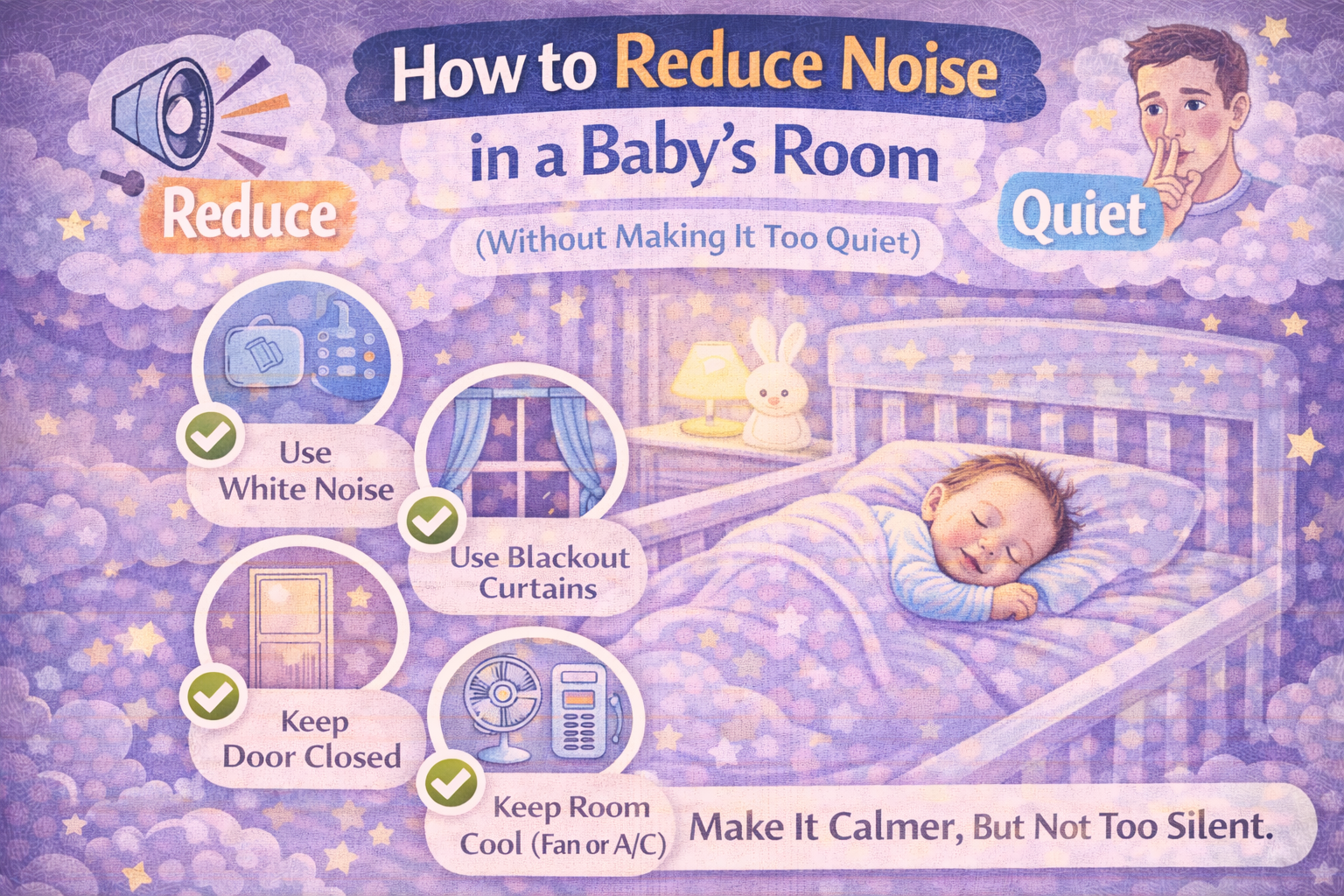
Reducing disruptive noise doesn’t mean removing all sound. It means softening sudden noises and creating a predictable sound environment.
Why Babies Are Noisy Sleepers (And Why That Matters)
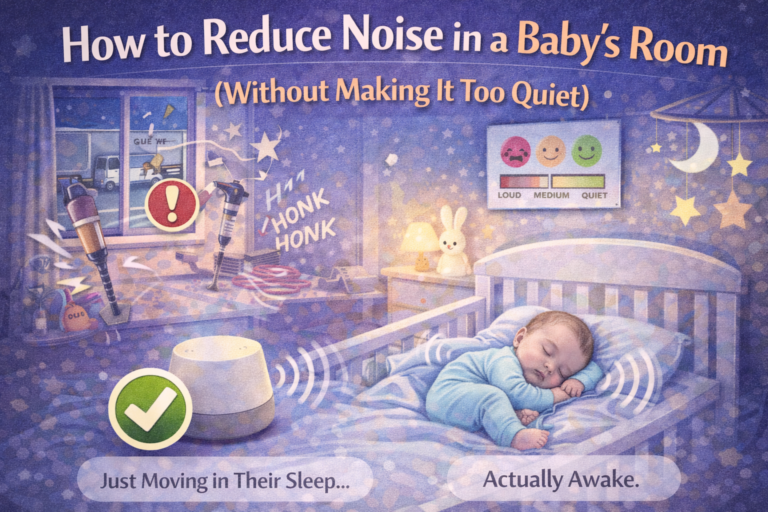
Another reason parents struggle with how to reduce noise in a baby’s room is that babies themselves are noisy. Grunting, shifting, brief cries, and movement are all normal parts of baby sleep. These sounds often worry parents more than they should.
If you expect silence, every baby noise feels alarming. But once you accept that baby sleep is active, it becomes easier to tell which sounds matter and which ones don’t. This understanding is a key part of overall baby sleep and night care, which we cover in detail here:
👉 Baby Sleep & Night Care: A Practical Guide for New Parents
Practical Ways to Reduce Disruptive Noise
Now let’s get practical about how to reduce noise in a baby’s room without overcomplicating things.
Control the Loudest Noise Sources
Start by identifying the loudest and most unpredictable sounds near the baby’s room. These might include:
- A TV in the next room
- A noisy hallway
- Kitchen activity
- Street noise
Simple changes like closing doors, adding a rug, or rearranging furniture can reduce sound transmission more than people expect.
Use Soft Furnishings to Absorb Sound
Hard surfaces reflect sound. Soft surfaces absorb it.
Adding:
- Curtains
- Rugs
- Upholstered furniture
can noticeably reduce echo and sudden noise. You don’t need acoustic panels or special equipment. Normal household items often do the job just fine.
White Noise: Helpful, But Not Mandatory
White noise is often mentioned in discussions about how to reduce noise in a baby’s room, and for good reason. It creates a consistent sound layer that masks sudden noises.
That said:
- White noise is optional
- It doesn’t work for every baby
- It should be used at a safe volume
The goal is gentle background sound, not loud noise.
The Role of Monitoring in Managing Noise
Many parents worry about noise because they don’t want to wake the baby unnecessarily. This is where a reliable baby monitor becomes extremely useful. Being able to hear what’s happening in the baby’s room without physically entering helps parents understand which noises actually matter.
For example:
- You might hear movement and realize the baby is still asleep
- Or hear real crying that needs attention
This reduces unnecessary room visits, which often create more noise than they prevent. Parents who prefer simple, stable setups often choose monitors that don’t rely on phones or internet connections. If that sounds like you, our main guide explains this clearly:
👉 Best Baby Monitor Without WiFi
Monitoring supports better noise management by replacing guesswork with information.
Nighttime Noise vs. Daytime Noise
How to reduce noise in a baby’s room also depends on the time of day.
At night:
- Sudden noises feel bigger
- Babies are more likely to wake fully
During the day:
- Some background noise can actually help babies sleep through normal household activity
Many parents intentionally keep daytime naps slightly noisier than nighttime sleep. This helps babies adapt to real-world environments and prevents hypersensitivity to sound.
Should You Tiptoe Around a Sleeping Baby?
Short answer: no.
Constantly tiptoeing teaches babies to expect silence. Normal movement, quiet talking, and everyday sounds are fine. Learning how to reduce noise in a baby’s room does not mean freezing your household.
Instead of stopping all activity:
- Keep voices calm
- Avoid sudden loud noises
- Let normal life continue
This creates a more sustainable environment for everyone.
Common Noise Myths That Cause Unnecessary Stress
When it comes to how to reduce noise in a baby’s room, several myths cause parents extra anxiety:
- “Any noise will wake the baby”
- “The room must be silent”
- “Babies can’t sleep through noise”
In reality, babies are often more resilient than we expect. It’s unpredictability, not volume alone, that causes problems.
How Noise Management Fits Into the Bigger Sleep Picture
Noise is just one part of baby sleep. Temperature, routines, night care habits, and parental responses all matter too. Treating noise as the only factor often leads to frustration.
For a full understanding of how sleep works together with environment and routines, these pillar guides give the full picture:
- 👉 Baby Sleep & Night Care: A Practical Guide for New Parents
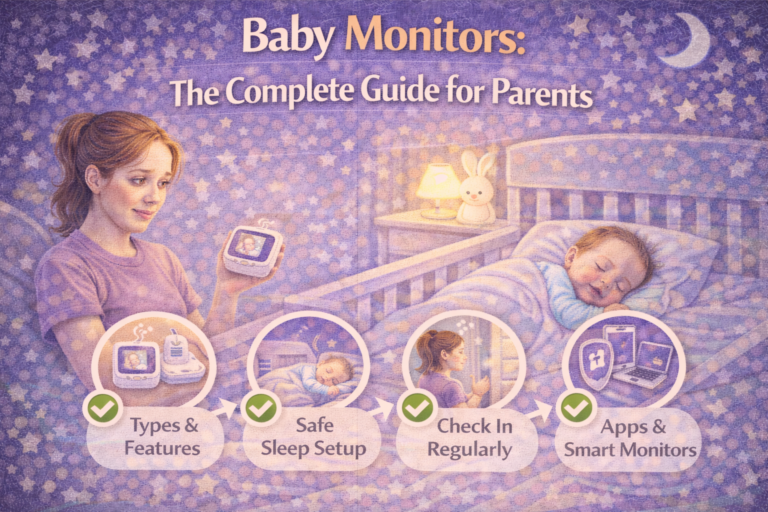
- 👉 Baby Monitors: The Complete Guide for Parents
These resources help connect noise management to overall sleep success.
What to Do If Your Baby Wakes From Noise
Even with the best setup, babies will wake sometimes. When that happens:
- Stay calm
- Avoid turning on bright lights
- Respond gently
Panicked reactions often create more stimulation than the noise itself.
When Noise Becomes a Real Problem
Occasionally, noise really is disruptive especially in very small apartments or noisy urban areas. In those cases:
- White noise
- Room placement adjustments
- Better sound absorption
can make a meaningful difference. But even then, the goal is reducing sharp interruptions, not building a soundproof room.
So, How Do You Reduce Noise in a Baby’s Room?
To summarize the realistic approach to how to reduce noise in a baby’s room:
- Don’t aim for silence
- Reduce sudden, sharp noises
- Allow steady background sound
- Use soft furnishings
- Avoid unnecessary room checks
- Let normal life continue
This balanced approach works better than extreme quiet.
Final Thoughts
Learning how to reduce noise in a baby’s room is really about learning how babies sleep. Once you stop chasing silence and start focusing on consistency, sleep often becomes easier, not harder.
A calm, realistic environment beats a perfectly quiet one every time.
Should a baby’s room be silent?
No. Consistent background noise often helps babies sleep better than silence.
Does white noise help babies sleep?
For many babies, yes—but it should be used at a safe volume and isn’t mandatory.
Will normal household noise wake my baby?
Usually not. Sudden, loud noises are more disruptive than steady background sounds.
Is it okay to move around the house while the baby sleeps?
Yes. Normal movement and quiet activity are healthy and sustainable.