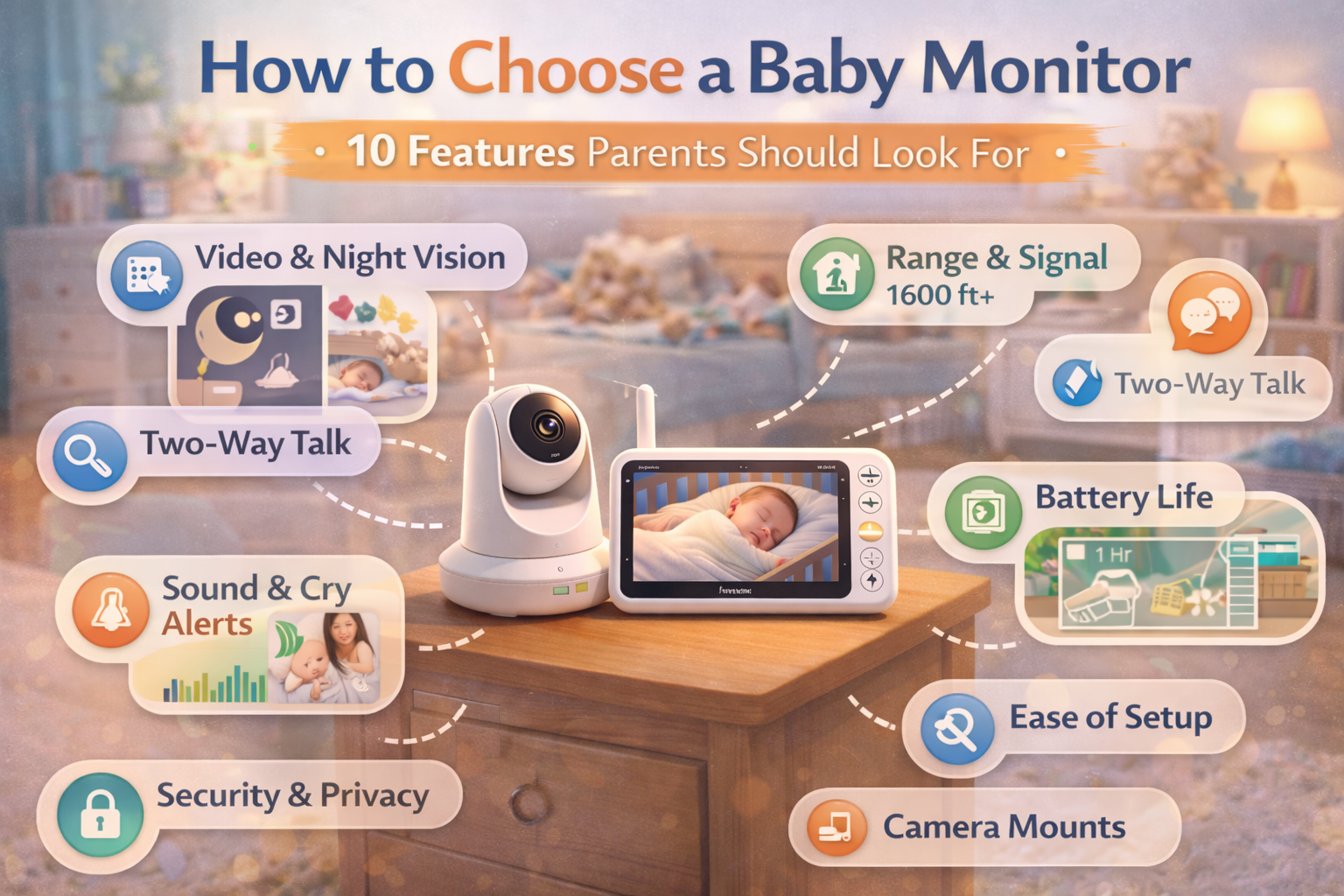
How to Choose a Baby Monitor: 10 Features Parents Should Look For
How to choose a baby monitor is a question many parents ask when preparing a nursery or bringing a newborn home. A baby monitor allows caregivers to hear and see their baby from another room, helping parents respond quickly if the baby wakes or needs attention. With so many different models available, choosing the right device can feel confusing at first.
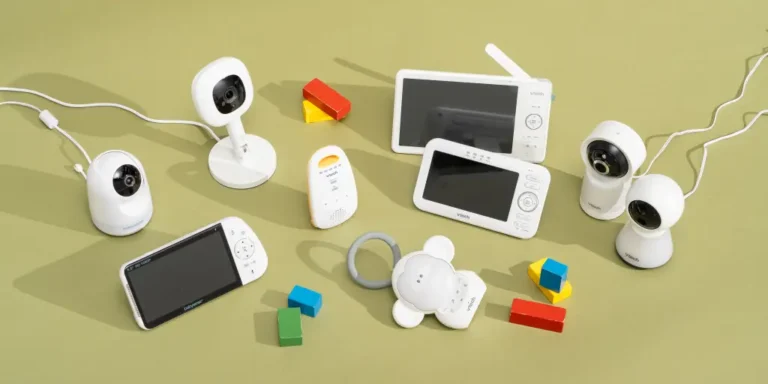
Baby monitors vary widely in terms of features, signal technology, video quality, and monitoring range. Some models connect through WiFi and smartphone apps, while others operate through direct radio communication between devices. Each option offers different advantages depending on the home layout, privacy preferences, and monitoring needs of the family.
At Safebabylab, we study how different baby monitor setups perform in real homes and nurseries. What many parents discover is that the best baby monitor is not always the most expensive one. Instead, the best choice is the device that provides reliable monitoring, clear audio and video, and a safe setup in the nursery environment.
This guide explains how to choose a baby monitor by exploring the most important features parents should consider before buying one.
Why Choosing the Right Baby Monitor Matters
A baby monitor plays an important role in helping parents observe their baby while maintaining a calm sleep environment. The right monitor allows caregivers to check on the baby without entering the nursery and disturbing sleep.
Monitoring devices help parents:
- hear when the baby wakes
- observe sleep movement
- detect crying quickly
- check the baby without turning on lights
Choosing the wrong monitor may lead to problems such as unreliable signals, poor video quality, or complicated setup.
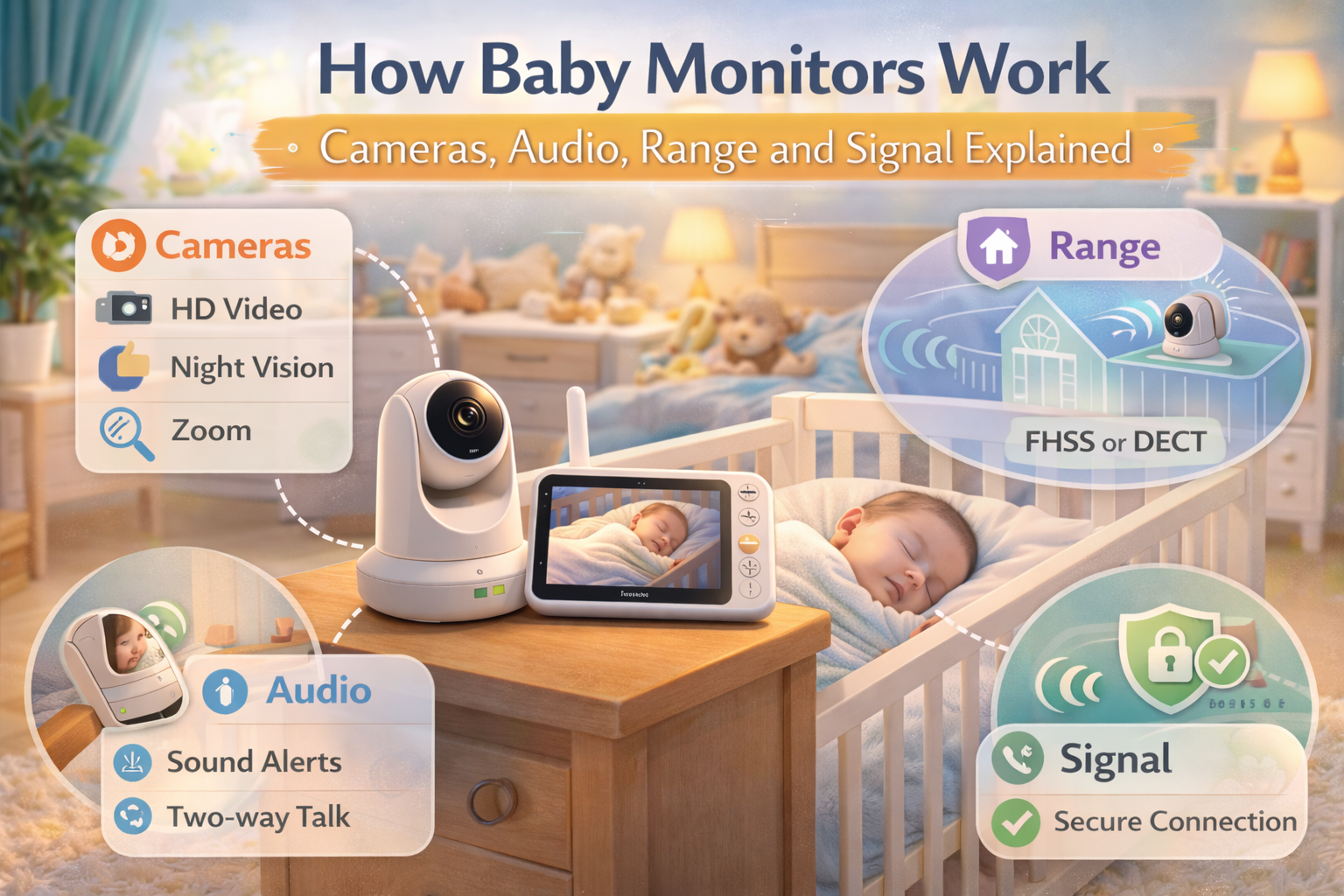
Parents who understand how baby monitors work often make better purchasing decisions. If you want a deeper explanation of monitor technology, you can read our guide on how baby monitors work, which explains the wireless systems used in modern monitors.
Selecting a reliable device ensures consistent monitoring during naps and overnight sleep.
How to Choose a Baby Monitor Based on Your Home
How to choose a baby monitor often depends on the layout of the home where the device will be used. The size of the house, wall materials, and number of floors can influence which monitor works best.
Parents living in small apartments may not need extremely long signal ranges. In contrast, families living in large houses may require monitors that transmit signals across multiple floors.
Important factors related to home layout include:
- wall thickness
- distance between nursery and living areas
- number of floors
- electronic interference from other devices
Parents living in larger homes often research monitors listed in best baby monitor long range, which are designed to maintain stable signals across greater distances.
Understanding your home environment is the first step in choosing the right monitor.
Video Monitor vs Audio Monitor
One of the first decisions parents face is choosing between a video monitor and an audio only monitor.
Audio Baby Monitors
Audio monitors transmit sound from the nursery to the parent unit. These devices allow parents to hear crying or movement without seeing the baby.
Audio monitors usually offer:
- simple design
- lower cost
- longer battery life
However, they do not allow parents to visually check the baby’s sleep position.
Video Baby Monitors
Video monitors include cameras that transmit images of the nursery.
These monitors allow parents to:
- see the baby’s sleep position
- observe movement
- check breathing motion
- monitor without entering the room
At Safebabylab, most parents report feeling more comfortable using video monitors because they provide visual confirmation of the baby’s safety.
WiFi vs Non WiFi Baby Monitors
Another important factor when deciding how to choose a baby monitor is whether the device connects to WiFi.
WiFi Baby Monitors
WiFi monitors transmit video through internet networks and smartphone apps.
Advantages include:
- remote viewing outside the home
- smartphone notifications
- cloud video storage
However, WiFi monitors rely on internet stability.
Non WiFi Baby Monitors
Non WiFi monitors transmit signals directly between the baby unit and parent unit.
Advantages include:
- stronger privacy
- stable local connection
- simpler setup
- independence from internet outages
Parents who prefer local communication often choose devices explained in complete guide to baby monitors without wifi because they offer consistent performance without internet connectivity.
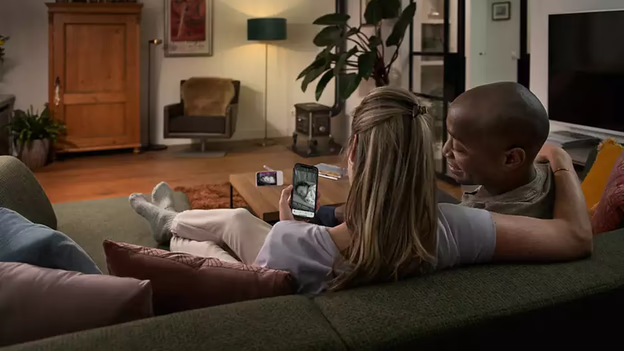
Video Quality and Night Vision
Video quality plays an important role in monitoring effectiveness.
Clear video allows parents to observe movement and sleep position without entering the nursery.
Important video features include:
- high resolution cameras
- infrared night vision
- zoom functions
- wide angle viewing
Night vision is especially important because babies sleep best in dim environments. Infrared cameras allow parents to see the baby clearly even when the room is dark.
Lighting conditions also influence monitor performance. As explained in nursery lighting for baby sleep, maintaining a calm and dim environment supports healthy sleep cycles.
Monitor Range and Signal Strength
Range determines how far the parent unit can move from the nursery while maintaining a stable connection.
Manufacturers often advertise ranges between 600 and 1000 feet in open environments. Inside homes, walls and floors may reduce this distance.
Factors affecting monitor range include:
- wall materials
- floor levels
- electronic interference
- device antenna strength
Parents who need strong indoor coverage often research models designed for extended range.
Testing the monitor throughout the home after installation helps ensure reliable monitoring.
Two Way Audio Communication
Two way audio allows parents to speak through the monitor to soothe their baby without entering the room.
This feature is helpful for:
- calming babies who wake briefly
- reassuring older infants
- communicating during nighttime wake ups
Clear audio transmission helps parents hear subtle sounds such as coughing or movement during sleep.
Audio communication can reduce the need to enter the nursery and disturb the baby.
Environmental Monitoring Features
Some baby monitors include sensors that track environmental conditions in the nursery.
These sensors may monitor:
- temperature
- humidity
- sound levels
Environmental monitoring helps parents maintain comfortable sleep conditions.
Humidity levels discussed in baby room humidity for sleep can influence breathing comfort and overall sleep quality.
Monitoring these factors helps create a balanced sleep environment.
Camera Placement and Visibility
Camera placement affects how clearly parents can observe the crib.
The best viewing angle usually comes from mounting the camera above crib height and pointing it downward.
Parents often achieve the best results by following recommendations explained in baby monitor placement guide, which describes how to position cameras safely.
Correct placement ensures:
- full crib visibility
- clear night vision
- safe distance from the baby
Proper placement also prevents cables from becoming hazards.
Battery Life and Parent Unit Portability
Battery life influences how convenient the monitor is to use throughout the day.
Most parent units include rechargeable batteries designed to last through several hours of monitoring.
Battery life may depend on:
- screen brightness
- video usage
- signal strength
- device settings
Portable monitors allow parents to move freely around the house while maintaining connection with the nursery.
This flexibility helps parents continue daily tasks while keeping an eye on their baby.
Ease of Setup and Daily Use
Ease of use is often overlooked when choosing baby monitors.
Parents caring for newborns benefit from devices that are simple and reliable.
Helpful design features include:
- intuitive controls
- clear display screens
- simple pairing process
- minimal configuration steps
At Safebabylab, we often see parents appreciate monitors that work immediately without requiring complicated setup.
Simple devices often perform better in everyday use.
Safety Considerations When Choosing a Monitor
Safety should always be a top priority when installing monitoring equipment.
Important safety practices include:
- keeping cables out of reach
- mounting cameras securely
- avoiding placement inside the crib
- maintaining safe distance from the baby
Parents who follow safe placement guidelines reduce the risk of accidents.
Proper placement also improves monitoring visibility and signal reliability.
Price vs Value
Baby monitors range from budget models to advanced systems with many features.
Higher price does not always guarantee better performance.
When evaluating price, parents should focus on:
- reliability
- video clarity
- signal stability
- safety features
Devices that perform well in everyday monitoring situations often provide better value than feature heavy devices with unreliable signals.
Choosing a dependable monitor is more important than selecting the most expensive option.
Final Thoughts
Understanding how to choose a baby monitor helps parents select a device that fits their home environment, privacy preferences, and monitoring needs. A reliable baby monitor provides reassurance during sleep while allowing parents to observe their baby without disturbing the nursery environment.
The most important factors to consider include signal reliability, video clarity, safe camera placement, and ease of use. By focusing on these features rather than unnecessary extras, parents can choose a monitor that supports safe and comfortable monitoring during both naps and nighttime sleep.
At Safebabylab, we recommend selecting a monitor that prioritizes reliability and safety. A well chosen baby monitor allows parents to stay connected with their baby while maintaining a calm sleep environment.
Frequently Asked Questions
What is the best type of baby monitor?
Video baby monitors are often preferred because they allow parents to see and hear their baby.
Do baby monitors need WiFi?
No. Many monitors transmit signals directly between devices without internet connections.
How far should a baby monitor reach?
Most homes require monitors that work reliably within 150 to 300 feet indoors.
Are expensive baby monitors better?
Not always. Reliability and signal stability are often more important than extra features.
Where should a baby monitor be placed?
The camera should be mounted above crib height and angled downward to capture the entire crib.