Do Baby Monitors Emit Radiation? Safety, Distance, and What Parents Should Know
Do baby monitors emit radiation is a question many parents ask when setting up monitoring devices in the nursery. Because baby monitors transmit signals using wireless communication, some families worry about whether these signals could affect a baby’s health. Understanding how baby monitors work and what type of signals they use helps parents make informed decisions about safe monitoring practices.
Wireless baby monitors rely on radio communication to transmit audio or video from the baby unit to the parent unit. These signals are similar to those used by everyday household devices such as cordless phones, WiFi routers, and wireless speakers. While the word radiation can sound alarming, most baby monitors operate at extremely low power levels designed for short distance communication.
Parents who prioritize simple and secure monitoring often choose systems explained in our complete guide to baby monitors without wifi, which operate through direct radio communication instead of internet networks. These systems provide reliable monitoring while avoiding many concerns associated with online devices.
This guide explains what radiation means in the context of baby monitors, how different monitor technologies work, and how parents can use these devices safely.
Understanding What Radiation Means
The term radiation often causes concern because it is commonly associated with harmful sources such as nuclear energy. However, radiation simply refers to the transmission of energy through waves or particles.
Wireless baby monitors use non ionizing radiation, which is a type of energy that does not damage DNA or cells. Non ionizing radiation is the same type used by:
- radio signals
- television broadcasts
- WiFi routers
- Bluetooth devices
These signals operate at low energy levels designed for communication rather than biological interaction.
Understanding this distinction helps parents recognize that the radiation used by baby monitors differs greatly from harmful forms of radiation.
Do Baby Monitors Emit Radiation Through Wireless Signals
Do baby monitors emit radiation through wireless signals is an important question because every wireless communication device transmits some form of radio frequency energy. Baby monitors send signals from the camera or audio unit to the parent receiver.
These signals travel through the air as radio waves. The strength of the signal depends on factors such as:
- monitor technology
- transmission power
- distance between devices
Most baby monitors operate at very low transmission power compared with devices such as smartphones.
Because baby monitors are designed for short distance monitoring within a home, they typically use far less power than devices intended for long range communication.
Types of Signals Used by Baby Monitors
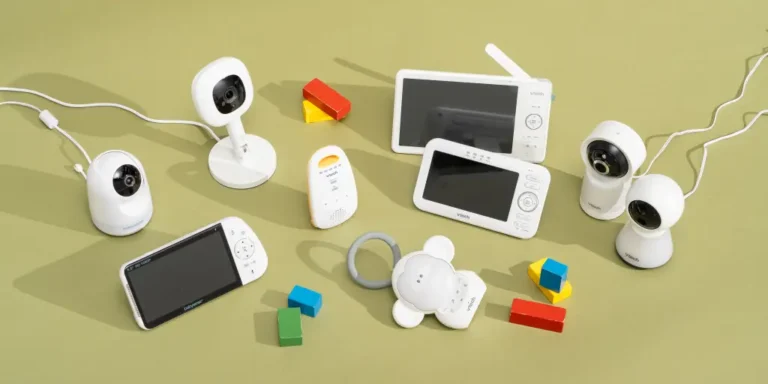
Different baby monitor technologies use different types of communication signals.
Analog Monitors
Older baby monitors used analog radio signals similar to those used by traditional walkie talkies. These signals were simple but sometimes prone to interference.
Digital Monitors
Modern monitors often use digital communication technologies such as FHSS.
Frequency hopping spread spectrum technology rapidly switches frequencies to avoid interference and improve signal stability.
Many non WiFi monitors use this technology because it creates a private and stable connection between the baby unit and parent unit.
WiFi Monitors
WiFi baby monitors transmit video through home internet networks. These devices rely on routers and internet connections to deliver video to smartphones.
Parents who prefer direct communication without internet involvement often use monitors described in best baby monitor long range, which transmit signals directly between devices.
Understanding these technologies helps parents choose the monitoring system that fits their preferences.
Comparing Radiation From Baby Monitors to Other Devices
Many everyday household devices emit similar radio frequency signals.
Examples include:
- smartphones
- laptops
- tablets
- wireless headphones
- home routers
In most cases, baby monitors operate at lower power levels than smartphones because they only need to transmit signals across a short distance.
This means the energy emitted by baby monitors is generally much weaker than signals produced by devices used throughout the day.
Understanding this comparison helps place radiation concerns in a realistic context.
Distance and Radiation Exposure
Distance plays an important role in reducing exposure to radio frequency signals.
Signal strength decreases rapidly as the distance between the transmitting device and the person increases.
For example:
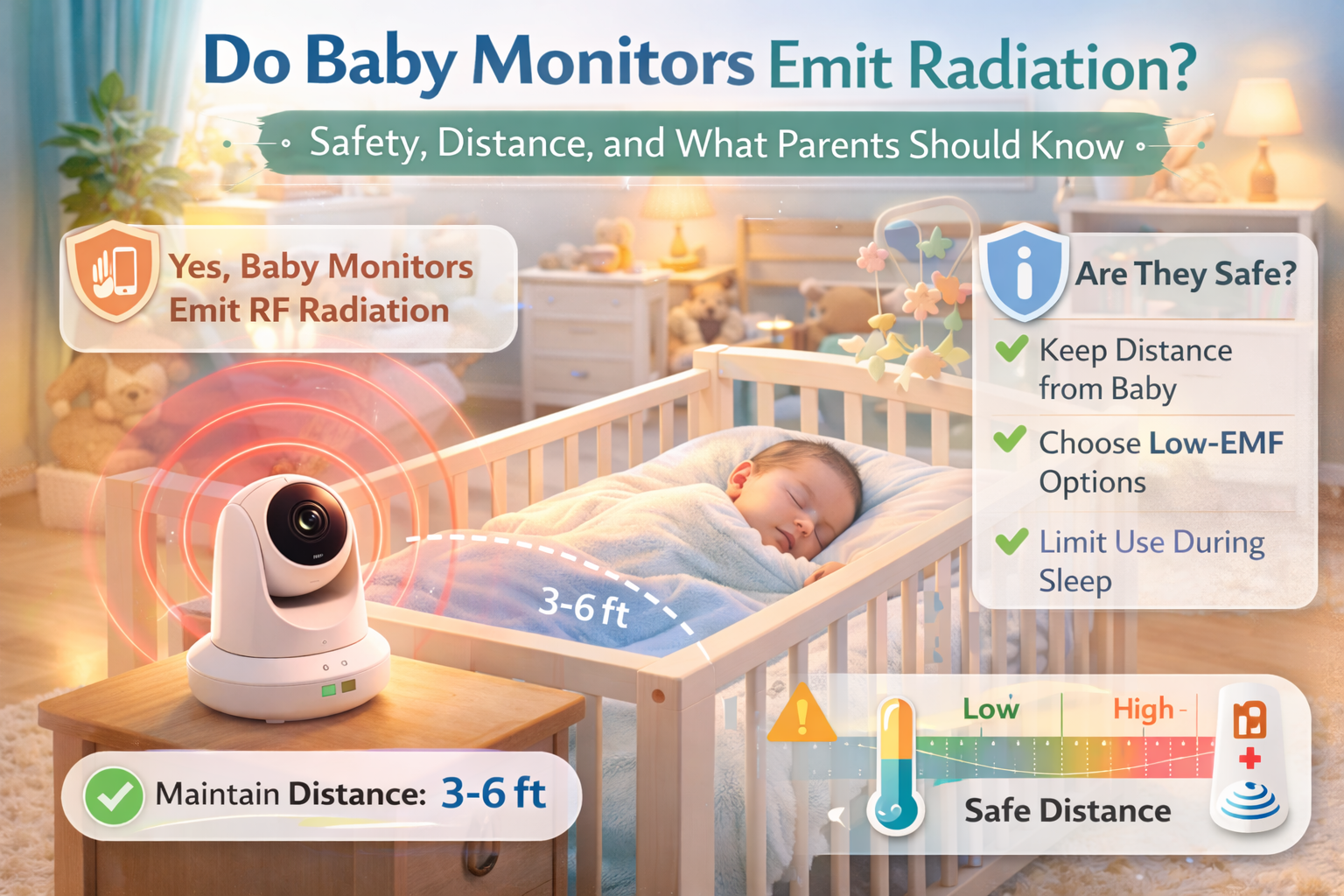
- placing a baby monitor several feet from the crib significantly reduces signal exposure
- signal intensity drops quickly beyond a short range
Because most baby monitors sit several feet away from the baby, the signal reaching the crib area is extremely weak.
Parents who follow proper placement guidelines described in baby monitor placement guide further reduce exposure while maintaining clear monitoring visibility.
How to Use Baby Monitors Safely
Parents can follow simple guidelines to ensure safe monitor usage.
Recommended practices include:
- placing the baby unit several feet away from the crib
- avoiding placement directly inside the crib
- mounting cameras securely above crib height
- keeping cables out of reach
These practices improve both safety and monitoring effectiveness.
Proper placement also helps maintain a clear camera view of the crib.
Why Many Parents Prefer Non WiFi Monitors
Some parents choose non WiFi monitors because they prefer systems that operate without internet connectivity.
These monitors transmit signals directly between devices rather than through routers or cloud servers.
Advantages include:
- stable local connection
- enhanced privacy
- simplified setup
- reduced cybersecurity concerns
Non WiFi monitors also avoid potential disruptions caused by internet outages.
Parents interested in this technology often explore models described in complete guide to baby monitors without wifi to understand their benefits.
Environmental Factors That Influence Monitor Signals
Several environmental factors influence how baby monitor signals travel through the home.
These include:
- wall thickness
- building materials
- electronic interference
- distance between devices
While these factors may affect signal strength, they do not increase radiation exposure to harmful levels.
Instead, they primarily affect how clearly the monitor transmits audio or video.
Understanding these factors helps parents choose the right monitor placement for their home layout.
Creating a Balanced Monitoring Environment
Baby monitors function best when the nursery environment remains calm and stable.
Monitoring devices should support observation without interfering with the baby’s sleep environment.
Parents should avoid placing monitoring equipment near:
- bright lights
- noisy electronics
- moving objects
Environmental factors such as lighting discussed in nursery lighting for baby sleep also influence how comfortably babies sleep.
A balanced environment supports both monitoring and sleep quality.
Long Term Monitoring Considerations
As babies grow and become more active, parents may adjust monitor placement to maintain a clear view of the crib.
Camera positioning may change when babies begin:
- rolling
- crawling
- standing
Maintaining safe placement and proper distance continues to support reliable monitoring.
Parents who periodically review monitor placement ensure that both safety and visibility remain optimal.
What Experts Say About Wireless Devices
Health organizations around the world have studied radio frequency exposure for many years.
Current scientific research indicates that the low power signals used by devices such as baby monitors fall well within established safety guidelines.
These guidelines limit the amount of radio frequency energy consumer devices can emit.
Because baby monitors operate at very low power levels and are usually placed several feet from the baby, their exposure levels remain minimal.
Parents who follow recommended usage practices can use these devices confidently.
Final Thoughts
Do baby monitors emit radiation is a common concern for parents who want to create a safe sleep environment for their baby. While baby monitors do transmit radio frequency signals, these signals belong to the category of non ionizing radiation and operate at extremely low power levels.
By understanding how these devices work and following safe placement practices, parents can monitor their baby confidently without unnecessary worry. Placing the monitor several feet from the crib, choosing reliable equipment, and maintaining a balanced nursery environment ensures that baby monitors remain helpful tools for observing sleep safely.
Monitoring devices provide reassurance and awareness without disturbing the baby’s environment, allowing parents to check on their child while maintaining a calm sleep space.
FAQ
Do baby monitors emit harmful radiation?
Baby monitors emit non ionizing radio frequency signals that operate at very low power levels.
Is it safe to place a baby monitor near a crib?
Yes, but it is recommended to keep the monitor several feet away from the crib to ensure safe placement.
Do WiFi baby monitors emit more radiation?
WiFi monitors may transmit signals through internet networks, but they still operate within regulated safety limits.
How far should a baby monitor be from the baby?
Most experts recommend placing the monitor at least three feet away from the crib.
Are non WiFi baby monitors safer?
Many parents prefer non WiFi monitors because they provide private communication without relying on internet connections.