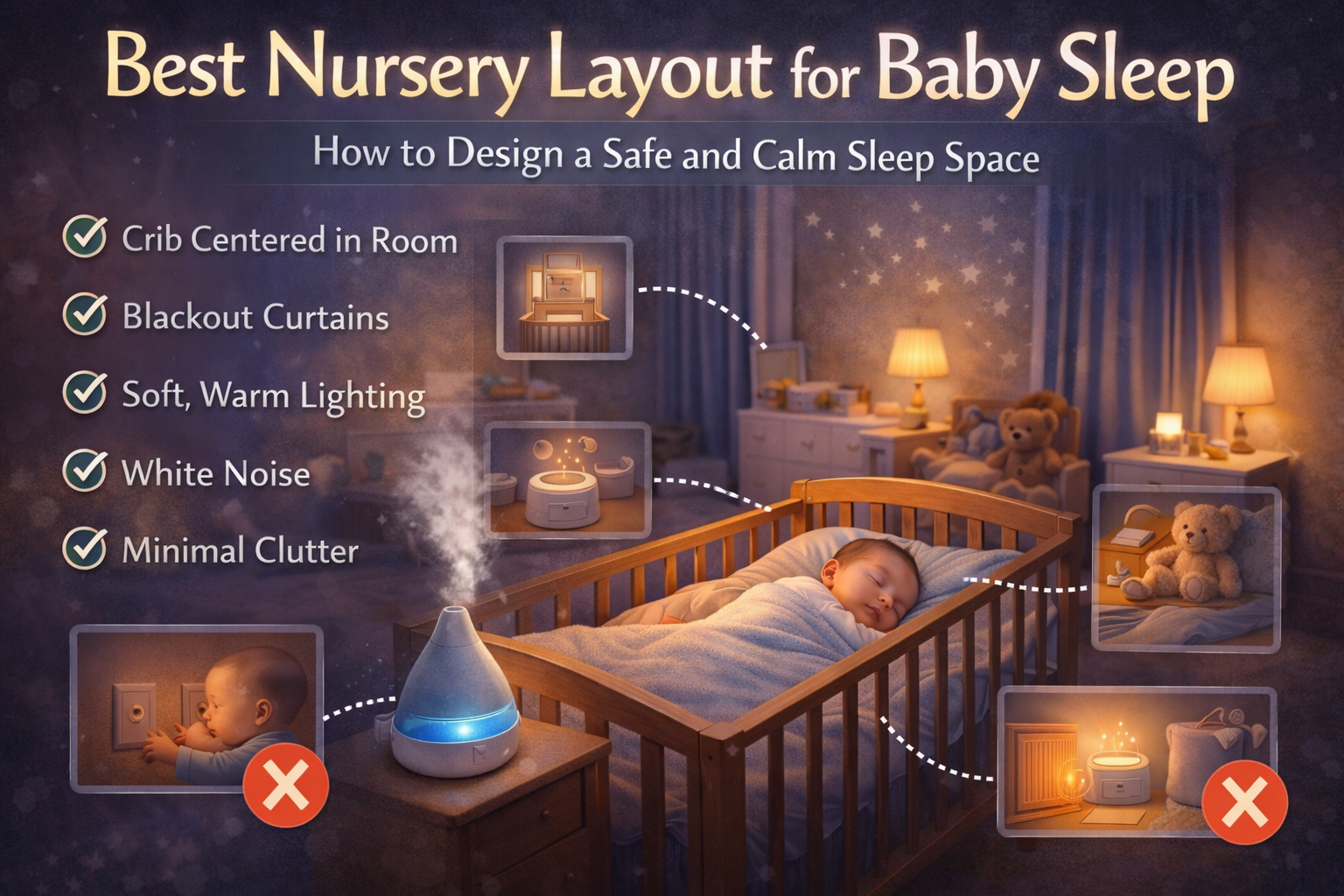
Best Nursery Layout for Baby Sleep: How to Design a Safe and Calm Sleep Space
Best nursery layout for baby sleep plays a critical role in how safely and comfortably babies rest during the night. Many parents carefully choose cribs, mattresses, and baby monitors, yet the arrangement of furniture and sleep elements inside the nursery can influence sleep quality just as much. A thoughtful layout supports safe crib placement, stable temperature, gentle lighting, and clear monitoring visibility.
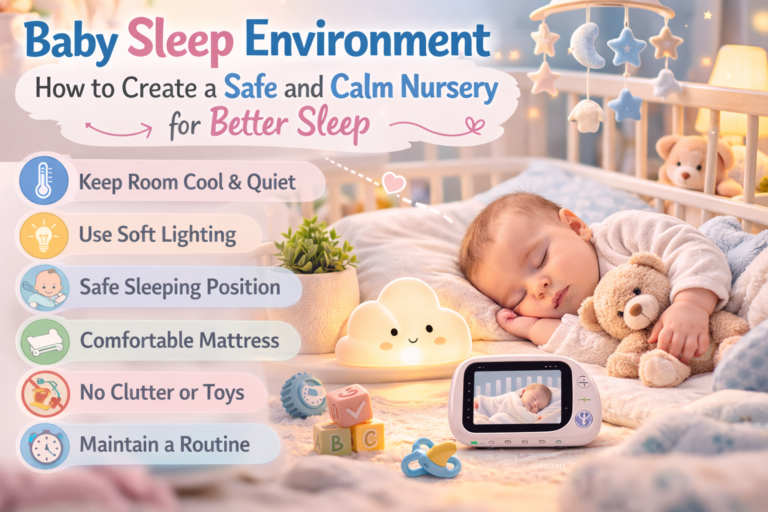
A balanced sleep environment includes more than a comfortable crib. Factors such as airflow, lighting direction, noise exposure, and visual stimulation all affect how easily babies fall asleep and stay asleep. As explained in our baby sleep environment explained guide, babies sleep best when environmental conditions remain calm, predictable, and consistent.
Designing the nursery layout with sleep in mind helps reduce unnecessary stimulation and creates a safe space where babies can rest peacefully.
Why Nursery Layout Influences Baby Sleep
Babies are sensitive to environmental signals. Light, sound, temperature, and movement around the crib can all influence sleep cycles. A poorly arranged nursery may expose babies to bright lights, cold drafts, or distracting visual patterns.
A well designed nursery layout helps achieve several goals:
- safe positioning of the crib
- stable airflow and temperature
- proper lighting for sleep cues
- reduced noise exposure
- clear visibility for baby monitoring
Parents who monitor sleep patterns using tools described in best baby monitor without wifi often observe that babies settle faster when the room layout minimizes stimulation near the crib.
The goal is to create a calm sleep zone where the baby’s brain can associate the crib area with rest.
Best Nursery Layout for Baby Sleep: Core Design Principles
Best nursery layout for baby sleep follows several practical principles that support safety and comfort.
The crib should be the center of the sleep zone, surrounded by open space rather than cluttered furniture. Positioning the crib along an interior wall often provides the most stable temperature and lighting conditions.
Furniture should be arranged to create clear pathways for nighttime care while keeping the crib area simple and quiet.
A typical safe layout includes:
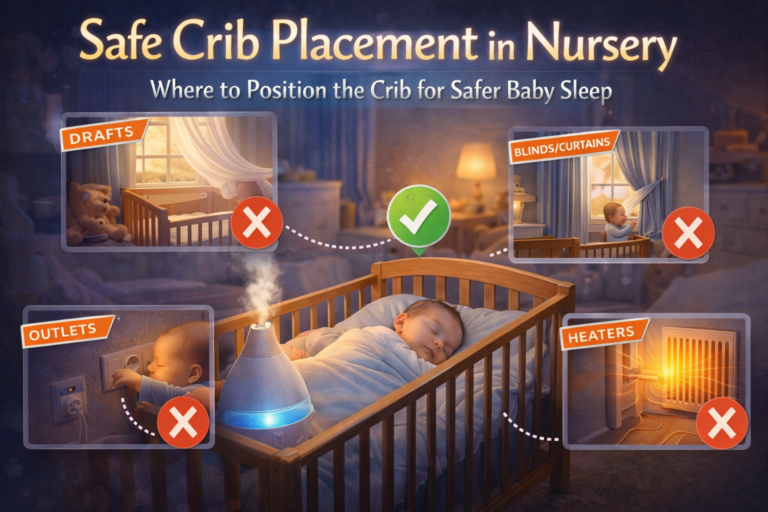
- crib placed away from windows
- dresser or changing table positioned along a side wall
- monitor camera placed opposite the crib
- soft lighting positioned away from direct crib exposure
This arrangement keeps the baby’s sleep space calm while still allowing parents easy access.
Choosing the Right Wall for the Crib
The wall behind the crib should ideally be simple and free from heavy decorations.
Interior walls often provide the most stable temperature because they are not exposed to outside weather conditions. This helps maintain consistent air conditions discussed in baby room humidity for sleep, which influence breathing comfort during sleep.
Avoid placing the crib directly beneath:
- wall shelves
- heavy picture frames
- hanging decor
- wall mounted lamps
Keeping the wall behind the crib clear reduces both visual stimulation and potential hazards.
How Lighting Should Influence Nursery Layout
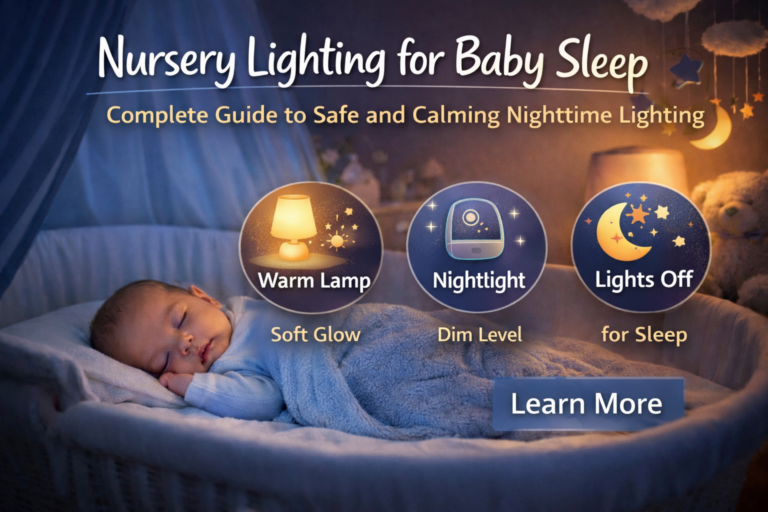
Lighting placement is an important part of nursery design. Bright lights close to the crib can interfere with sleep signals and cause babies to wake more easily.
As explained in nursery lighting for baby sleep, warm and indirect lighting supports melatonin production and encourages calmer sleep.
In a sleep friendly nursery layout:
- night lights should face walls rather than the crib
- lamps should sit outside the baby’s direct line of sight
- overhead lighting should remain dim during nighttime care
This setup allows parents to see clearly while keeping the sleep environment calm.
Positioning Baby Monitors Within the Nursery
Monitor placement works together with nursery layout. Cameras need a clear view of the crib without creating hazards near the sleep space.
Parents using long range monitoring systems such as those discussed in best baby monitor long range often place cameras high on a wall opposite the crib. This position provides a wide view while keeping the device out of reach.
Good monitor placement includes:
- mounting cameras above crib height
- keeping cables out of reach
- avoiding glare from nearby lighting
- maintaining full crib visibility
A well positioned monitor allows parents to observe sleep patterns without interfering with the sleep environment.
Creating a Calm Visual Environment
Visual stimulation near the crib can influence sleep behavior. Bright patterns, busy decorations, or moving objects may keep babies alert instead of relaxed.
Sleep friendly design often includes:
- neutral wall colors
- minimal artwork near the crib
- soft textures and simple décor
- gentle lighting
The crib area should feel visually calm compared to play areas in the nursery.
Parents often notice smoother bedtime transitions when the sleep area remains simple and predictable.
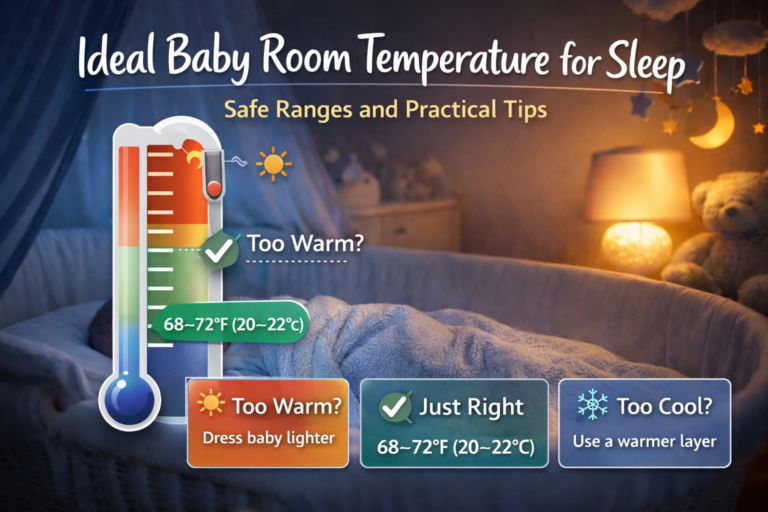
Airflow and Temperature Considerations
Airflow patterns inside the room also affect layout decisions.
Cribs should not be placed directly beside:
- air conditioning vents
- heating radiators
- strong fans
- open windows
Uneven airflow may cause temperature fluctuations that disturb sleep. Maintaining consistent air conditions helps support stable breathing and comfort throughout the night.
This environmental balance works together with sound stability described in does white noise help babies sleep, where consistent surroundings help babies remain asleep longer.
Creating Clear Parent Access Paths
The nursery layout should allow parents to move safely around the room during nighttime care.
Clear pathways make it easier to:
- reach the crib quickly
- perform diaper changes
- adjust blankets or sleepwear
- check the baby monitor
Avoid placing furniture directly between the door and the crib. A simple path helps parents move quietly without disturbing the baby.
Accessibility also becomes important during late night feeding or soothing.
Separating Sleep Zones From Activity Areas
Many nurseries combine sleeping, feeding, and play areas in one room. Separating these zones can improve sleep cues.
Helpful strategies include:
- placing the crib on the calmest side of the room
- positioning rocking chairs or feeding areas away from the crib
- keeping toys outside the immediate sleep zone
Over time, babies learn that the crib area represents sleep rather than activity.
This environmental association helps strengthen bedtime routines.
Common Nursery Layout Mistakes
Many nursery layouts look attractive but unintentionally create sleep disturbances.
Frequent mistakes include:
- placing the crib near windows
- positioning the crib directly under bright lights
- cluttering the area around the crib
- mounting monitors too close to the crib
- blocking easy parent access
Correcting these issues often improves sleep without changing routines or schedules.
A calm and open layout supports safer sleep conditions.
Long Term Benefits of a Thoughtful Nursery Layout
Designing the nursery around sleep offers long term advantages for both babies and parents.
Benefits include:
- improved sleep consistency
- fewer nighttime awakenings
- safer monitoring visibility
- easier bedtime routines
- calmer sleep environment
These benefits often become more noticeable as babies grow and begin developing stronger sleep habits.
Small layout adjustments can create meaningful improvements in sleep quality.
Final Thoughts
Best nursery layout for baby sleep focuses on creating a calm, safe, and predictable environment. By positioning the crib away from windows, lighting, and airflow sources, parents reduce disturbances that may interrupt sleep.
A well designed nursery combines safe crib placement, thoughtful lighting, balanced air conditions, and effective baby monitor positioning. Together these elements create a space where babies feel comfortable and secure during sleep.
When the nursery layout supports environmental stability, babies are more likely to fall asleep easily and remain asleep throughout the night.
Frequently Asked Questions
What is the safest place to put a crib in a nursery?
The safest place is along an interior wall, away from windows, cords, heaters, and heavy wall decorations.
Should the crib face the door?
The crib does not need to face the door, but it should be visible and easily accessible for parents.
Where should a baby monitor be placed?
The monitor should be mounted above crib height on an opposite wall so it can clearly view the crib without being within reach.
Does nursery layout affect baby sleep?
Yes. Lighting, airflow, noise exposure, and visual stimulation all influence how easily babies fall asleep.
Can nursery design improve sleep routines?
Yes. A calm and consistent sleep zone helps babies associate the crib with rest, which supports longer and more stable sleep patterns.