Baby Sleep Environment: How to Create a Safe and Calm Nursery for Better Sleep
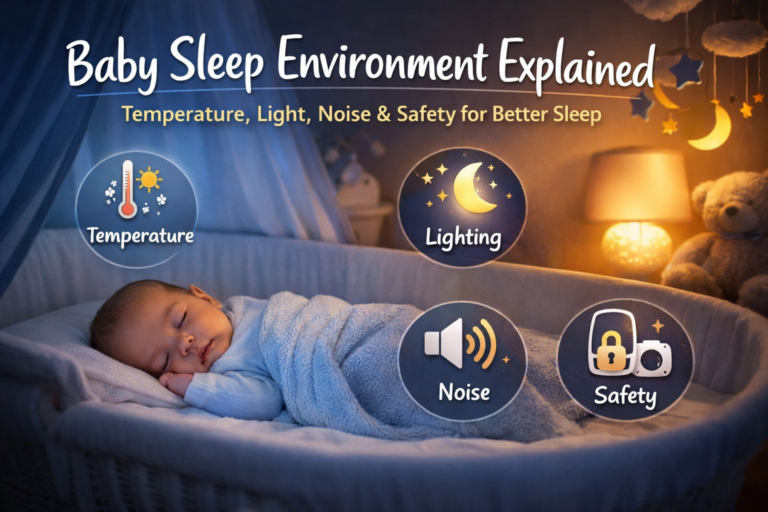
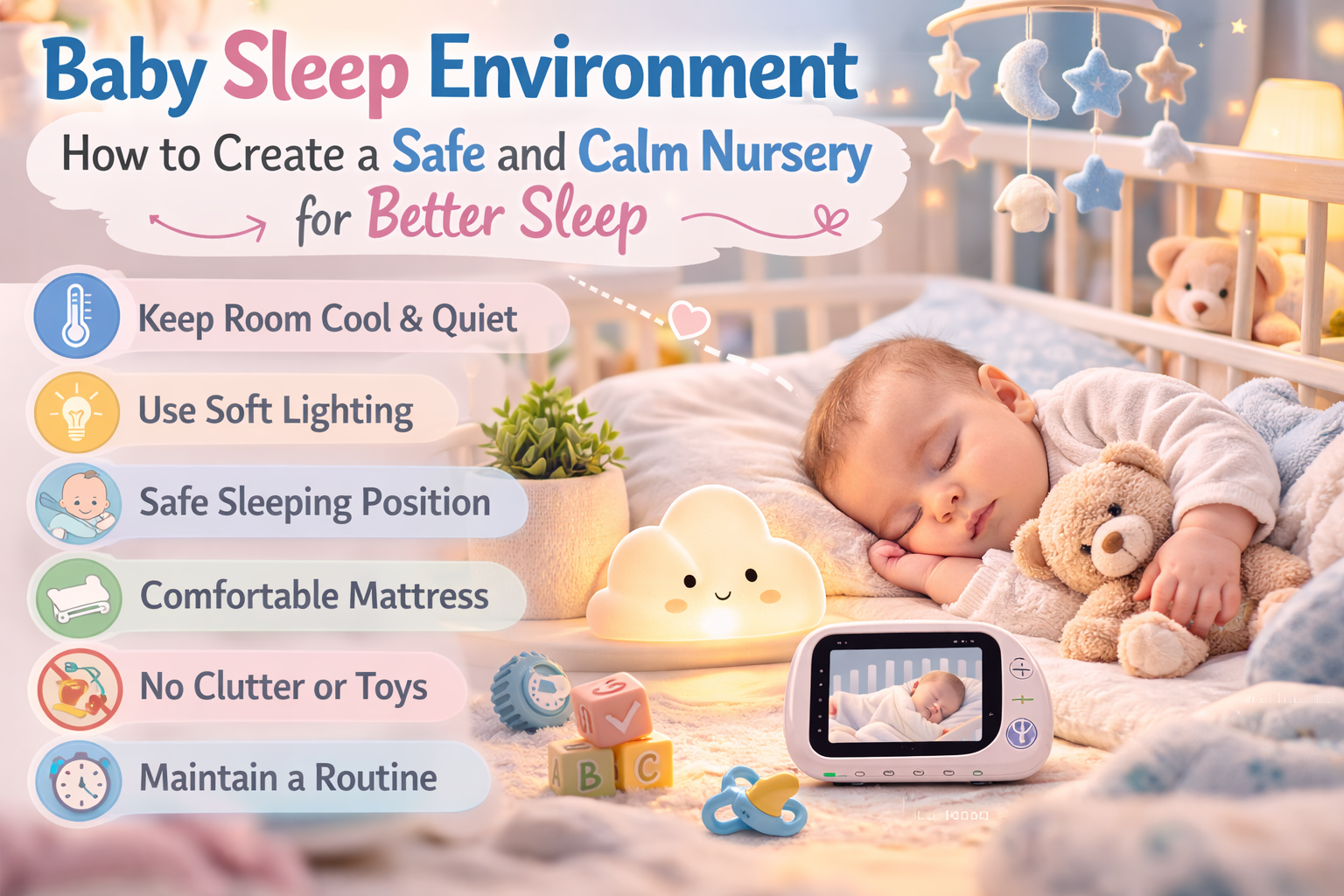
Baby sleep environment plays a major role in how well babies rest during naps and overnight sleep. The nursery surroundings influence comfort, breathing, temperature regulation, and how easily babies transition between sleep cycles. When the environment supports sleep, babies tend to fall asleep faster and remain asleep longer.
Many parents focus on feeding schedules and sleep routines, but the physical environment where the baby sleeps is just as important. Lighting, temperature, humidity, sound levels, and crib placement all contribute to how comfortable the baby feels during sleep.
At Safebabylab, we study how nursery setups influence sleep quality and how monitoring tools help parents observe sleep patterns without disturbing the baby. Small environmental adjustments can significantly improve how easily babies settle and how consistently they sleep.
This guide explains how to create a healthy baby sleep environment and which factors matter most when designing a calm and safe nursery.
Why the Baby Sleep Environment Matters
Babies are highly sensitive to their surroundings. Unlike adults, babies cannot easily adjust their environment if they feel too warm, too cold, or overstimulated.
A well designed nursery helps babies:
- fall asleep more easily
- stay asleep longer
- transition between sleep cycles
- remain calm during nighttime waking
An inconsistent environment can lead to frequent waking or difficulty settling.
Creating a stable sleep environment helps babies develop healthy sleep patterns during their early months.
Temperature and the Baby Sleep Environment
Temperature is one of the most important elements of a healthy nursery.
Babies sleep best when the room remains comfortably cool. Rooms that are too warm may cause discomfort and restless sleep.
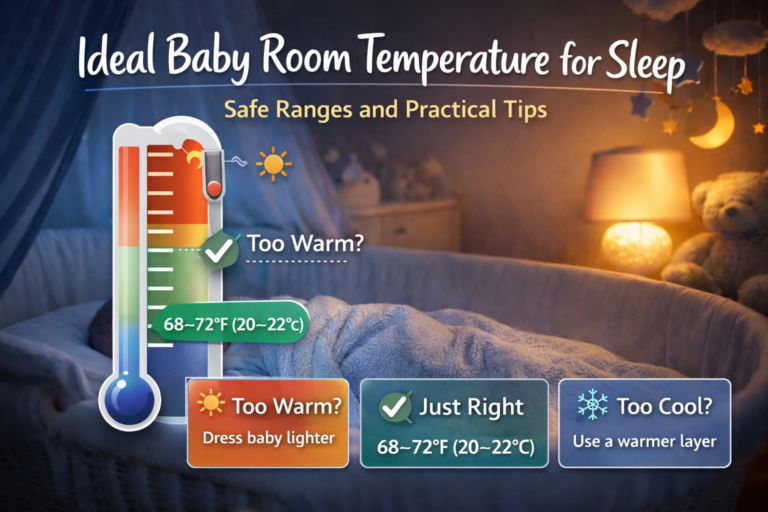
Many pediatric sleep experts recommend maintaining a nursery temperature between:
68°F and 72°F (20°C to 22°C)
This temperature range helps prevent overheating while keeping the baby comfortable.
Parents can monitor room conditions using nursery thermometers or baby monitors that include environmental sensors.
Maintaining stable temperature throughout the night helps prevent sudden wake ups.
Lighting and Nighttime Sleep
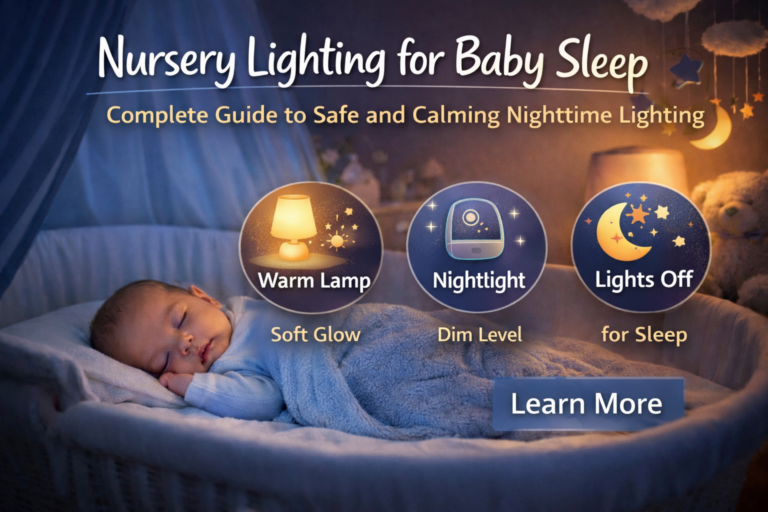
Lighting strongly influences sleep quality because it affects the body’s production of melatonin.
Melatonin is the hormone that signals the brain that it is time to sleep.
Bright lights can interrupt melatonin production and make it harder for babies to fall asleep.
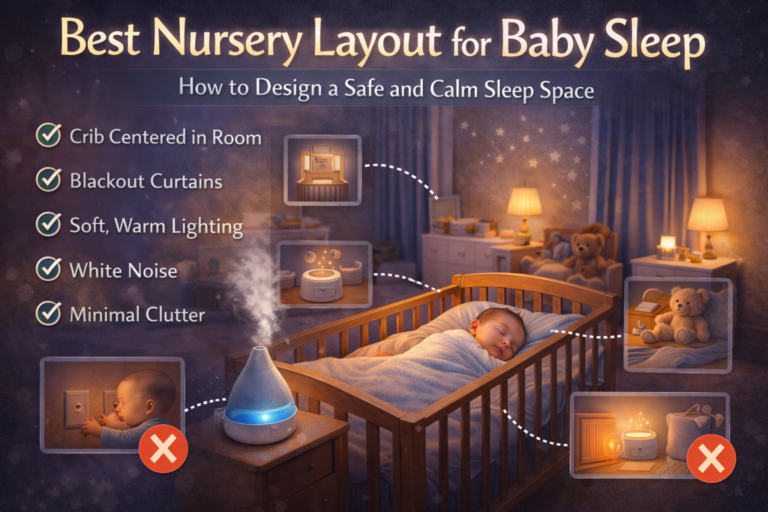
For this reason, nurseries should include:
- dim evening lighting
- blackout curtains for nighttime sleep
- minimal screen exposure
As discussed in nursery lighting for baby sleep, maintaining low light levels during bedtime routines helps babies develop stronger sleep associations.
Dark environments support deeper sleep cycles.
Noise Levels in the Nursery
Noise is another important part of the baby sleep environment.
Some babies sleep better in quiet rooms, while others benefit from consistent background noise.
White noise machines are commonly used because they create a steady sound that masks sudden noises such as:
- doors closing
- footsteps
- household appliances
Consistent sound environments may help babies remain asleep during light sleep phases.
Many parents combine white noise with monitoring tools so they can observe sleep without entering the nursery.
Crib Placement and Room Layout
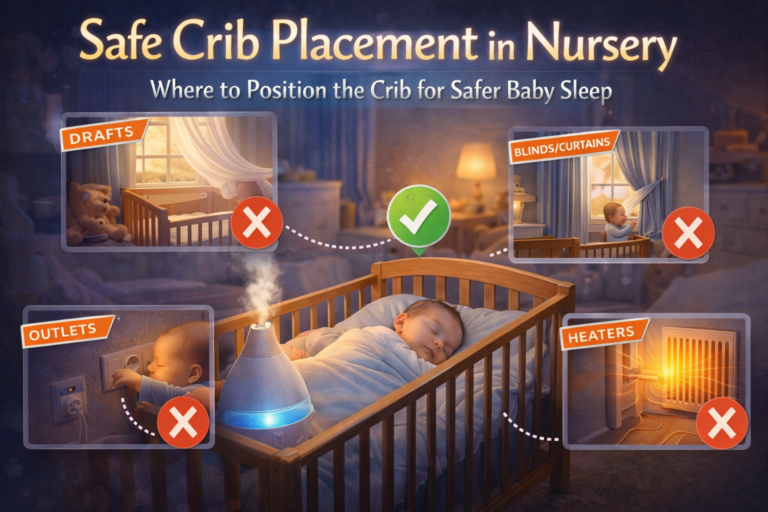
The position of the crib inside the nursery can also influence sleep quality.
Parents should avoid placing the crib near:
- windows with bright streetlights
- heating vents
- loud appliances
- direct airflow from fans
A stable location away from these distractions creates a calmer sleeping environment.
Parents also benefit from positioning the crib where it can be easily monitored using a camera.
Following the recommendations explained in baby monitor placement guide often improves visibility while maintaining safe distance between monitoring equipment and the baby.
Air Quality and Humidity
Air quality is another factor that influences comfort during sleep.
Dry air can irritate the baby’s nose and throat, while overly humid environments may feel uncomfortable.
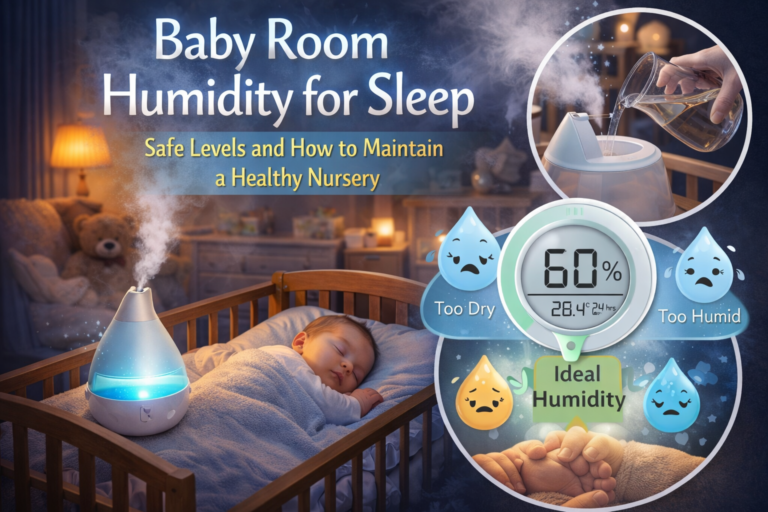
Most nurseries benefit from humidity levels between:
40% and 60%
Balanced humidity helps support comfortable breathing during sleep.
Humidity levels are discussed in more detail in baby room humidity for sleep, which explains how moisture levels influence sleep comfort.
Maintaining balanced air conditions can improve overall sleep quality.
Creating a Calm Bedtime Atmosphere
The sleep environment should gradually become calmer during bedtime routines.
Parents can support this process by:
- dimming lights in the evening
- reducing loud activity near the nursery
- using consistent bedtime routines
- keeping stimulation low before sleep
Babies often associate environmental cues with sleep readiness.
A calm and predictable nursery atmosphere helps babies transition into sleep more easily.
Monitoring the Baby Without Disturbing Sleep
Parents often want to check on their baby during sleep without entering the room.
Baby monitors allow parents to observe sleep patterns without turning on lights or opening doors.
Monitoring tools help parents:
- observe breathing motion
- detect early waking signals
- check sleep position
- monitor environmental conditions
At Safebabylab, we often recommend monitoring solutions that allow parents to observe the nursery quietly.
Parents who prefer private monitoring often explore options explained in complete guide to baby monitors without wifi, where signals transmit directly between devices.
This approach allows monitoring without internet connectivity.
Avoiding Overstimulation in the Nursery
While decorative nurseries may look appealing, too many bright colors or moving objects can overstimulate babies.
Calm sleep environments usually include:
- soft neutral colors
- minimal visual clutter
- simple crib surroundings
Reducing visual stimulation helps babies relax more easily during bedtime.
The goal of the nursery environment should always be calmness and comfort rather than decoration alone.
Consistency Helps Babies Sleep Better
Consistency in the sleep environment helps babies develop predictable sleep patterns.
When the nursery environment remains similar each night, babies learn to associate those conditions with sleep.
Consistent environmental signals include:
- dim lighting
- stable temperature
- familiar background sound
- comfortable bedding
Maintaining these conditions helps babies recognize that it is time to sleep.
Over time, consistent sleep environments support longer and more stable sleep cycles.
Final Thoughts
A well designed baby sleep environment plays a major role in helping babies fall asleep comfortably and remain asleep throughout the night. Temperature, lighting, sound levels, and nursery layout all contribute to sleep quality.
By maintaining a calm and predictable nursery environment, parents can help their baby develop healthy sleep habits from an early age. Monitoring tools, thoughtful crib placement, and balanced air conditions all support a comfortable sleep space.
At Safebabylab, we encourage parents to focus on creating nurseries that support calmness, safety, and consistent sleep cues. Small environmental adjustments often make a noticeable difference in how easily babies settle and how peacefully they sleep.
Frequently Asked Questions
What is the ideal baby sleep environment?
A calm nursery with dim lighting, stable temperature, low noise disruption, and a safe crib setup.
What temperature should a nursery be?
Most experts recommend keeping the room between 68°F and 72°F.
Do babies sleep better in dark rooms?
Yes. Dark rooms support melatonin production and help babies fall asleep faster.
Should a nursery be completely silent?
Not necessarily. Many babies sleep well with consistent background noise such as white noise.
Can a baby monitor affect sleep?
No. When placed correctly, monitors allow parents to observe the baby without disturbing sleep.