Baby Room Humidity for Sleep: Safe Levels and How to Maintain a Healthy Nursery
Baby room humidity for sleep is an important but often overlooked factor in creating a comfortable and healthy nursery environment. Many parents carefully manage temperature and lighting, yet the moisture level in the air also affects how well babies breathe and sleep through the night. Air that is too dry can irritate the nose and throat, while excessive humidity can create an uncomfortable sleeping space.
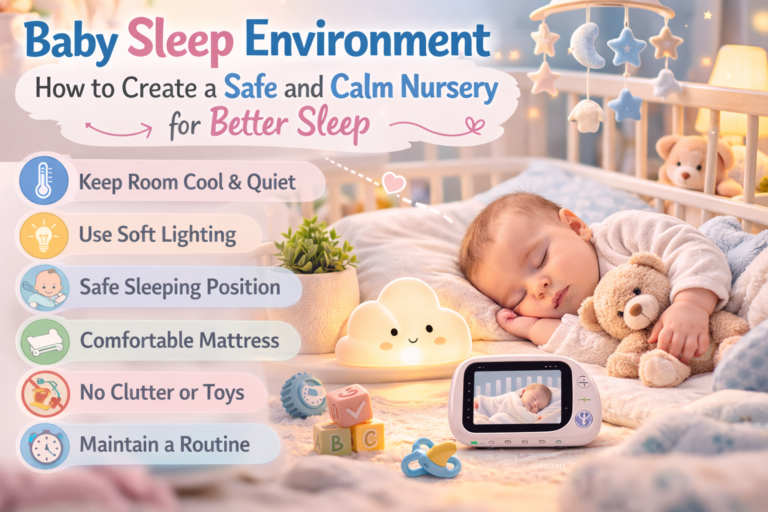
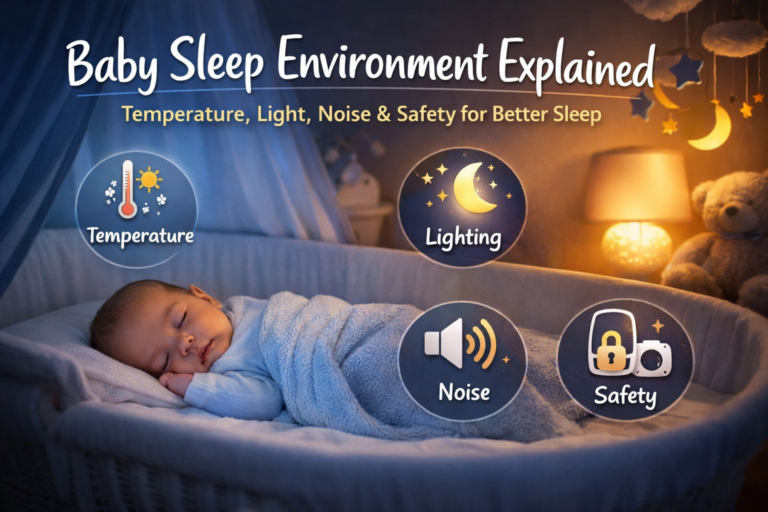
A balanced sleep environment includes temperature, lighting, sound stability, and air conditions. As explained in our baby sleep environment explained guide, babies sleep best when environmental factors remain stable and predictable. Humidity plays a quiet but important role in that stability.
Understanding how humidity affects breathing, comfort, and nighttime rest helps parents create a nursery environment that supports healthy sleep patterns.
Why Humidity Affects Baby Sleep
Humidity describes the amount of moisture present in the air. When humidity levels fall outside a comfortable range, babies may experience breathing irritation or dryness that interrupts sleep.
Babies are more sensitive to environmental changes than adults. Their airways are smaller and their skin is more delicate, which means dry or overly moist air can quickly cause discomfort.
Balanced humidity supports:
- comfortable breathing
- reduced throat dryness
- healthier skin
- fewer nighttime disturbances
When humidity levels remain stable, babies tend to sleep more calmly and wake less frequently during the night.
Baby Room Humidity for Sleep: Recommended Safe Range
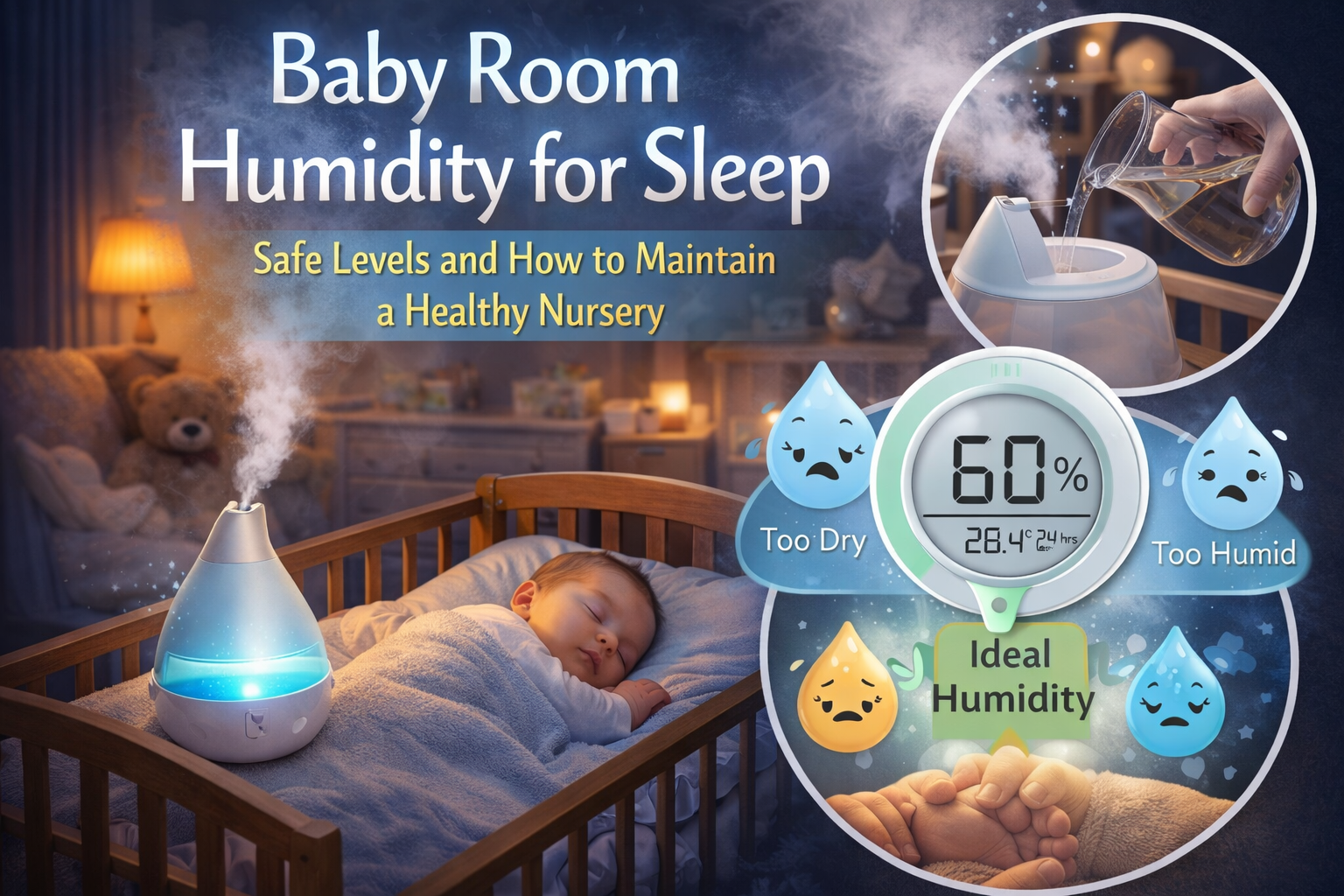
Baby room humidity for sleep should ideally remain between 40 percent and 60 percent relative humidity. This range supports comfortable breathing conditions while preventing excess moisture buildup.
Air that is too dry may cause:
- nasal dryness
- throat irritation
- coughing during sleep
- restless movement
Air that is too humid may encourage:
- mold growth
- dust mites
- stuffy breathing
- uncomfortable warmth
Maintaining humidity within the recommended range helps create a balanced nursery environment where babies can breathe easily and rest more comfortably.
Parents monitoring sleep patterns using tools discussed in best baby monitor without wifi often notice that environmental consistency improves nighttime behavior.
Signs the Nursery Air Is Too Dry
Dry air is especially common during colder months when heating systems remove moisture from indoor air.
Signs of low humidity include:
- dry lips or skin
- mild congestion
- coughing during sleep
- static electricity in the room
Babies may also wake more frequently because dry air irritates the throat or nasal passages.
Parents sometimes notice these patterns when reviewing nighttime activity in monitors, especially when evaluating sleep behavior described in does white noise help babies sleep, where stable environmental conditions support deeper sleep cycles.
Signs the Nursery May Be Too Humid
High humidity can also disrupt sleep and create unhealthy air conditions.
Signs of excessive humidity include:
- condensation on windows
- musty smell in the room
- visible moisture buildup
- damp bedding or fabrics
Too much moisture can make rooms feel warmer than the thermostat indicates, which may lead to restless sleep.
Keeping humidity within the recommended range prevents these problems.
How to Measure Humidity in a Nursery
Many parents do not realize that indoor humidity varies from room to room.
The most reliable method is using a small digital hygrometer placed near the crib area. This device measures relative humidity and provides an accurate reading of room conditions.
Helpful tips include:
- placing the device away from vents
- keeping it at crib height
- checking readings at different times of day
Monitoring humidity helps parents adjust room conditions before sleep problems develop.
Using Humidifiers Safely in a Baby Room
Humidifiers are commonly used when indoor air becomes too dry.
Safe humidifier use includes:
- choosing cool mist models
- cleaning the unit regularly
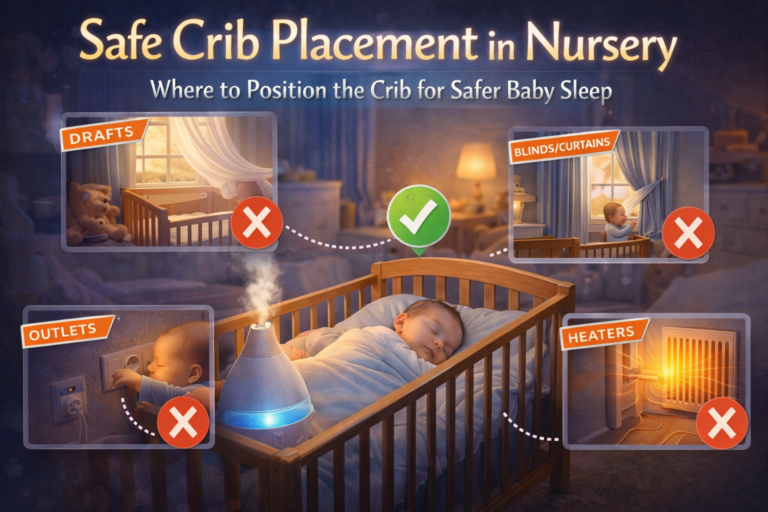
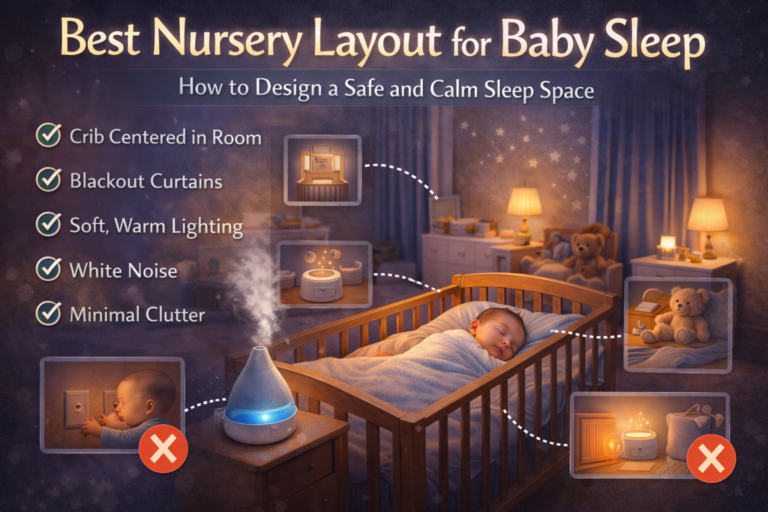
- avoiding placement directly next to the crib
- monitoring humidity levels to prevent excess moisture
Humidifiers should maintain balanced humidity rather than creating a damp environment.
Consistency remains more important than high humidity.
Seasonal Changes That Affect Nursery Humidity
Humidity levels often change with the seasons.
Winter
Heating systems frequently dry the air, lowering humidity levels inside homes. Humidifiers may help restore comfortable moisture levels.
Summer
Humid climates or rainy seasons can increase indoor humidity. Proper ventilation or air conditioning may help stabilize the environment.
Understanding seasonal patterns allows parents to make small adjustments before sleep conditions are affected.
How Humidity Works With Other Sleep Environment Factors
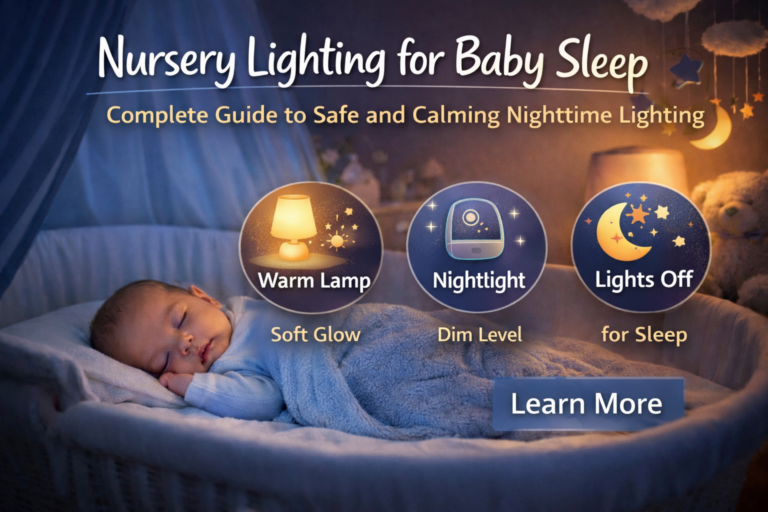
Humidity does not act alone. It interacts with temperature, lighting, and sound conditions to shape a baby’s sleep environment.
For example:
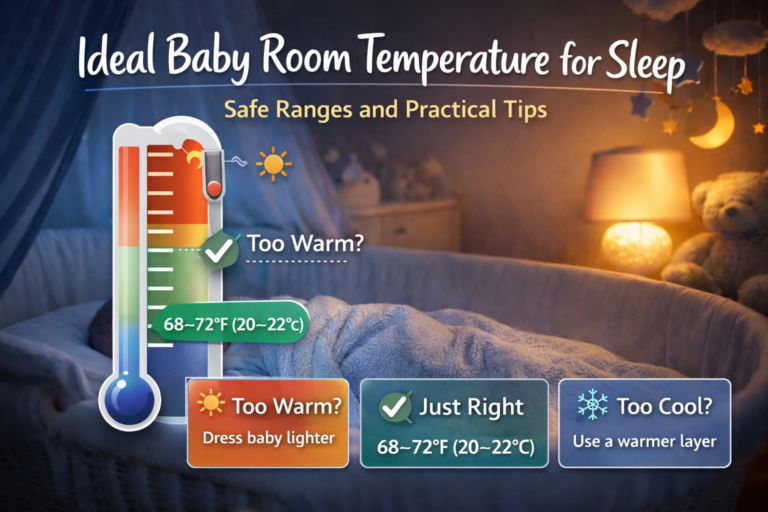
- warm temperatures combined with high humidity may cause overheating
- dry air combined with cold temperatures may irritate breathing
- balanced humidity helps maintain overall comfort
Parents adjusting nursery setup after learning baby monitor placement mistakes most parents make often realize that air conditions influence sleep just as much as monitor positioning.
Environmental balance creates the calm and predictable conditions babies need for restful sleep.
Practical Tips for Maintaining Healthy Nursery Air
Parents can maintain proper humidity levels using simple daily habits.
Helpful steps include:
- checking humidity during bedtime preparation
- ventilating the room occasionally
- using humidifiers only when needed
- keeping bedding clean and dry
- maintaining consistent temperature
Small adjustments prevent larger sleep disruptions.
Long Term Benefits of Balanced Nursery Humidity
Maintaining healthy humidity supports both sleep quality and overall comfort.
Benefits may include:
- easier breathing during sleep
- reduced nighttime irritation
- more stable sleep cycles
- healthier skin and nasal passages
Over time, babies adapt to stable environmental conditions and develop stronger sleep routines.
Final Thoughts
Baby room humidity for sleep is a key part of a balanced nursery environment. While temperature and lighting often receive more attention, proper humidity helps babies breathe comfortably and sleep more peacefully.
Maintaining humidity between 40 percent and 60 percent, monitoring room conditions, and making small seasonal adjustments can significantly improve nighttime comfort.
When humidity works together with temperature, lighting, and sound stability, parents create a nursery environment that supports healthy and consistent sleep for their baby.
FAQ
What humidity level is best for baby sleep?
The recommended range is between 40 percent and 60 percent relative humidity.
Can dry air wake a baby during sleep?
Yes. Dry air can irritate the throat or nasal passages, which may cause discomfort and frequent waking.
Is a humidifier safe in a baby’s room?
Yes, when used properly. Cool mist humidifiers are generally recommended.
Can humidity affect breathing during sleep?
Yes. Balanced humidity helps maintain comfortable breathing conditions for babies.
Should humidity be monitored every night?
Checking humidity occasionally is helpful, especially during seasonal changes when indoor air conditions shift.