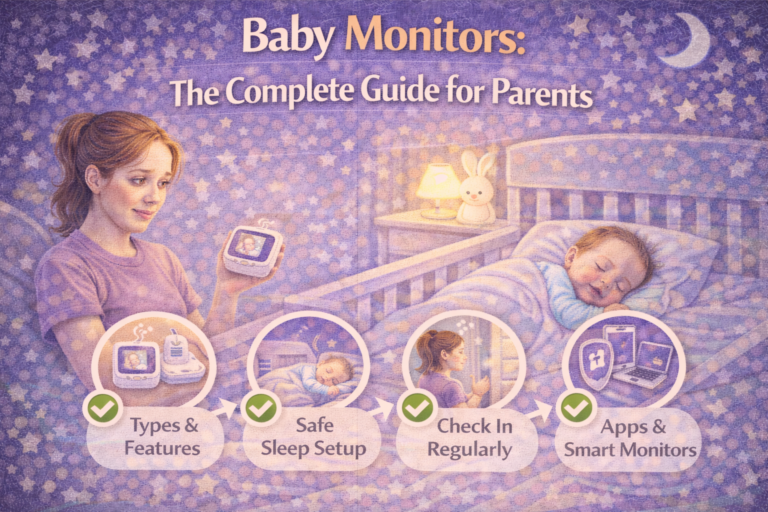
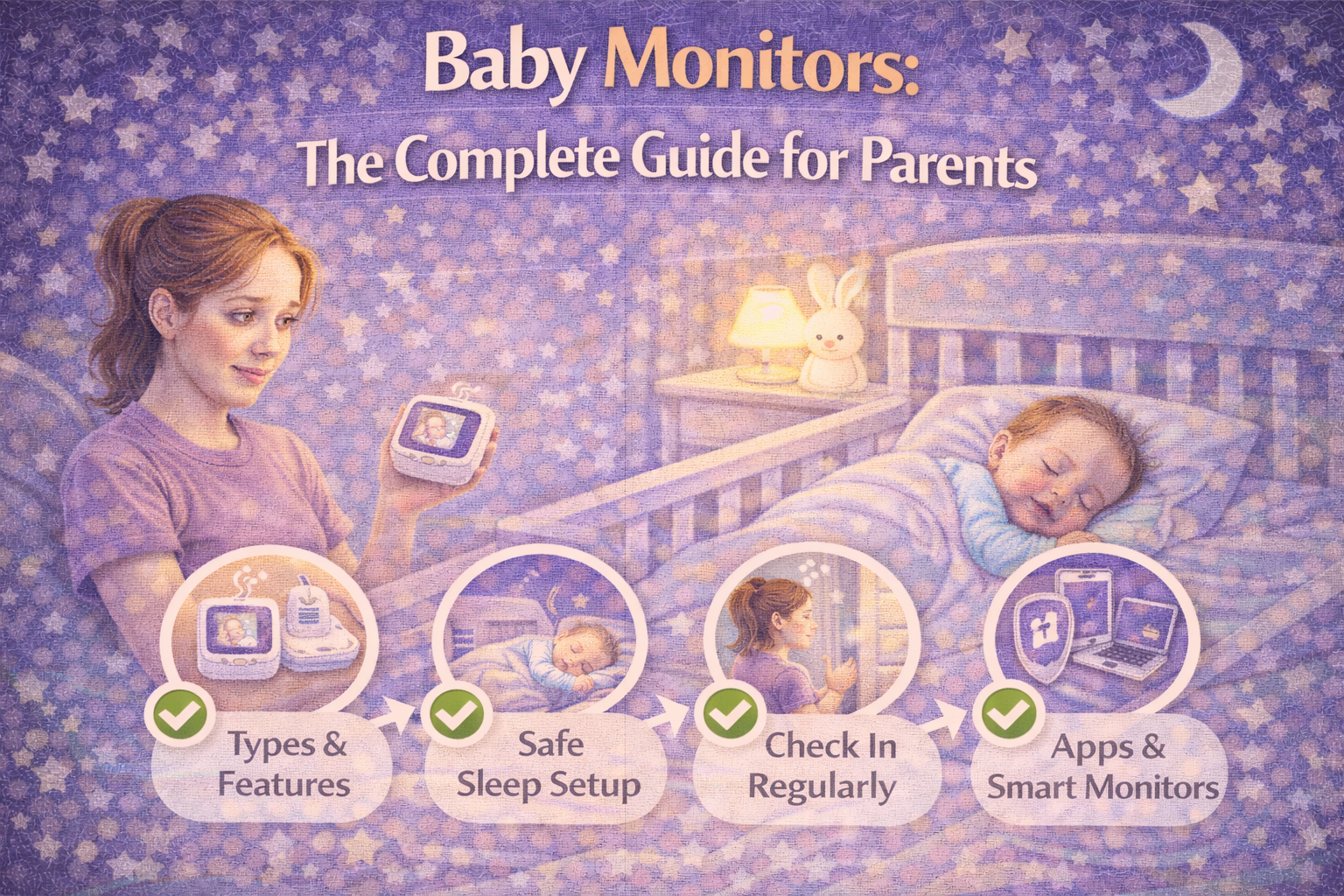
Baby Monitors: The Complete Guide for Parents
Baby monitors have become one of the most common tools new parents use, but they’re also one of the most misunderstood. Many people buy a baby monitor quickly, without fully knowing how it works, what features actually matter, or whether the monitor they choose fits their home and lifestyle. This guide is designed to change that. If you want to understand baby monitors properly, without marketing hype or technical overload you’re in the right place.
At their core, baby monitors exist to solve one simple problem: allowing parents to check on their baby without physically being in the room. That sounds straightforward, but once you start looking at baby monitors, you quickly realize there are many types, technologies, and trade-offs involved. Choosing the right baby monitor is less about buying the “best” model and more about choosing the one that fits how you live.
What Baby Monitors Actually Do (And What They Don’t)
Baby monitors are designed to provide awareness, not control. They let you hear or see your baby, notice changes, and decide when to intervene. They do not prevent crying, guarantee sleep, or replace safe sleep practices.
Understanding this is important, because many frustrations with baby monitors come from expecting them to do more than they realistically can.
Main Types of Baby Monitors
When people talk about baby monitors, they’re usually referring to one of these main categories.
Audio baby monitors transmit sound only. They are simple, reliable, and often preferred by parents who don’t want screens or cameras. Many families find audio baby monitors less distracting and more than sufficient for everyday use.
Video baby monitors include a camera and screen, allowing parents to see their baby as well as hear them. These are helpful if you want visual confirmation without entering the room, especially as babies get older and more active.
WiFi baby monitors connect to the internet and stream video or audio through an app. While they offer flexibility, they also depend on network stability and raise privacy considerations that many parents care about.
Non-WiFi baby monitors use direct radio connections between the camera and parent unit. These are often preferred for their simplicity, reliability, and privacy. If this is something you’re considering, we’ve covered it in detail here:
👉 Best Baby Monitor Without WiFi
How Baby Monitors Fit Into Daily Life
Baby monitors are most useful at night, during naps, and anytime you want to step away briefly. Instead of constantly checking the baby’s room, you can glance at a screen or listen for sound. This reduces unnecessary interruptions and helps both parents and babies get more rest.
Many parents also find that baby monitors reduce anxiety. Being able to confirm that everything is fine without guessing makes it easier to relax, especially in the early months.
Safety and Privacy Considerations
One of the most important aspects of baby monitors is safety. This includes both physical safety and data privacy.
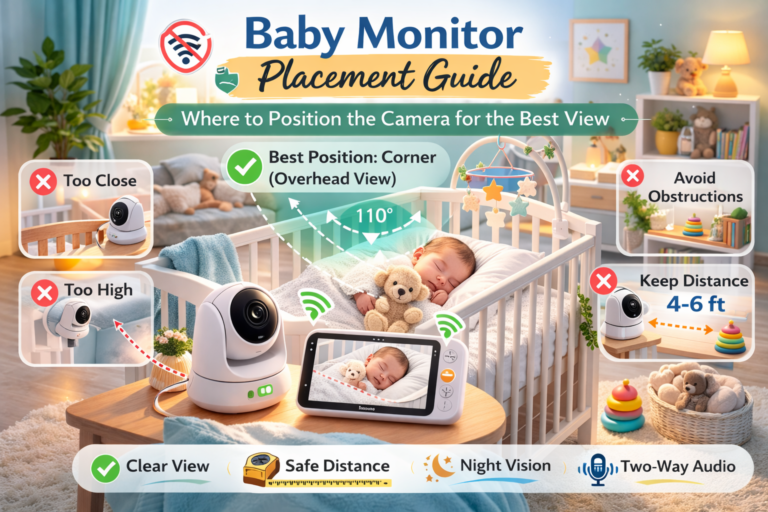
From a physical perspective:
- The monitor should be placed:
- Out of reach
- With cords secured
- Cameras should:
- Never be placed inside the crib
From a privacy perspective:
- WiFi baby monitors require:
- Strong passwords
- Updated firmware
- Non-WiFi baby monitors:
- Avoid internet exposure entirely
This is one reason many parents actively choose simpler baby monitor setups.
Common Questions Parents Have About Baby Monitors
Parents often worry about:
- Signal range
- Walls and interference
- False alarms
- Hacking
- Whether they really need video
These are all valid concerns, and we address them in dedicated guides across the site. The important thing to know is that no baby monitor is perfect, but many are good enough when chosen with realistic expectations.
Do You Really Need a Baby Monitor?
Not every family uses a baby monitor, and that’s okay. But many parents find that baby monitors become especially helpful once the baby starts sleeping in a separate room, or when parents want to move around the house without worrying.
The value of baby monitors is not constant watching, it’s peace of mind.
How to Choose the Right Baby Monitor for Your Home
When choosing between baby monitors, ask yourself:
- Do I want audio only or video?
- Do I want WiFi or a closed system?
- How large is my home?
- How sensitive am I to noise and alerts?
- Do I prefer simplicity or advanced features?
Answering these questions matters more than chasing specs.
How Baby Monitors Evolve as Your Baby Grows
What you want from baby monitors often changes over time. In the early months, you may rely heavily on sound and quick checks. Later, visual confirmation becomes more useful. Some families stop using baby monitors after a year, others keep them longer.
There is no “correct” timeline.
Final Thoughts
Baby monitors are tools, not solutions. Used well, they make parenting easier and calmer. Used with unrealistic expectations, they can cause frustration.
The key is understanding what baby monitors do, choosing a type that fits your needs, and keeping things simple.
What are baby monitors used for?
Baby monitors allow parents to hear or see their baby without being in the same room.
Are baby monitors safe?
Yes, when used correctly and placed safely. Privacy depends on the type of monitor.
Do I need a WiFi baby monitor?
Not necessarily. Many parents prefer non-WiFi baby monitors for reliability and privacy.
When should I start using a baby monitor?
Many parents start when their baby sleeps in a separate room, but it varies by family.