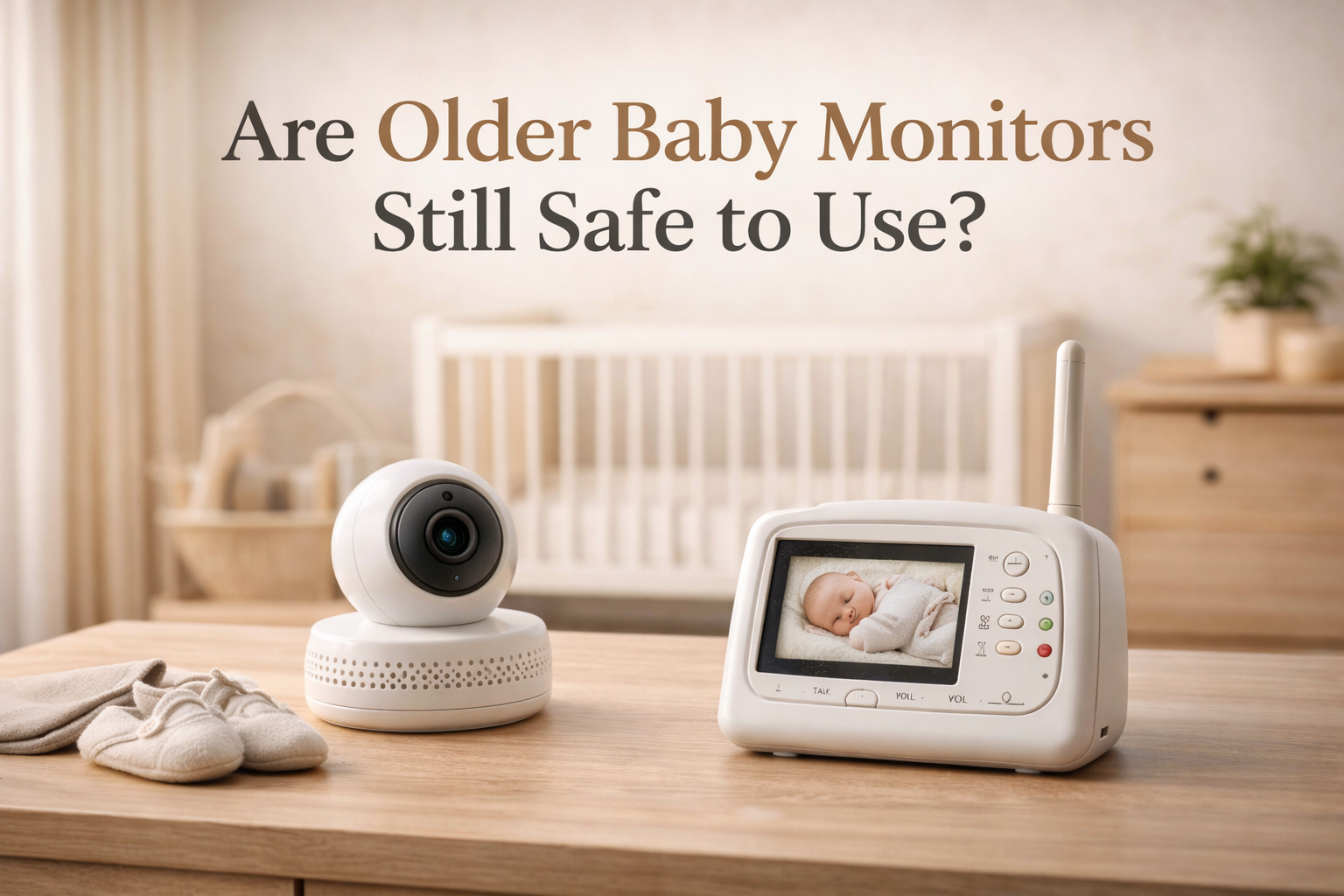
Are Older Baby Monitors Safe to Use?
Are older baby monitors safe? It’s a question many parents quietly ask usually after finding one in a closet, being offered one by a relative, or realizing the model they’ve used for years is now considered “outdated.”
The monitor still turns on. The picture still shows the crib. The audio still works.
So… what’s the problem?
The short answer is this: many older baby monitors are still functionally safe. But “old” can mean different things. A monitor that’s five years old is very different from one that’s fifteen. And the real concerns aren’t usually what parents expect.
It’s rarely about radiation. It’s often about signal reliability, encryption (for WiFi models), battery degradation, and cord safety.
Before you replace a working monitor out of fear or keep using one out of convenience here’s what actually matters.
When Older Baby Monitors Are Still Perfectly Fine
If your monitor is:
- Non-WiFi (direct FHSS transmission)
- Physically intact
- Not overheating
- Free of exposed wires
- Working without signal drop
It’s probably still safe from a regulatory standpoint.
Federal standards around RF emissions haven’t radically changed in the last decade. If the device met FCC requirements when sold, it was operating within accepted safety limits.
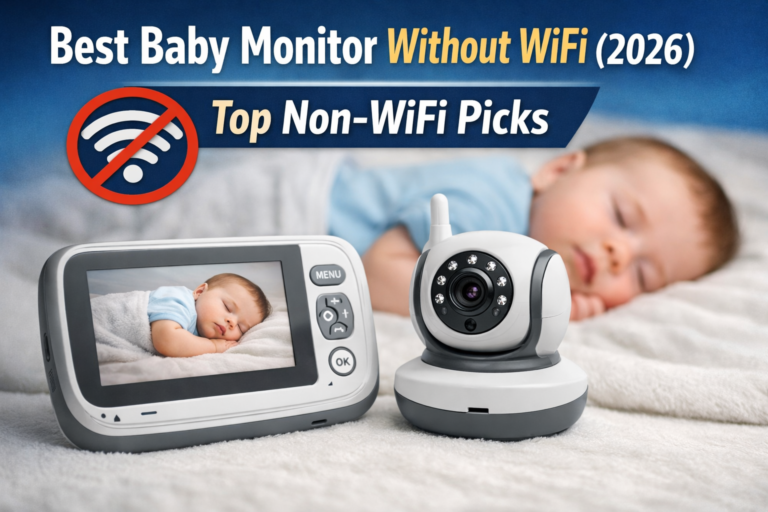
In fact, many parents intentionally choose non-WiFi models today for privacy reasons. If you’re considering switching to a more modern closed-system monitor, our guide to the best baby monitor without WiFi explains why many families prefer the simplicity and security of that setup.
Older non-WiFi monitors, especially from reputable brands, often age better than early-generation WiFi models.
When an Older Monitor May Be Outdated
“Outdated” doesn’t automatically mean unsafe but it can mean less secure or less reliable.
Here’s where problems can emerge:
1. Early WiFi Models with Weak Encryption
Some early-generation WiFi baby monitors lacked strong encryption protocols or firmware update systems. That doesn’t mean they’re automatically compromised, but it does increase vulnerability compared to newer systems.
If your monitor requires an app that hasn’t been updated in years, that’s a red flag.
2. Battery Degradation in Parent Units
Rechargeable batteries lose capacity over time. An older parent unit that once lasted 10 hours might now last three. That’s not a safety hazard but it can become a nighttime frustration if the monitor dies unexpectedly.
3. Signal Drop in Larger Homes
Older monitors often had shorter real-world range. If you’ve moved into a larger house since buying the monitor, signal stability may no longer meet your needs.
If range has become an issue, upgrading to one of the models reviewed in our best long range baby monitor guide can significantly improve signal reliability in multi-floor homes.
4. Cord Wear and Mounting Issues
Plastic degrades. Cords can fray. Mounting brackets loosen.
Physical inspection matters more than model age alone.
What Has Actually Improved in Newer Monitors?
Newer baby monitors tend to offer:
- Stronger encryption (for WiFi models)
- Faster audio response
- Better night vision clarity
- Improved battery efficiency
- More stable long-range transmission
- Split-screen support for multiple children
But improvements don’t automatically make older models unsafe. They just make newer models more convenient.
Safety and convenience are not the same thing.
Radiation Fears and “Old Technology”
One common misconception is that older monitors emit “more radiation.”
That’s not how RF regulation works.
Devices sold legally in the U.S. had to comply with FCC exposure limits at the time of sale. Those limits are designed with safety margins built in.
Older technology may be less efficient, but it wasn’t operating outside regulatory standards simply because it was older.
Distance from the crib still matters far more than device age.
When You Should Definitely Replace an Older Monitor
There are clear situations where replacement is the safer option:
- The monitor overheats during normal use
- The power cord shows damage
- The device randomly shuts off
- The app is no longer supported
- Firmware updates are impossible
- The camera angle requires unsafe mounting
If you notice instability, especially overnight, that alone can justify upgrading.
One parent told us their older monitor would randomly lose audio for several seconds. It technically “worked.” But that small delay created constant anxiety. Sometimes replacement is about peace of mind as much as function.
The Hidden Risk: False Sense of Security
An unreliable monitor can be more stressful than helpful.
If you:
- Don’t trust the signal
- Constantly double-check the room
- Experience frequent disconnections
- Notice delayed audio
You’re not benefiting from the monitor anymore.
In that case, upgrading isn’t about fear it’s about restoring confidence.
Are Older Audio-Only Monitors Safer?
Interestingly, many older audio-only monitors remain extremely reliable.
Because they transmit less data than video systems, they often maintain strong signal even after years of use. If you prefer simplicity and only need sound monitoring, there’s often no urgency to replace a functioning audio-only model.
Just inspect cords and ensure the unit doesn’t overheat.
FAQ: Are Older Baby Monitors Safe?
Is it dangerous to use a baby monitor that’s 10 years old?
Not automatically. If it’s functioning properly, physically intact, and compliant when sold, it can still operate safely. However, WiFi security may be outdated.
Do older baby monitors emit more radiation?
No. They were required to meet FCC exposure standards when sold.
Should I replace an older WiFi baby monitor?
If it no longer receives firmware updates or uses outdated encryption, replacement may improve security.
Are older non-WiFi monitors safer?
From a privacy standpoint, yes they avoid internet connectivity entirely.
How do I know if my monitor is overheating?
If the camera feels unusually hot or emits a smell, unplug it immediately.
Is signal drop a safety issue?
Signal drop itself isn’t dangerous, but it can reduce monitoring reliability and increase parental stress.
Can I use a hand-me-down baby monitor?
Yes, after inspecting cords, verifying proper function, and ensuring the unit is not recalled.
Final Thoughts
Older baby monitors are not automatically unsafe.
But age changes things.
Materials degrade. Batteries weaken. Software becomes outdated.
If your older monitor still works reliably, doesn’t overheat, and meets your home’s range needs, there’s no reason to panic-replace it.
If signal reliability has changed especially in a larger home it may be worth upgrading to a more stable system designed for better coverage.
Peace of mind matters.
Always follow safe sleep guidelines, keep cords fully out of reach, and position monitors securely away from the crib.