Baby Safety Tips 2026: A Mid-Year Review of What Parents Are Getting Right and Wrong
Parenting advice never stands still.
Baby safety tips 2026 look different from just a few years ago. New technology has entered nurseries, smart baby monitors have become mainstream, sleep recommendations continue to evolve, and parents have access to more information than ever before. Yet despite all these advances, many of the same preventable mistakes continue to appear in homes around the world.
At SafeBabyLab, we spend every day researching products, reviewing safety recommendations, analyzing trends, and answering the questions parents ask most often. Halfway through the year is the perfect time to step back and look at the bigger picture.
What are parents doing better than ever?
Which outdated habits refuse to disappear?
And where do modern baby products genuinely improve safety versus simply adding more technology?
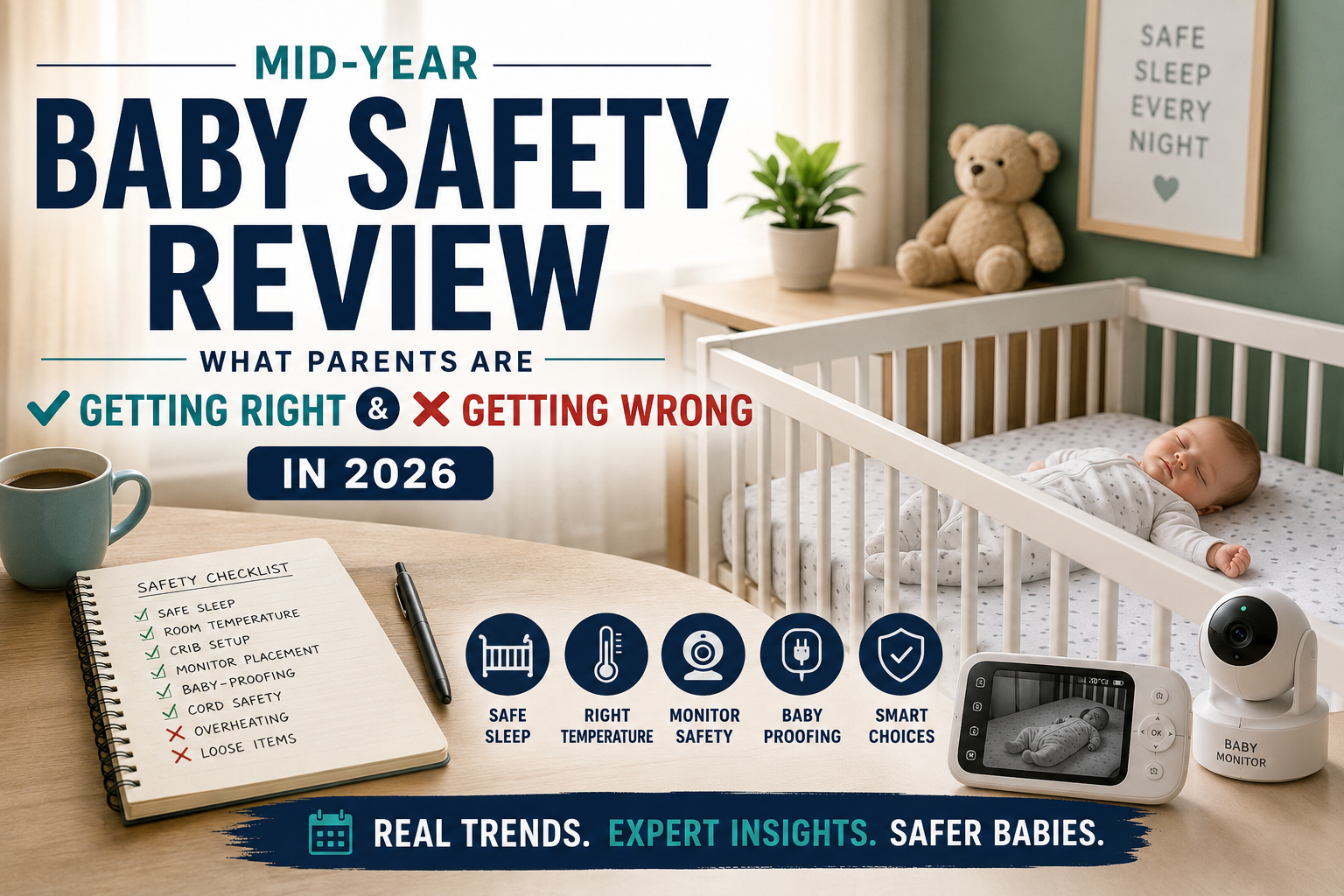
This mid-year review highlights the biggest patterns we’ve observed in 2026, celebrating the habits that create safer nurseries while calling attention to common mistakes that are still worth addressing.
Some of the trends are encouraging.
Others show that good intentions don’t always translate into safer choices.
Why Baby Safety Looks Different in 2026
Every generation of parents faces a different set of challenges.
A decade ago, most nurseries contained little more than a crib, a basic audio monitor, and a changing table. Today, many families are setting up connected sleep spaces with Wi-Fi cameras, breathing trackers, smart lighting, white noise machines, humidifiers, air purifiers, and mobile apps that promise to optimize every nap.
Technology has made parenting more convenient in many ways. Parents can check on a sleeping baby from another room, monitor room temperature remotely, and receive alerts when movement is detected.
But technology has also introduced new questions.
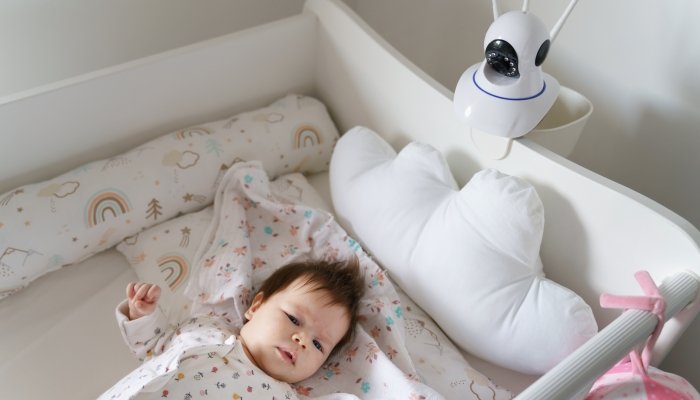
How close should a baby monitor be to the crib?
Can too many devices create unnecessary distractions?
Are parents relying on technology instead of following basic safe sleep recommendations?
These are the kinds of questions that define baby safety in 2026. While products continue to improve, the fundamentals remain remarkably consistent. A safe sleep environment, thoughtful nursery design, and informed decision-making still matter far more than the latest gadget.
Baby Safety Tips 2026: What Parents Are Getting Right
If there’s one encouraging trend we’ve noticed this year, it’s that parents are becoming more informed before making purchasing decisions.
Instead of buying the first product they see online, many now compare safety features, read independent reviews, and seek guidance from trusted pediatric sources.
That shift alone has contributed to several positive trends.
Safer Sleep Is Becoming the Standard
One of the biggest improvements we’ve seen is a growing awareness of safe sleep practices.
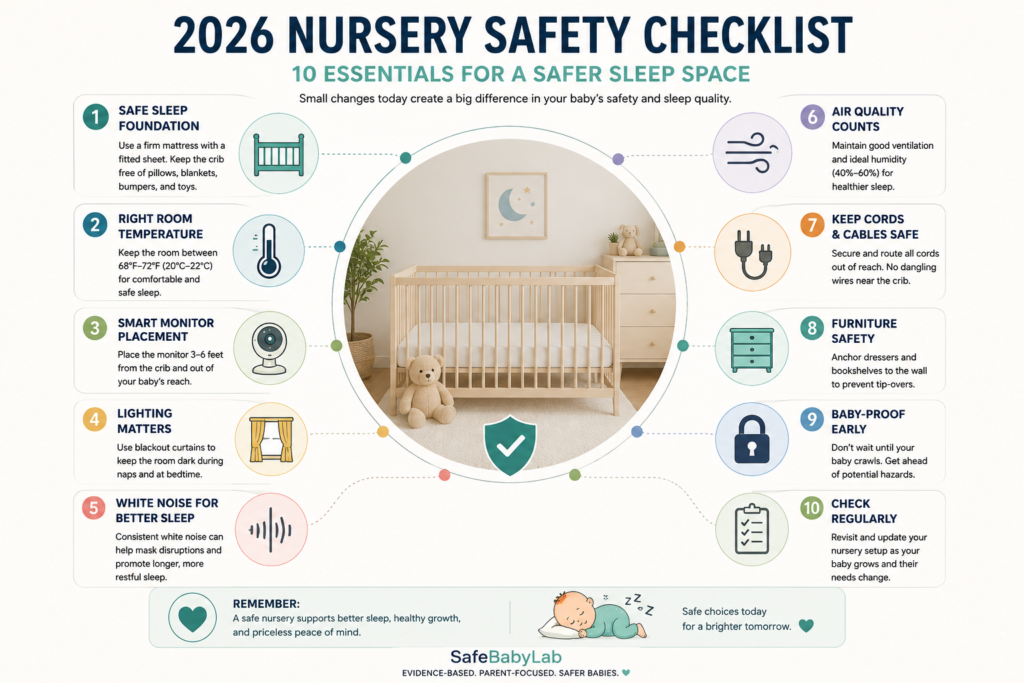
More parents understand that babies sleep safest on a firm mattress with a fitted sheet and without loose blankets, pillows, crib bumpers, or stuffed animals.
Minimalist sleep spaces may not look as decorative as they once did, but they provide a much safer environment for infants.
This growing awareness represents one of the most meaningful baby safety improvements of recent years.
Parents Are Thinking Beyond the Crib
Safety no longer begins and ends with the crib itself.
Families are paying closer attention to the entire nursery, including furniture placement, blind cords, power outlets, monitor positioning, and air quality.
That broader perspective is exactly what modern baby safety should encourage.
A nursery functions as a complete environment, where every decision contributes to your baby’s comfort and well-being.
Baby Safety Tips 2026: Where Parents Are Still Getting It Wrong
While it’s encouraging to see more families prioritizing safety, some outdated habits continue to appear far too often. In many cases, these mistakes aren’t caused by a lack of care. They’re the result of conflicting advice, viral social media trends, or simply assuming that popular products are automatically safe.
Here are the patterns we continue to see in 2026.
Confusing Convenience With Safety
Modern baby gear has become smarter than ever.
Today’s parents can choose from AI-powered baby monitors, smart bassinets, breathing trackers, connected thermometers, and apps that promise to analyze every movement during the night.
These tools can certainly be helpful, but none of them replace the basics.
A baby sleeping on a firm mattress in a clutter-free crib is still safer than a baby surrounded by expensive technology that doesn’t follow established safe sleep recommendations.
Technology should support safe parenting, not replace it.
Decorating the Crib Instead of Protecting It
Beautiful nursery inspiration is everywhere.
Scroll through Instagram or Pinterest, and you’ll find perfectly styled cribs filled with plush blankets, decorative pillows, stuffed animals, personalized cushions, and elaborate bedding sets.
The problem is that many of these designs prioritize appearance over safety.
The safest crib often looks surprisingly simple.
A firm mattress, a fitted sheet, and an appropriately dressed baby are all that’s needed for sleep. Everything else can wait until your child is older.
It’s a reminder that the most photogenic nursery isn’t always the safest one.
Waiting Too Long to Baby-Proof
Many parents assume baby-proofing begins once their child starts crawling.
In reality, development rarely follows a schedule.
Some babies begin rolling earlier than expected. Others pull themselves to standing within weeks of crawling. Before parents realize it, electrical cords, furniture corners, or unstable objects that once seemed harmless have become reachable.
Baby-proofing works best when it’s done before your baby needs it, not after.
Forgetting That Safety Changes With Every Milestone
One of the biggest misconceptions is believing the nursery is “finished.”
In reality, the safest nursery is one that evolves.
Every developmental milestone creates new considerations.
A newborn cannot reach a power cable.
A nine-month-old probably can.
The monitor that was perfectly positioned three months ago may now be within reach. Furniture that seemed secure may suddenly become climbable.
Reviewing your nursery every few months is one of the simplest habits parents can develop.
The Biggest Nursery Trends We’ve Seen This Year
Some of the most interesting changes in 2026 aren’t products at all. They’re shifts in how parents think about their baby’s environment.
Cleaner Nurseries
The trend toward minimalist nurseries continues to grow.
Parents are choosing calmer spaces with fewer decorations, less clutter, and furniture that serves a practical purpose.
This isn’t just a design preference.
Less clutter often means fewer potential hazards, easier cleaning, and a more relaxing environment for both babies and parents.
Air Quality Is Becoming a Priority
Parents are paying closer attention to what their baby breathes.
Questions about indoor air quality, humidity, ventilation, and seasonal allergens have become far more common than they were just a few years ago.
While expensive air quality gadgets aren’t necessary for every family, maintaining a well-ventilated room with comfortable humidity can contribute to a healthier nursery environment.
Smarter Buying Decisions
Perhaps the most encouraging trend is that parents are slowing down before making purchases.
Instead of buying every trending product recommended by influencers, many families now ask practical questions.
Do we actually need this?
Will it make our baby safer?
Does it solve a real problem?
Or is it simply another gadget we’ll stop using after a few weeks?
That mindset leads to better decisions and less unnecessary spending.
What Parents Should Focus On During the Rest of 2026
If we had to recommend just a handful of priorities for the remainder of the year, they would be surprisingly simple.
Focus on creating a safe sleep space before adding extra accessories.
Review your nursery every few months instead of assuming your original setup is still appropriate.
Keep learning as your baby grows, because safety recommendations that apply to a newborn won’t necessarily apply to an active infant.
And finally, remember that consistency usually matters more than perfection.
No nursery will ever be flawless.
What matters is making thoughtful decisions based on reliable information rather than trends or social media advice.
Our Editorial Take
After reviewing hundreds of products, analyzing safety guidance, and following parenting trends throughout the first half of 2026, one conclusion stands out.
Parents today have access to more information than any generation before them.
That’s a tremendous advantage.
It’s also a challenge.
The internet offers expert advice alongside myths, viral hacks, and product marketing that can make it difficult to separate useful guidance from unnecessary noise.
The families who create the safest environments aren’t necessarily the ones who buy the most expensive equipment.
They’re the ones who understand the fundamentals, ask good questions, and aren’t afraid to keep things simple.
As the rest of 2026 unfolds, we expect innovation to continue at a rapid pace. AI-powered nursery products will become more common, connected devices will offer even more features, and manufacturers will continue introducing new ways to monitor and support infant sleep.
Those innovations are exciting, but they shouldn’t distract from the principles that have always mattered most.
A safe sleep environment.
Thoughtfully chosen products.
Age-appropriate nursery design.
And informed parents who understand that no piece of technology can replace attentive caregiving.
At SafeBabyLab, that’s the standard we’ll continue to measure every product, guide, and recommendation against.
What Changed Since 2025?
If there’s one thing we’ve noticed over the past year, it’s that parents are becoming more selective.
A few years ago, the nursery market was driven by novelty. Every month introduced another smart gadget promising to improve sleep, monitor breathing, or simplify parenting. Today, families are asking different questions.
Instead of asking, “What’s the newest product?”, many parents are asking:
“Does this actually make my baby safer?”
That shift is important.
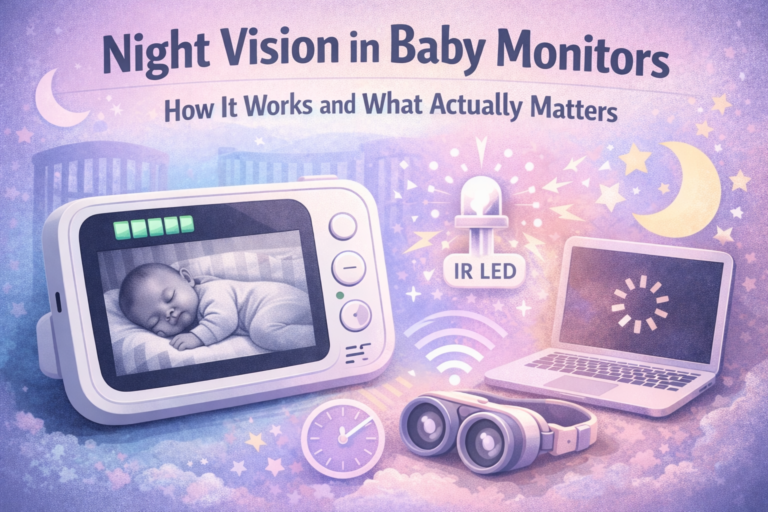
Manufacturers have responded by placing greater emphasis on practical safety features rather than flashy marketing. Cameras offer clearer night vision instead of simply higher resolution. White noise machines now include automatic shut-off timers and volume limits. Nursery thermometers have become more accurate, while smart monitors focus on reducing false alarms rather than adding unnecessary notifications.
At the same time, pediatric organizations continue reinforcing a message that hasn’t changed.
Technology is helpful.
Safe sleep practices remain essential.
No monitor, wearable, or smartphone app can replace proper crib setup, safe sleep positioning, and attentive caregiving.
That’s perhaps the biggest lesson of 2026 so far.
The smartest nursery isn’t necessarily the one with the most technology.
It’s the one designed with safety in mind.
Products That Actually Made Parenting Easier in 2026
Every year introduces dozens of new baby products, but only a small number genuinely improve daily life.
Rather than focusing on individual brands, we’ve noticed several product categories that consistently help families.
Smarter Baby Monitors
Video quality is no longer the biggest selling point.
Parents now value monitors that reduce unnecessary alerts, reconnect quickly after internet interruptions, and provide reliable performance without constant troubleshooting.
Convenience matters, but reliability matters even more.
Better Sleep Lighting
Adjustable nursery lighting has quietly become one of the most appreciated additions to modern baby rooms.
Soft amber lighting during nighttime feeds creates less disruption than bright overhead lights while helping parents move safely around the nursery.
It’s a simple upgrade that many families wish they had made sooner.
Simple Room Monitoring
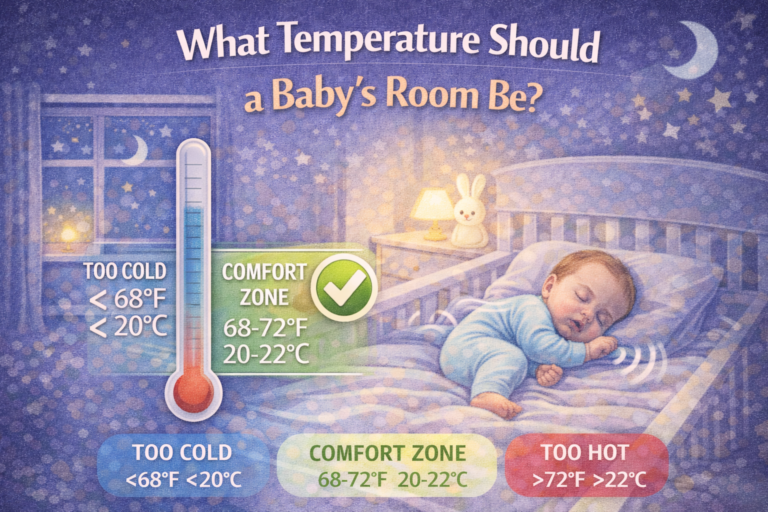
Parents increasingly recognize that temperature and humidity affect sleep quality.
Instead of purchasing multiple standalone devices, many now choose simple room monitors that track both measurements in one place.
This isn’t about chasing perfect numbers.
It’s about creating a consistently comfortable sleep environment.
Portable Sleep Solutions
Travel remains a challenge for many families with young babies.
Portable white noise machines, compact blackout solutions, and lightweight travel monitors have become increasingly popular because they help recreate familiar sleep conditions away from home.
For many babies, consistency matters far more than location.
Safety Trends We’d Love to Leave Behind
Some parenting trends deserve to disappear.
Unfortunately, several continue circulating online despite offering little benefit.
Filling Cribs With Decorative Items
Beautiful nursery photos often show stuffed animals, decorative blankets, and pillows inside the crib.
Real life should look different.
The safest crib remains a simple crib.
Assuming Smart Products Eliminate Risk
Technology supports parenting.
It doesn’t replace supervision.
No product should encourage parents to ignore established safe sleep recommendations.
Buying Every Viral Baby Product
Social media moves quickly.
One week it’s a viral sleep gadget.
The next week it’s a new parenting hack.
Most families don’t need more products.
They need better information.
Forgetting to Reevaluate the Nursery
Babies change rapidly.
Nurseries should change with them.
A safety review every few months often identifies hazards before they become problems.
The Questions Parents Asked Most in 2026
Throughout the year, several questions appeared repeatedly.
They reveal what modern parents worry about most.
Are Wi-Fi Baby Monitors Safe?
Parents continue balancing convenience with privacy.
Reliable security practices remain just as important as choosing the monitor itself.
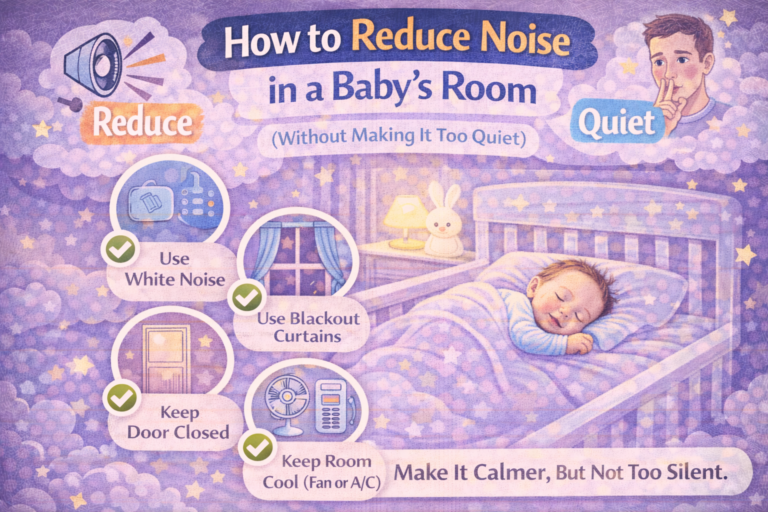
Do Babies Sleep Better With White Noise?
For many infants, yes.
Consistent background noise can reduce sudden disruptions and become part of a predictable bedtime routine.
Should Babies Sleep in Complete Darkness?
Most babies benefit from a darker sleep environment, particularly during naps and early mornings when outside light may interfere with sleep.
Is Every Nursery Product Really Necessary?
Probably not.
One of the healthiest parenting trends of 2026 is learning that babies often need fewer products than marketing suggests.
Looking Ahead to the Rest of 2026
If the first half of the year tells us anything, it’s that parenting is becoming both more connected and more intentional.
Artificial intelligence will likely appear in even more nursery products.
Sleep tracking will become increasingly sophisticated.
Parents will have access to more information than ever before.
But none of those developments change the fundamentals.
Babies still thrive in calm, predictable environments.
Parents still benefit from simple routines.
And safe sleep recommendations continue to provide the strongest foundation for every nursery.
As we move into the second half of 2026, our goal at SafeBabyLab remains the same.
We’ll continue testing products, following the latest research, and translating complex safety guidance into practical advice that families can use with confidence.
Because while parenting trends may change every year, helping parents make informed decisions never goes out of style.