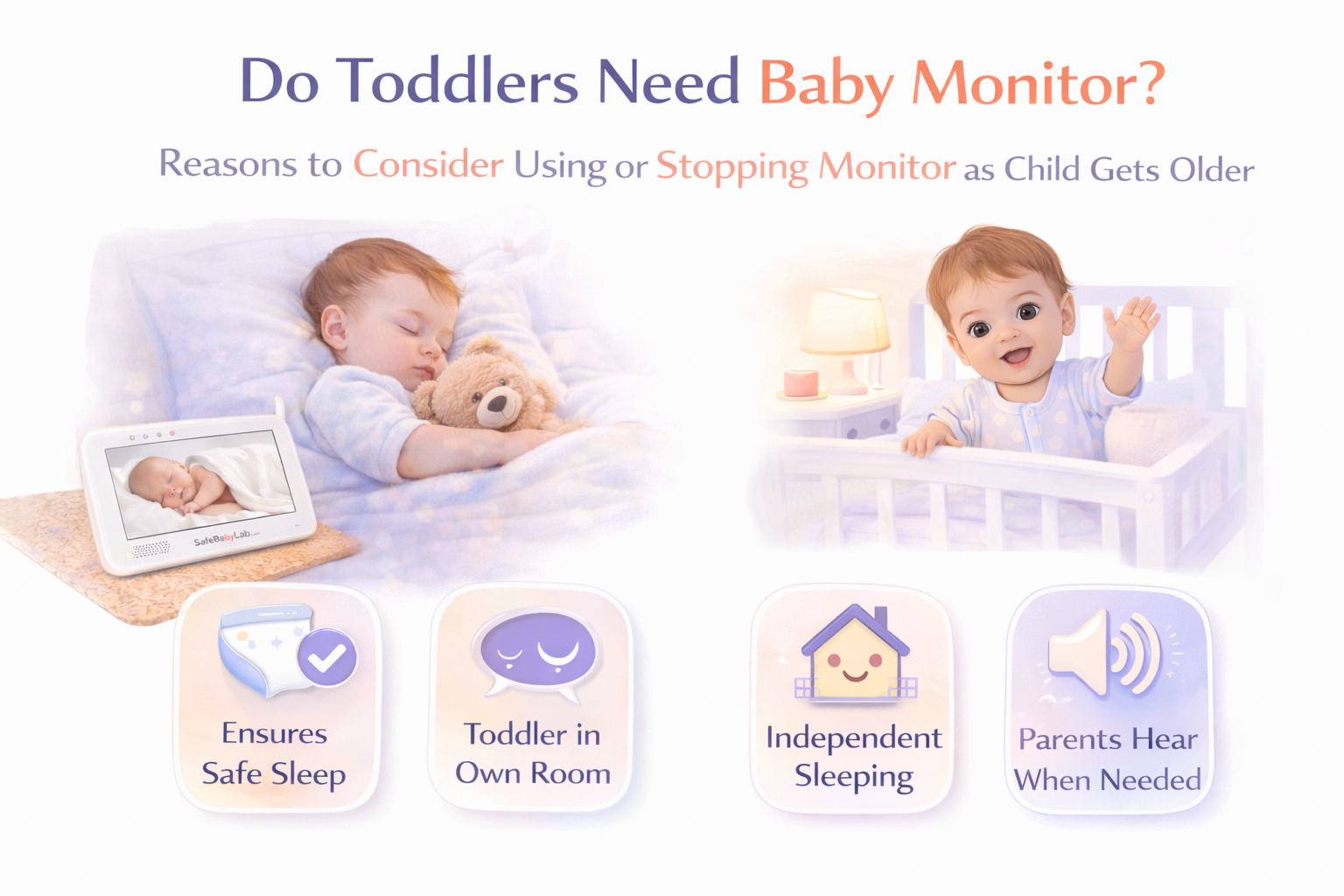
Do Toddlers Need a Baby Monitor? When to Keep Using One (and When to Stop)
Do toddlers need a baby monitor is a question many parents start asking once their baby becomes more independent. In the early months, a monitor feels essential. But as your child grows into a toddler, sleeps longer, and communicates better, the need for constant monitoring becomes less obvious.
The truth is that toddlers are in a transitional phase. They are no longer infants who require constant observation, but they are not fully independent either. This creates a gray area where some families still benefit from using a baby monitor, while others can safely stop.
At Safebabylab, we’ve seen that the decision is rarely about age alone. It depends on sleep patterns, home layout, and how confident parents feel without monitoring. This guide will help you understand when a toddler still needs a baby monitor and when it becomes unnecessary.
What Changes When Your Baby Becomes a Toddler
The biggest shift happens between 12 and 24 months.
Toddlers typically:
- sleep longer stretches at night
- move independently in their crib or bed
- begin to communicate needs verbally
- develop more consistent routines
These changes reduce the need for constant monitoring, but they do not eliminate it completely.
Unlike infants, toddlers are more aware of their surroundings. They may wake, sit up, call for a parent, or even try to get out of bed. This introduces a new kind of monitoring need.
Do Toddlers Need a Baby Monitor? The Short Answer
Do toddlers need a baby monitor? In many cases, no, it is not strictly necessary.
However, it can still be useful depending on:
- how far your child’s room is
- whether you can hear them without a monitor
- your child’s sleep behavior
- your comfort level
For some families, the monitor becomes a backup tool rather than a constant necessity.
Situations Where a Baby Monitor Is Still Useful for Toddlers
There are several common scenarios where keeping a baby monitor makes sense.
1. You Live in a Larger Home
If your child’s room is far away, especially on another floor, it may be difficult to hear them.
In these cases, a monitor provides:
- faster response time
- reassurance during the night
This is where choosing the best baby monitor long range becomes important.
2. Your Toddler Moves Around at Night
Toddlers are much more mobile than babies.
They may:
- sit up in bed
- walk around (if in a toddler bed)
- play or move silently
A monitor helps you understand what is happening without entering the room.
3. Transitioning Out of the Crib
Moving from a crib to a toddler bed is a major transition.
During this phase, a monitor can help you:
- observe behavior
- ensure safety
- respond if your child leaves the bed
4. Sleep Is Still Inconsistent
If your toddler:
- wakes frequently
- has night wakings
- struggles with sleep
a monitor can still be helpful.
This is especially true if you are working through sleep changes or regressions.
5. You Want Extra Peace of Mind
Sometimes the reason is simple.
Parents feel more comfortable knowing they can check in without entering the room.
At Safebabylab, we often see that this emotional factor plays a bigger role than practical need.
When a Baby Monitor Is No Longer Necessary
For many families, there comes a point where the monitor is no longer needed.
1. You Can Hear Your Child Naturally
If your home setup allows you to hear your toddler clearly, a monitor may be redundant.
2. Your Toddler Sleeps Consistently
If your child rarely wakes or calls out, monitoring adds little value.
3. Your Child Can Call for You
Toddlers can usually communicate clearly when they need something.
4. You No Longer Check the Monitor
If you find yourself not using it, that is a strong sign it is no longer necessary.
The Psychological Side: Why Parents Keep Using It
Even when a monitor is no longer needed, many parents continue using it.
Why?
- habit
- anxiety
- desire for control
- reassurance
The monitor becomes part of the bedtime routine.
At Safebabylab, we often see that stopping use is more about parent confidence than child need.
Video vs Audio: What Toddlers Actually Need
As children grow, video becomes less important.
Most parents transition to:
- audio only
- or no monitor at all
Video monitoring is most useful in infancy.
For toddlers, sound is usually enough.
Safety Considerations for Toddlers
Safety is still important, but it changes.
Instead of monitoring breathing or sleep position, the focus shifts to:
- movement
- climbing
- leaving the bed
In some cases, a monitor can help ensure your child stays safe during the night.
How to Transition Away From a Baby Monitor
If you are unsure, you can gradually stop using it.
Step 1: Turn Off Video
Use audio only.
Step 2: Check Less Frequently
Avoid constant monitoring.
Step 3: Test Without It
Try one night without using the monitor.
Step 4: Remove It Completely
Once comfortable, stop using it entirely.
Does Your Home Setup Matter?
Yes, a lot.
In a small apartment:
- you may not need a monitor at all
In a large house:
- it may remain useful longer
This is why some parents continue using monitors even with older children.
Baby Monitor vs Independence
There is a balance between monitoring and independence.
At some point, children benefit from:
- learning to self-settle
- calling for parents when needed
- sleeping without constant observation
Removing the monitor can be part of that transition.
How Baby Monitors Fit Into the Bigger Picture
A monitor is just one part of your sleep setup.
Other factors matter more:
- consistent bedtime routine
- stable sleep environment
- comfortable room temperature
You can learn more in our guide on baby sleep environment.
Should You Upgrade or Stop Using It?
Some parents wonder whether to upgrade to a better monitor or stop using one entirely.
If your child is already a toddler, upgrading is rarely necessary.
Instead, it may be time to evaluate whether you need it at all.
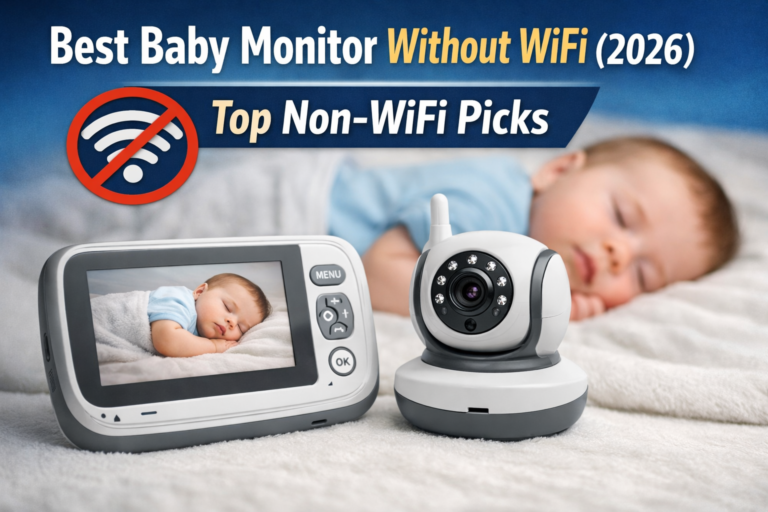
If you still rely on it, consider models from our best baby monitor without WiFi guide for added security.
Final Thoughts
Do toddlers need a baby monitor? For most families, the answer is no, but it depends on your situation.
A monitor can still be useful in certain cases, especially in larger homes or during transitions. But for many parents, it gradually becomes unnecessary as their child grows more independent.
At Safebabylab, we believe the best approach is to observe your child and your environment rather than follow a fixed rule. When you feel confident without constantly checking, that is usually the right time to stop.
FAQ
Do toddlers still need baby monitors
Usually not, unless there are specific reasons like distance or sleep issues
At what age can you stop using a baby monitor
Most parents stop between 1.5 and 3 years
Can I use audio only for a toddler
Yes, many parents switch to audio before stopping completely
Is it safe to remove the baby monitor
Yes, if you can hear your child and they sleep well
Should I keep using it for peace of mind
You can, but it may not be necessary