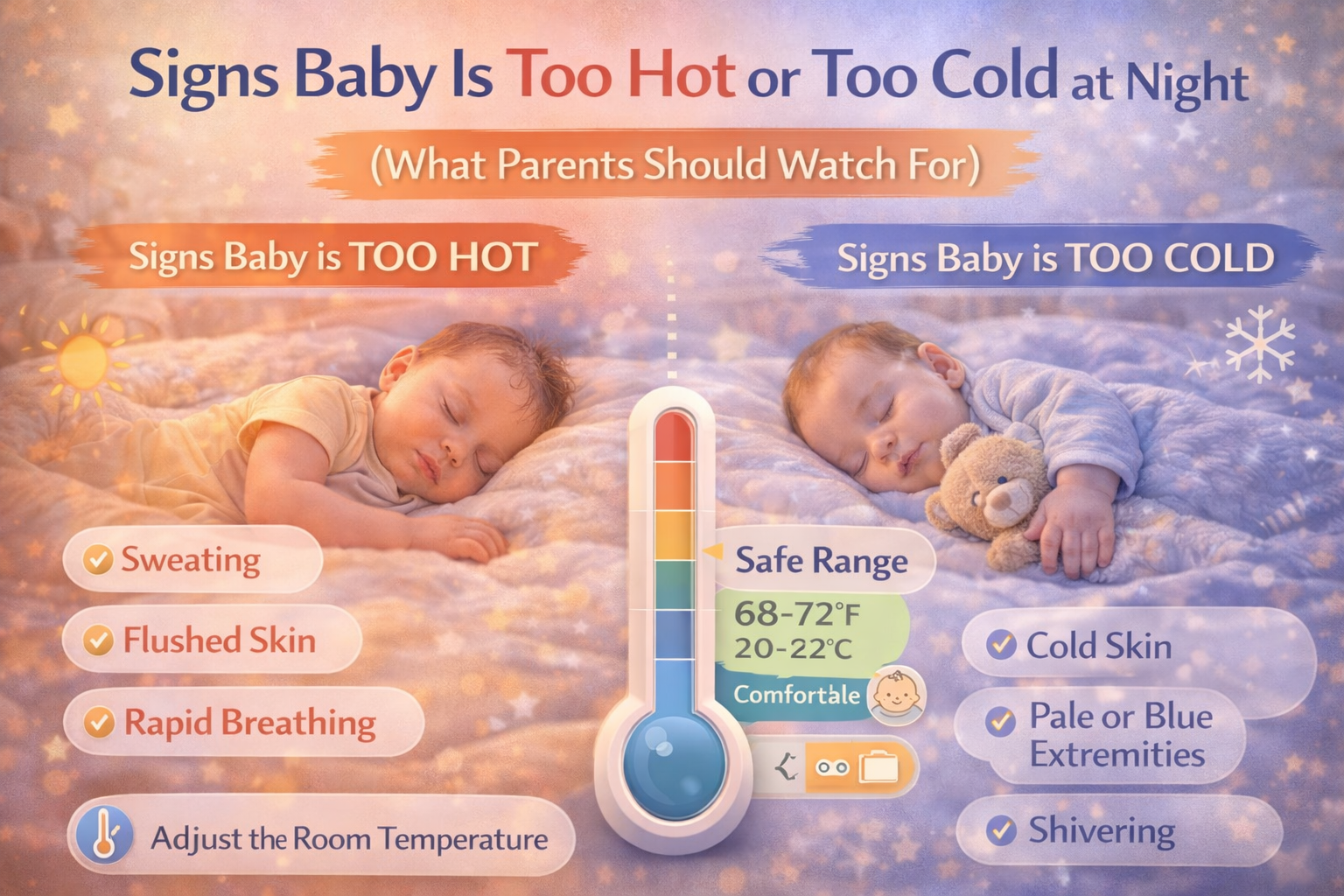
Signs Baby Is Too Hot or Too Cold at Night: What Parents Should Watch For
Signs baby is too hot or too cold at night are something every parent worries about, especially in the first months. Babies cannot regulate their body temperature as effectively as adults, which means they depend on their environment and clothing to stay comfortable. When the room is too warm or too cold, babies may sleep poorly, wake frequently, or show subtle physical signs of discomfort.
Many parents are unsure what to look for. Cold hands might seem alarming, sweating might be confusing, and nighttime wakeups can have many causes. Understanding the real signs of temperature discomfort helps parents respond calmly and correctly.
At Safebabylab, we often see that temperature confusion is one of the most common reasons parents second guess their nursery setup. The good news is that once you know what to look for, it becomes much easier to adjust the environment and help your baby sleep comfortably.
This guide explains the signs baby is too hot or too cold at night, how to check temperature properly, and what changes actually improve sleep.
Why Temperature Matters for Baby Sleep
Temperature plays a major role in sleep quality.
Babies sleep best when their body temperature stays stable. If they are too warm, they may become restless, sweaty, or irritable. If they are too cold, they may wake more often and struggle to settle.
A balanced sleep environment helps babies:
- fall asleep faster
- stay asleep longer
- transition between sleep cycles
- avoid unnecessary discomfort
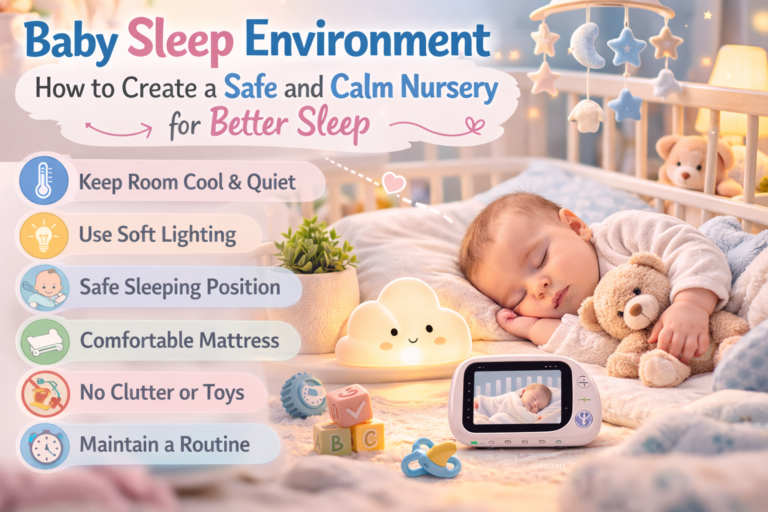
This is why temperature is a key part of a proper baby sleep environment, along with lighting, noise, and airflow.
Signs Baby Is Too Hot or Too Cold at Night: Key Indicators
Signs baby is too hot or too cold at night are usually visible through behavior and physical cues. The challenge is knowing which signals actually matter.
Signs Your Baby Is Too Hot
Babies who are too warm may show:
- sweating, especially on the neck or back
- damp hair or clothing
- flushed or red skin
- rapid breathing
- restlessness during sleep
- waking more frequently
The most reliable place to check warmth is the chest or upper back. If these areas feel hot or sweaty, the baby is likely overdressed or the room is too warm.
Signs Your Baby Is Too Cold
Babies who are too cold may show:
- cool chest or back
- waking more often than usual
- difficulty settling
- slightly pale skin
- less active movement during sleep
Cold hands and feet are not always reliable indicators. Many babies naturally have cooler extremities even when their core temperature is fine.
How to Check Baby Temperature Correctly
One of the biggest mistakes parents make is checking hands or feet.
The correct way to check is:
- place your hand on the baby’s chest
- or check the upper back
These areas reflect core body temperature much more accurately.
If the chest feels:
- warm and slightly comfortable → baby is likely fine
- hot or sweaty → too warm
- cool → possibly too cold
At Safebabylab, we always emphasize this simple check because it prevents unnecessary adjustments.
Ideal Room Temperature for Night Sleep
Room temperature is one of the easiest things to control.
Most experts recommend:
68°F to 72°F (20°C to 22°C)
This range helps keep babies comfortable without overheating.
Parents should combine room temperature with appropriate clothing rather than relying on temperature alone.
This connects directly with best room temperature for newborn sleep, which explains how to balance clothing and environment.
Clothing Mistakes That Cause Temperature Problems
Overdressing is one of the most common mistakes.
Parents often worry about babies being cold, so they add extra layers. This can easily lead to overheating.
Common mistakes include:
- using too many layers
- adding blankets on top of sleepwear
- dressing for daytime instead of nighttime
- not adjusting clothing based on room temperature
A simple rule is:
baby wears one more layer than an adult would feel comfortable in
Breathable fabrics and sleep sacks are usually better than loose blankets.
Overheating vs Being Slightly Cool
It is generally safer for a baby to be slightly cool than too warm.
Overheating can lead to:
- restless sleep
- excessive sweating
- discomfort
- increased waking
A slightly cooler baby will often move or wake briefly, but this is usually less risky than overheating.
This is why many sleep environments are designed to be slightly on the cooler side rather than warm.
How Fans and Airflow Affect Baby Temperature
Airflow can change how a room feels without changing the actual temperature.
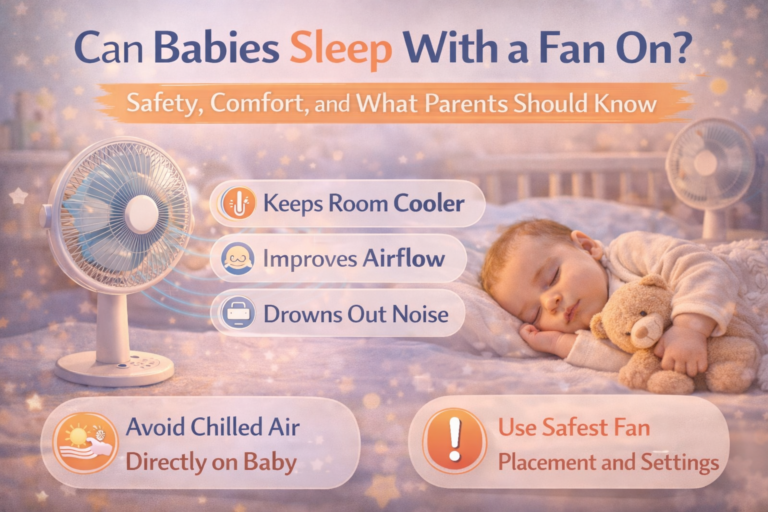
A fan can:
- reduce stuffiness
- improve air circulation
- make the room feel cooler
But it should not blow directly on the baby.
This is explained in can babies sleep with a fan on, where proper airflow positioning is key.
Good airflow supports comfort, but it should be gentle and indirect.
Night Wakings and Temperature
Temperature discomfort is a common cause of night waking.
If a baby:
- wakes frequently
- seems restless
- settles only briefly
it may be worth checking temperature.
However, not all waking is temperature related. Babies naturally wake between sleep cycles.
The key is to look for patterns combined with physical signs like sweating or cool chest.
Using a Baby Monitor to Check Comfort
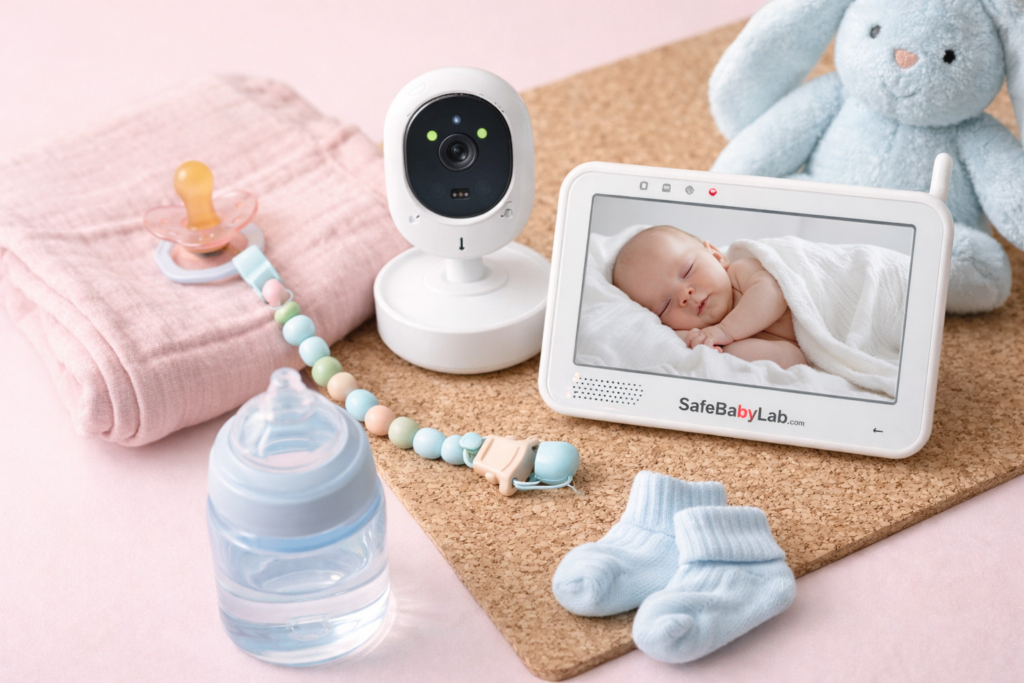
Baby monitors can help parents observe temperature related signs without entering the room.
They allow parents to:
- check movement patterns
- observe restlessness
- see sleep position
- monitor room conditions
Some monitors also include temperature sensors.
At Safebabylab, we often recommend combining environmental awareness with monitoring tools instead of relying on guesswork.
You can connect this naturally to:
Adjusting the Nursery Step by Step
When parents suspect temperature issues, it is best to adjust gradually.
Step by step approach:
- check room temperature
- check baby’s chest or back
- adjust one layer of clothing
- wait and observe
- avoid making multiple changes at once
This helps identify what actually improves comfort.
Common Myths About Baby Temperature
Myth 1: Cold hands mean the baby is cold
Not always true. Hands are not reliable indicators.
Myth 2: Babies need to be very warm to sleep well
False. Slightly cooler environments are often better.
Myth 3: More layers always mean better sleep
Too many layers often cause overheating and worse sleep.
Myth 4: Fans are dangerous
Fans are safe when used correctly and indirectly.
Creating a Balanced Sleep Environment
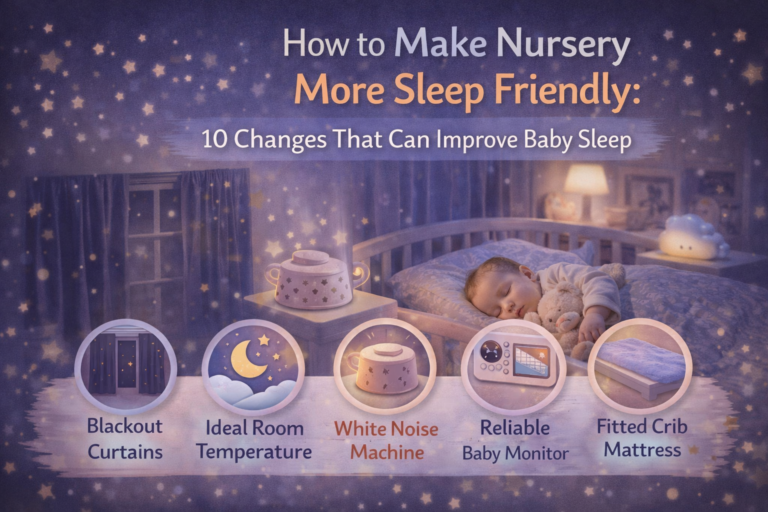
Temperature is only one part of the full sleep setup.
A balanced nursery includes:
- stable temperature
- proper humidity
- low light
- minimal noise disruption
- safe crib placement
This is covered in baby sleep environment, which ties all elements together.
When all factors align, babies tend to sleep more calmly and consistently.
Final Thoughts
Signs baby is too hot or too cold at night become much easier to recognize once parents know what to look for. The most reliable indicators are found by checking the baby’s chest and observing behavior such as sweating, restlessness, or frequent waking.
At Safebabylab, we emphasize simple and consistent adjustments rather than constant changes. A stable sleep environment, proper clothing, and gentle airflow usually solve most temperature related issues.
When parents understand these signs, they can respond confidently and create a nursery that supports calm and comfortable sleep.
FAQ
How do I know if my baby is too hot at night?
Check the chest or back. If the baby feels hot or sweaty, they are likely too warm.
Are cold hands a sign my baby is cold?
Not necessarily. Hands and feet are not reliable indicators.
What temperature should my baby’s room be at night?
Between 68°F and 72°F is generally recommended.
Should I add more layers if my baby wakes up?
Not always. First check temperature and signs before adding clothing.
Can overheating affect baby sleep?
Yes. Overheating often leads to restlessness and frequent waking.