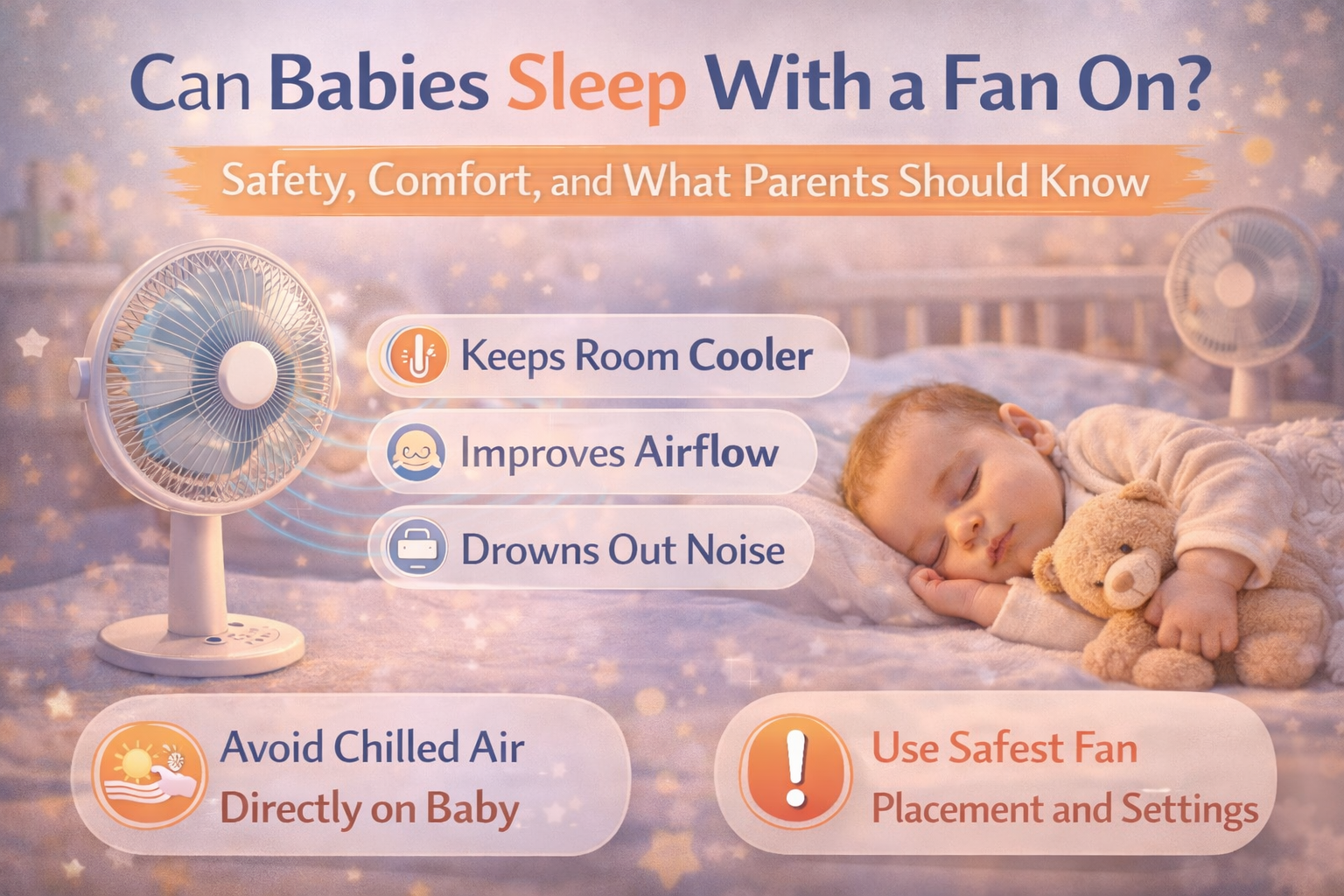
Can Babies Sleep With a Fan On? Safety, Comfort, and What Parents Should Know
Can babies sleep with a fan on is a question many parents ask when trying to keep the nursery comfortable during warm nights or stuffy weather. A fan can make a room feel cooler and improve airflow, but parents often worry whether it could make the baby too cold, create too much direct air movement, or interfere with comfortable sleep. The good news is that a fan can often be used safely in a baby’s room when it is positioned and used correctly.
The key is understanding what the fan is actually doing. A fan does not lower the temperature the way air conditioning does. Instead, it improves air circulation and can help the room feel less stagnant. At Safebabylab, we often see that parents benefit most when they use a fan as part of a broader sleep environment plan rather than as a quick fix.
This guide explains can babies sleep with a fan on, when it may help, what to avoid, and how to use airflow safely in a nursery.
Why Parents Consider Using a Fan in the Nursery
Nurseries sometimes feel warmer than the rest of the home, especially in summer or in rooms with limited ventilation. Even a room that seems fine during the day can become stuffy at night.
Parents often think about using a fan because they want to:
- improve air circulation
- reduce stuffiness
- make the room feel more comfortable
- support a cooler sleep environment
- avoid overheating concerns
This is closely related to concerns discussed in best room temperature for newborn sleep and baby sleep environment explained, because the nursery environment affects sleep more than many people realize.
Can Babies Sleep With a Fan On: The Short Answer
Can babies sleep with a fan on in most cases can be answered with yes, as long as the fan is used safely. A fan is generally fine in a baby’s room if it is not blowing directly on the baby at strong force and if the overall room temperature remains comfortable.
A fan can be helpful because it:
- improves circulation
- reduces trapped warm air
- prevents the room from feeling stale
- may make a warm nursery feel more comfortable
The important point is that a fan should support the room environment, not create harsh airflow directly onto the crib.
The Difference Between Airflow and Cold Exposure
Some parents worry that any fan automatically means the baby will get too cold. In reality, airflow and cold exposure are not the same thing. A fan moves air. It does not necessarily create a cold room.
That means a baby can sleep safely with a fan on if:
- the room temperature stays in a healthy range
- the baby is dressed appropriately
- the fan is not pointed directly at the baby
- the airflow is gentle rather than intense
At Safebabylab, we think this distinction matters because many parents avoid good airflow unnecessarily out of fear that movement of air equals danger.
Why Air Circulation Helps Nursery Comfort
Good air circulation can make a room feel more stable. Without it, warm air may collect in one area, humidity can feel heavier, and the nursery may become stuffy.
Better airflow may help by:
- reducing stale air feeling
- making the room feel more evenly comfortable
- supporting temperature consistency
- helping parents feel less tempted to overcool the room
This also works alongside baby room humidity for sleep, since humidity and airflow often affect how a nursery feels even when the thermostat number looks reasonable.
When a Fan May Be Especially Useful
A fan may be especially helpful in situations such as:
- warm summer nights
- nurseries with weak ventilation
- rooms that feel stuffy after bedtime
- homes where air conditioning does not reach the nursery evenly
- spaces where humid air feels heavy
Parents often notice the benefit more in comfort than in dramatic visible changes. Babies may settle more easily simply because the room feels less oppressive.
Direct Airflow vs Indirect Airflow
The safest way to use a fan in a nursery is usually indirect airflow. This means the fan helps circulate the room but is not aimed straight at the baby.
Indirect airflow is usually better because:
- it avoids blowing strongly onto the face
- it prevents the baby from feeling chilled
- it reduces eye or skin dryness
- it creates a gentler nursery environment
A fan pointed across the room or toward a wall often works better than one aimed directly at the crib.
Can a Fan Replace Temperature Control?
No. A fan can help the room feel better, but it should not be treated as a replacement for appropriate room temperature. If the nursery is too hot, parents still need to manage the actual room conditions, not just add more air movement.
A fan works best when combined with:
- proper room temperature
- breathable sleepwear
- sensible layering
- reduced sunlight or heat buildup
- good nighttime nursery setup
This is where linking to best room temperature for newborn sleep is especially useful.
How to Position a Fan Safely
A fan in a nursery should be placed with safety and comfort in mind.
Helpful guidelines include:
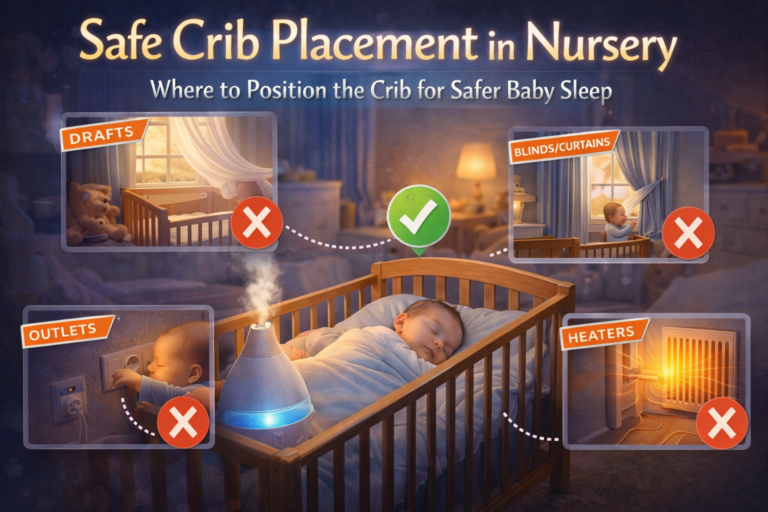
- keep the fan away from the crib
- avoid direct airflow onto the baby
- place it where cords are secure and out of reach
- choose a stable location that cannot tip
- avoid creating strong wind in the sleep zone
Ceiling fans, tower fans, or room fans can all work, but the same principle applies. Gentle circulation is usually better than forceful air.
Signs the Fan Setup May Not Be Ideal
Even when a fan is generally safe, there are signs that the setup may need adjustment.
Watch for:
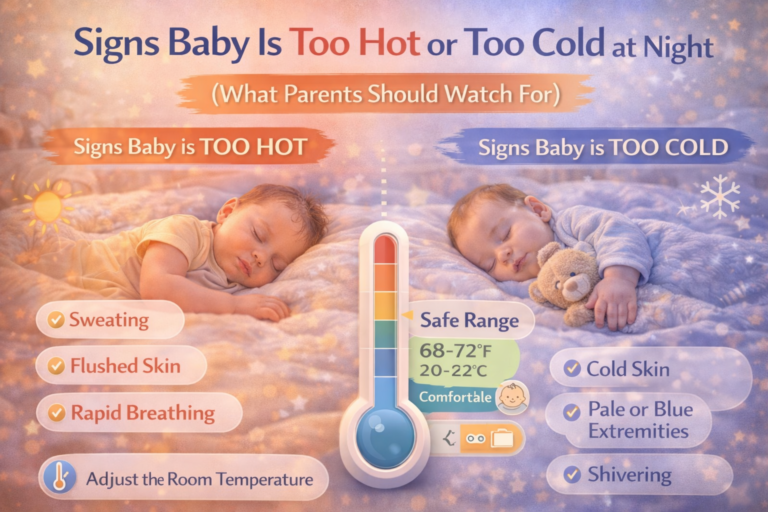
- the baby seeming too cool on the chest or back
- unusual restlessness after the fan is turned on
- dry skin or dry eyes in the morning
- overly strong airflow in the crib area
- the room feeling cooler than intended overnight
Parents should also remember that temperatures can change after midnight, especially if outdoor air cools suddenly.
Fan Use and Sleep Clothing
Clothing still matters when a fan is used. The goal is to dress the baby for the actual room conditions, not for the weather outside.
Parents should avoid:
- overdressing the baby because of fear of a fan
- using heavy blankets
- keeping the fan on high while layering too lightly or too heavily
Breathable clothing and wearable sleep sacks are usually more predictable than loose layers.
Can a Fan Help Reduce Overheating Concerns?
A fan can be part of a nursery strategy aimed at reducing overheating risk by improving circulation and reducing stuffiness. It is not a guarantee against overheating, but it may help the nursery feel more balanced.
At Safebabylab, we often suggest that parents think of a fan as one part of an environment system that includes:
- room temperature
- clothing
- humidity
- crib placement
- nursery layout
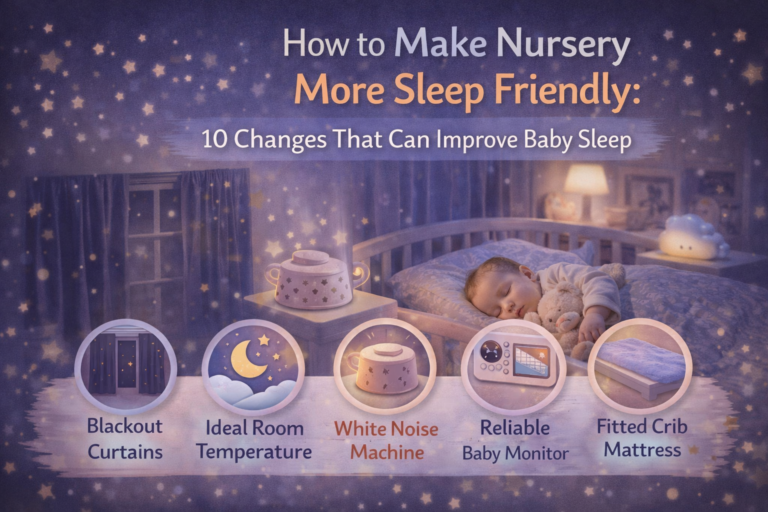
This makes the topic a natural fit with how to make nursery more sleep friendly and best nursery layout for baby sleep.
Does a Fan Affect White Noise or Monitoring?
Some parents wonder whether a fan will make it harder to hear the baby or change sleep cues. In some homes, the gentle hum of a fan actually becomes part of the room’s consistent background sound. In others, parents still use a separate white noise machine.
A fan may help by:
- masking small environmental sounds
- adding steady background noise
- making the room feel more consistent
A good monitor setup should still allow parents to hear and observe the baby well. This is where links to baby monitor camera, best baby monitor long range, and complete guide to baby monitors without wifi fit naturally.
Common Fan Mistakes in Nurseries
Parents usually run into trouble not because fans are unsafe by default, but because of setup mistakes.
Common mistakes include:
- pointing the fan straight at the baby
- placing the fan too close to the crib
- ignoring overnight room temperature changes
- leaving cords accessible
- relying on the fan instead of fixing an overheated room
These are easy to avoid once parents understand the goal: comfortable circulation, not strong airflow.
Final Thoughts
Can babies sleep with a fan on is a practical question, and for most families the answer is yes when the fan is used correctly. A fan can improve comfort by supporting airflow and reducing stuffiness, especially on warm nights or in nurseries that feel poorly ventilated.
At Safebabylab, we see fans as a useful environmental tool when they are part of a broader nursery plan. Gentle indirect airflow, safe placement, comfortable room temperature, and appropriate clothing all matter more than simply turning the fan on or off. Used thoughtfully, a fan can help create a calmer and more comfortable sleep environment for many babies.
FAQ
Can babies sleep with a fan on all night?
Yes, many babies can sleep with a fan on all night if the airflow is gentle and not directed straight at the crib.
Is it bad for a fan to blow on a baby?
Strong direct airflow is not ideal. It is usually better to use indirect airflow that circulates the room.
Can a fan make a baby too cold?
It can if the room becomes too cool or the airflow is too direct. Check the baby’s chest or back for comfort.
Does a fan help babies sleep better?
It can help if the nursery is warm or stuffy, because better airflow often improves comfort.
Should I use a fan instead of air conditioning in a nursery?
A fan can help with circulation, but it does not replace proper temperature control.