What Features Should a Baby Monitor Have? A Complete Parent Checklist 2026
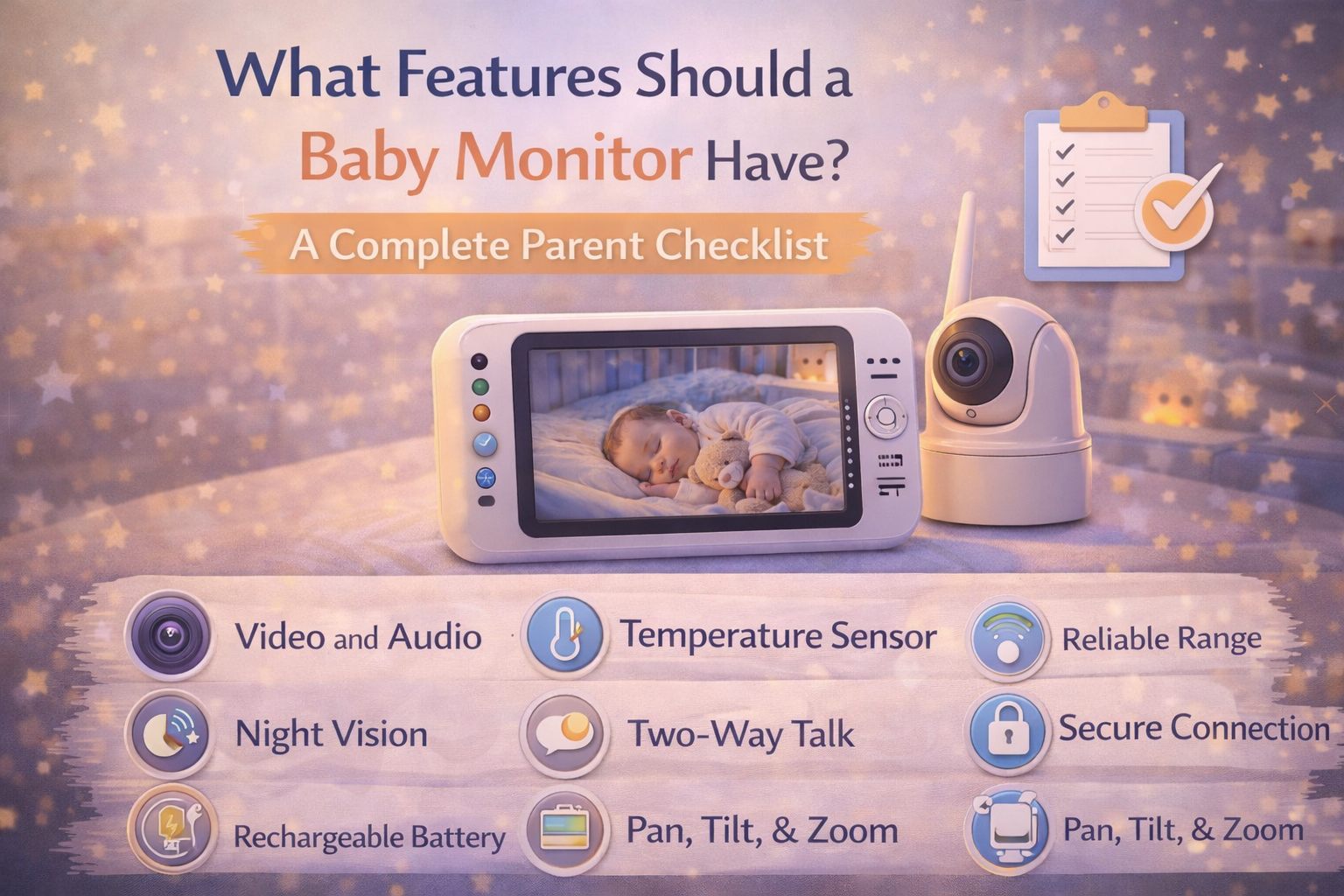
What features should a baby monitor have is one of the most important questions parents ask before buying a monitor for the nursery. With so many models on the market, it can be difficult to tell which features actually matter and which ones are just extra marketing. Some monitors focus on video quality, some prioritize long range, and others highlight smartphone access or advanced sensors. For most parents, the goal is much simpler. They want a monitor that is reliable, easy to use, and genuinely helpful during naps and nighttime sleep.
A baby monitor should make it easier to check on a baby without disturbing sleep. It should help parents feel informed and reassured, not overwhelmed by features they never use. At Safebabylab, we look at baby monitors through that practical lens. The best monitor is not the one with the longest feature list. It is the one that works consistently in a real home and supports safe, calm monitoring every day.
This guide explains what features should a baby monitor have, which ones matter most for different families, and how to prioritize the features that improve real world use.
Why Features Matter More Than Marketing
Many parents begin shopping by looking at product photos, star ratings, or brand names. While that is understandable, baby monitor performance depends much more on function than on presentation. A monitor can look advanced and still be frustrating to use if the signal drops, the battery dies too quickly, or the screen is hard to read at night.
The right features help parents:
- hear the baby clearly
- see the crib properly
- move around the home without losing signal
- monitor sleep without entering the nursery
- feel more confident at night
Parents often discover after a few weeks of use that convenience matters just as much as technical performance. That is why focusing on the right features from the start can prevent wasted money and frustration.
What Features Should a Baby Monitor Have: Start With Reliability
What features should a baby monitor have always starts with reliability. Before thinking about screens, apps, or extra sensors, parents need a monitor that works consistently.
Reliability usually means:
- stable signal
- low audio delay
- dependable battery performance
- easy connection between units
- minimal setup problems
A monitor that disconnects often or lags badly is not just annoying. It changes how useful the monitor actually is during the moments when parents depend on it most.
This is one reason many families prefer systems covered in complete guide to baby monitors without wifi. Direct connection monitors are often simpler and more predictable in daily use because they do not depend on the home internet.
Clear Audio Is Essential
Even in a video monitor, audio is one of the most important features. Parents usually hear a baby before they need to see more detail, and the sound quality often determines how quickly they respond.
Good audio performance means:
- clear crying and fussing sounds
- low static
- adjustable volume
- useful sound sensitivity settings
At Safebabylab, we think audio quality is often underestimated during shopping. Parents sometimes focus heavily on video resolution, but if the sound is poor or delayed, the monitor becomes much less helpful.
This also connects naturally with posts like how clear should baby monitor audio be and baby monitor volume levels because sound quality affects the real monitoring experience more than many people expect.
Video Quality That Is Good Enough, Not Just Impressive
Parents often assume they need the highest possible video resolution, but in practice, what matters is usable clarity. A baby monitor should let you see whether the baby is asleep, moving, awake, or uncomfortable. It should also let you check the crib quickly in low light.
Useful video features include:
- clear daytime image
- good night vision
- stable image without freezing
- enough detail to see the whole crib
Ultra high resolution sounds appealing, but it is less important than a dependable image and good low light performance. A practical monitor is better than one that only looks impressive in marketing copy.
For parents comparing camera options, this article should naturally link to baby monitor camera.
Night Vision Is a Must
Most monitoring happens at night or in dark nap conditions, so night vision is not optional. It is one of the core features every useful baby monitor should have.
Strong night vision allows parents to:
- see the baby without turning on lights
- check movement and position in a dark room
- preserve a sleep friendly nursery environment
Good night vision should be clear enough to show the crib well without glare or heavy blur. It should not make the image so grainy that parents have to guess what they are seeing.
This pairs well with nursery lighting for baby sleep, because the whole point is to keep the room dark and calm while still being able to monitor effectively.
Range Matters More Than Many Parents Expect
A monitor that works perfectly in one room may perform very differently across the house. That is why range is one of the most important features to evaluate before buying.
Parents should think about:
- apartment or house size
- one floor or multiple floors
- wall thickness
- whether they want coverage outside the nursery area
In larger homes, range can become the difference between a useful monitor and one that constantly loses connection. This is exactly why content like best baby monitor long range and how far do baby monitors reach matters so much to parents doing research.
At Safebabylab, we always treat range as a primary feature, not a bonus.
Battery Life Affects Daily Use
Battery life is easy to ignore until the monitor runs low in the middle of the night. A short battery can make an otherwise good monitor frustrating to use, especially if the parent unit must stay plugged in too often.
Good battery performance helps parents:
- move around the home easily
- use the monitor overnight
- avoid constant charging
- rely on the device during longer naps
Battery life matters even more for handheld parent units than for camera units, because portability is part of what makes monitors useful.
Parents comparing options should also consider whether the monitor gives battery warnings clearly and whether power saving settings actually help.
A Parent Unit Is Still Very Useful
Many new monitors emphasize smartphone viewing, but a dedicated parent unit is still one of the most practical features for many families.
Why it matters:
- instant access without opening an app
- no dependence on phone notifications
- fewer distractions from other phone use
- simpler night checks
A separate screen keeps monitoring separate from everyday phone activity. At Safebabylab, we often find that parents appreciate this much more after the baby arrives than they expect beforehand.
That does not mean app based viewing is bad. It means convenience during real parenting often looks different than convenience on a product page.
Two-Way Audio Can Be More Useful Than It Sounds
Some parents assume they will never use two-way audio, but it can be genuinely helpful in certain situations.
It may help when:
- soothing an older baby briefly
- calming a child during short wakeups
- talking before entering the room
- helping another caregiver communicate from another room
It is not the most essential feature for every parent, but when implemented well, it can add real value.
Temperature Monitoring Can Be Helpful
Temperature monitoring is not mandatory, but it can be a useful secondary feature, especially for parents focused on nursery comfort.
A temperature display can help parents notice if the room is:
- warmer than expected
- too cool overnight
- inconsistent between naps and nighttime
This feature works best when paired with what parents learn in best room temperature for newborn sleep and baby sleep environment explained. The monitor does not replace common sense or room checks, but it can provide helpful context.
Ease of Setup and Daily Controls Matter
A monitor can have good technical features and still be annoying if the setup or controls are clumsy. Parents often use these devices when tired, distracted, or in low light. Simplicity matters.
A good monitor should be:
- easy to pair
- intuitive to navigate
- quick to adjust volume and brightness
- simple to reposition if needed
At Safebabylab, we think usability is one of the most underrated buying criteria. Parents need a monitor they can use easily at 2 a.m., not one they need to relearn every week.
Privacy and Security Should Match Your Comfort Level
Some parents care deeply about privacy and want the most closed system possible. Others are comfortable with app based monitoring if it is convenient. Neither approach is automatically wrong, but parents should make a deliberate choice.
Features related to privacy include:
- non WiFi direct connection
- secure pairing
- account protection if app based
- controlled remote access
For parents who want the simplest privacy focused setup, complete guide to baby monitors without wifi is an important internal link target.
Mounting and Placement Flexibility
A good monitor should also be easy to position correctly. Even a great camera can disappoint if it is awkward to mount or hard to angle toward the crib.
Useful design features include:
- flexible mount or stand
- adjustable viewing angle
- compatibility with wall or shelf placement
- safe cable management options
This is where you should link to baby monitor placement guide and how to mount a baby monitor camera. Good placement improves both visibility and safety.
What Features Matter Most for Different Parents
Not every parent needs the same feature mix. A small apartment, a one story home, and a large multi floor house create very different priorities.
For example:
Small apartment parents may care most about
- simple setup
- clear audio
- good night vision
- affordable price
Large home parents may care most about
- long range
- stable signal
- strong battery life
- large parent unit screen
Privacy focused parents may care most about
- non WiFi operation
- direct signal transmission
- dedicated parent unit
- low complication
The best baby monitor is the one whose features fit the home and parenting style.
Final Thoughts
What features should a baby monitor have depends partly on the family, but a few priorities stay the same for almost everyone. Reliability, clear audio, good night vision, practical range, and easy daily use matter far more than a long list of flashy extras.
At Safebabylab, we believe the best monitors are the ones parents can trust without overthinking. A strong baby monitor should fit naturally into the home, support calm nursery monitoring, and make it easier to check on a baby without disrupting sleep. When parents focus on core features first, they usually end up with a better and more useful monitor.
FAQ
What is the most important feature in a baby monitor?
Reliability is usually the most important feature because a monitor is only helpful if it works consistently.
Do I need a video baby monitor or is audio enough?
Many parents prefer video because it allows quick visual checks, but audio may be enough in some homes.
Is night vision necessary in a baby monitor?
Yes. Night vision is one of the most important features because babies sleep in low light conditions.
Are WiFi baby monitors better than non WiFi monitors?
Not always. WiFi offers remote viewing, but non WiFi monitors often offer stronger privacy and simpler reliability.
How much range should a baby monitor have?
That depends on the size and layout of the home, but larger homes usually need longer and more stable indoor range.