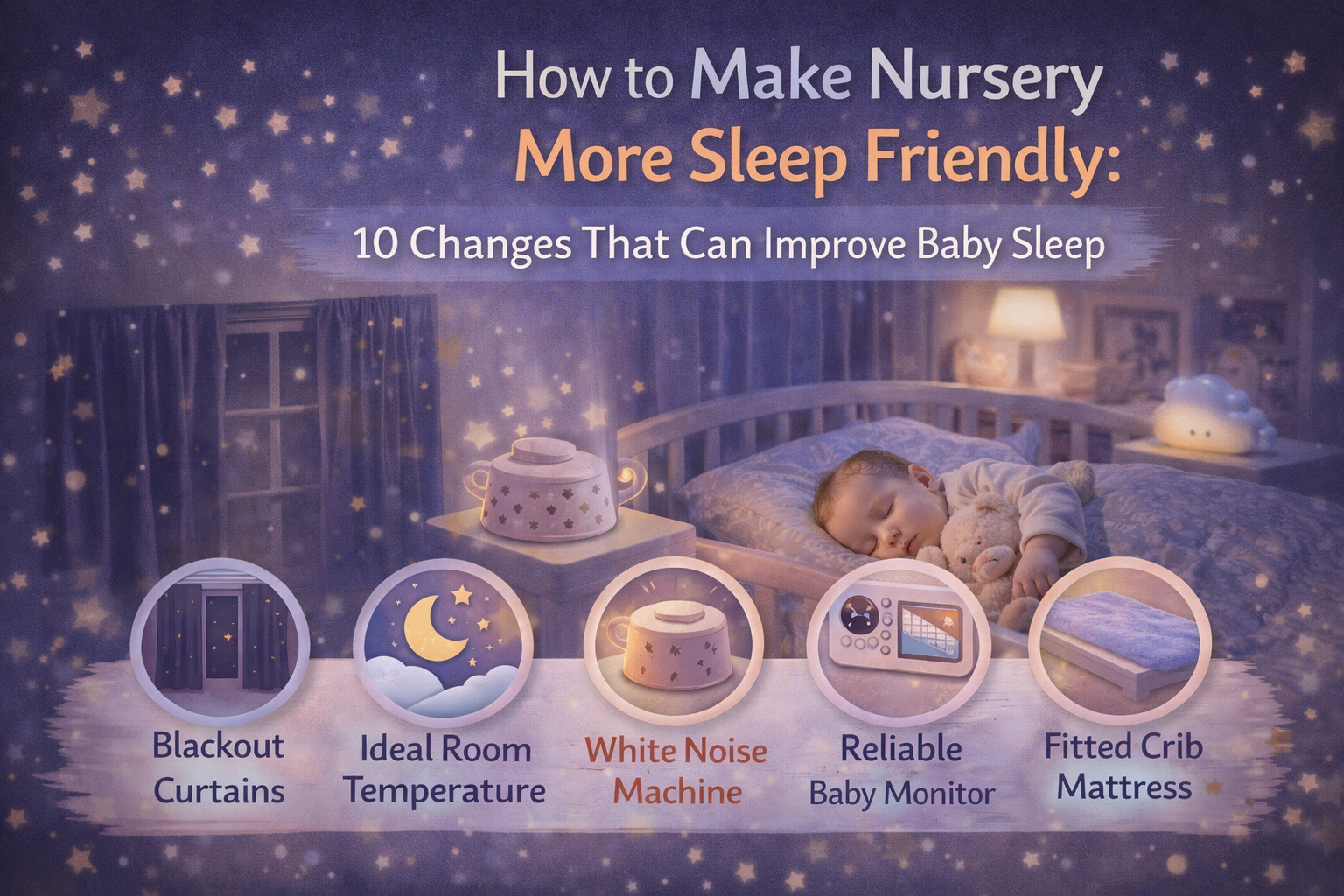
How to Make Nursery More Sleep Friendly: 10 Changes That Can Improve Baby Sleep
How to make nursery more sleep friendly is a question many parents ask when bedtime feels harder than expected or naps remain short and inconsistent. A baby’s sleep environment affects far more than appearance. The nursery can either support sleep or quietly work against it through light, temperature, clutter, poor layout, and inconsistent sound.
Many families already have a beautiful nursery but still struggle with sleep. That is because sleep friendly design is not only about décor. It is about what the room feels like at bedtime and during sleep itself. At Safebabylab, we regularly see that a few simple environmental changes can improve sleep more than buying another product or changing the whole routine.
This guide explains how to make nursery more sleep friendly using practical changes that support better rest, calmer bedtimes, and more predictable sleep cues.
Why Nursery Design Affects Sleep
Babies depend heavily on environmental signals. They do not understand bedtime because someone says it is bedtime. They understand it through repetition and surroundings.
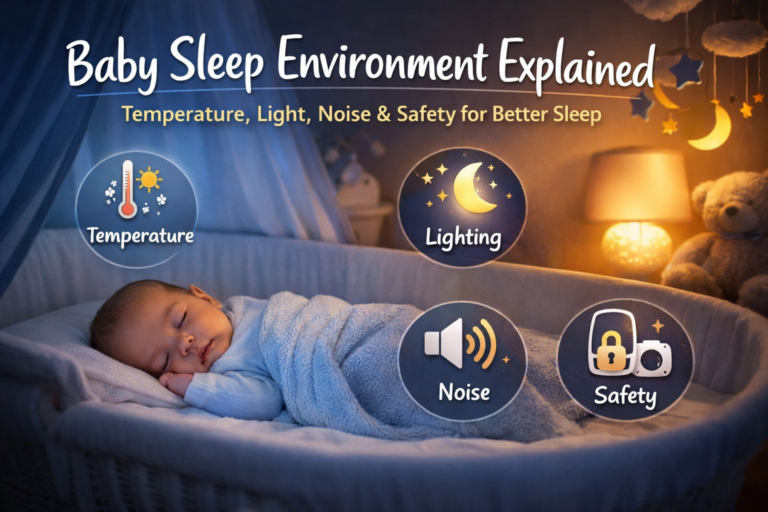
A sleep friendly nursery usually provides:
- lower light
- stable temperature
- calmer sound
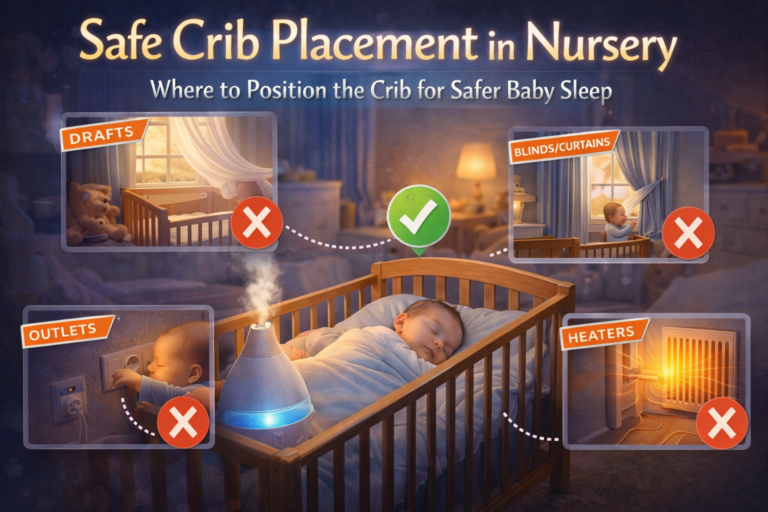
- safe crib positioning
- less visual stimulation
These signals help babies transition into sleep more smoothly.
How to Make Nursery More Sleep Friendly: Start With Light
How to make nursery more sleep friendly often starts with controlling light. Bright nurseries can feel cheerful during the day, but they may not support bedtime or naps.
Practical improvements include:
- using blackout curtains
- dimming lights before bed
- choosing warm light instead of cool bright bulbs
- reducing hallway light spill
This directly supports blackout curtains for nursery and nursery lighting for baby sleep.
Improve Temperature and Air Quality
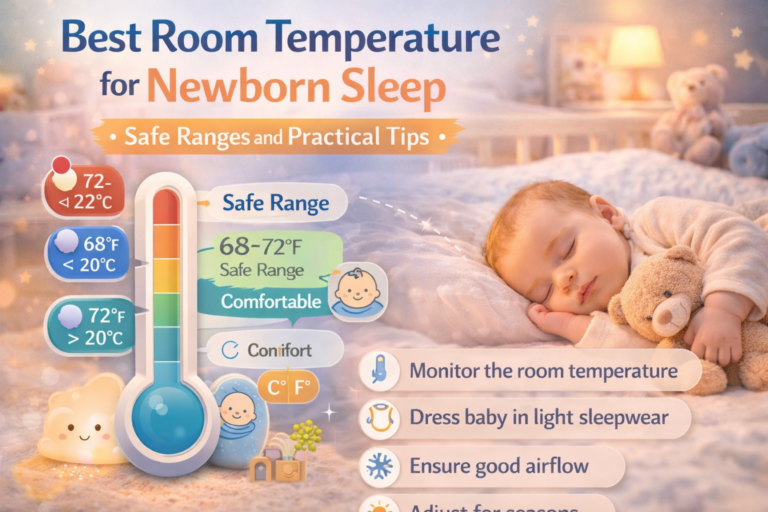
A comfortable nursery should not be too warm, too cold, too dry, or overly humid.
Parents should focus on:
- stable room temperature
- breathable sleepwear
- balanced humidity
- avoiding direct airflow on the crib
Relevant articles to link include:
Reduce Visual Clutter Near the Crib
The sleep zone should feel calm. Too many wall decorations, bold patterns, or hanging items near the crib can make the space feel busier than necessary.
A calmer crib area usually includes:
- simple wall space
- neutral tones
- no shelves above the crib
- minimal decorative distractions
This also supports safe crib placement in nursery.
Use Sound More Intentionally
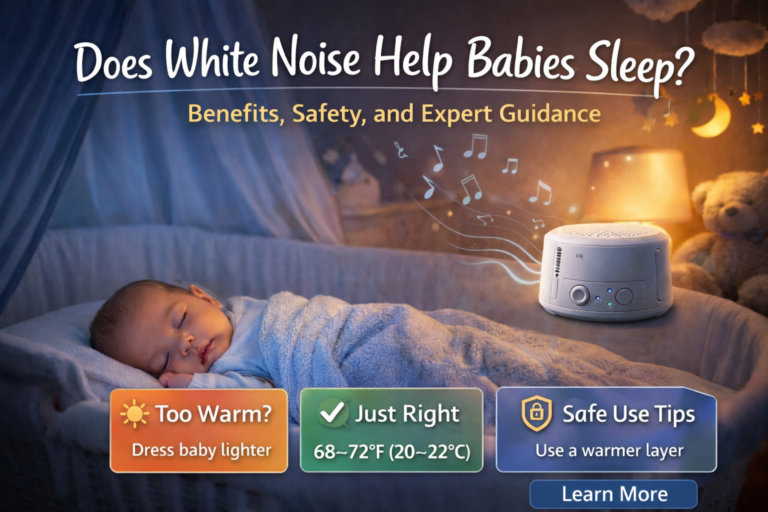
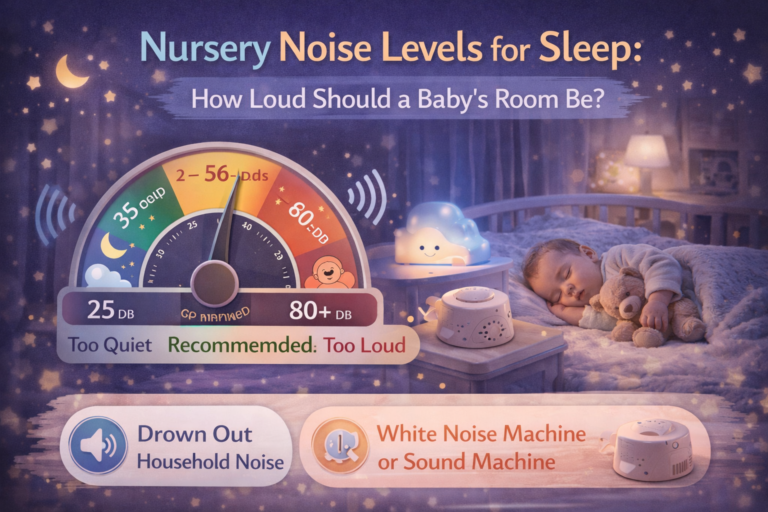
If the nursery is exposed to household noise, adding a consistent sound layer can help. White noise is a common choice because it masks sharper sounds that interrupt sleep.
This works best when:
- volume stays moderate
- the machine is placed safely
- the sound remains consistent across naps and bedtime
Link here to does white noise help babies sleep and nursery noise levels for sleep.
Choose Better Monitor Placement
Parents sometimes improve sleep simply by checking on the baby more quietly. Good monitor placement lets you observe without entering the room and changing light or sound conditions.
Useful links:
- baby monitor placement guide
- best baby monitor without wifi
- best baby monitor long range
- complete guide to baby monitors without wifi
At Safebabylab, we often see that better monitoring reduces the need to interrupt the baby’s sleep environment.
Make the Nursery Layout More Practical
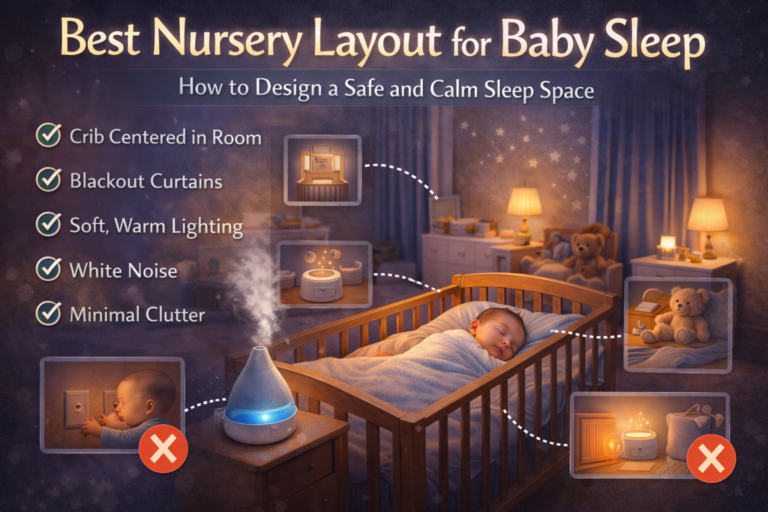
A sleep friendly nursery should also be practical for parents. You should be able to enter, soothe, and leave without bumping furniture or turning on bright overhead light.
Good layout usually means:
- open path to the crib
- changing area away from the sleep zone
- night care items within reach
- calm sleep area separate from stimulation
This connects naturally to best nursery layout for baby sleep.
Keep the Nursery Consistent
Consistency is one of the strongest sleep supports parents can create. The room should feel predictably similar at naps and bedtime.
That means:
- same light pattern
- similar temperature
- same sound conditions
- familiar sleep space
When the room changes constantly, babies receive weaker sleep cues.
Final Thoughts
How to make nursery more sleep friendly comes down to building a room that supports calm, consistency, and comfort. Parents do not need a perfect nursery. They need one that gives the baby clearer sleep signals and fewer environmental disruptions.
At Safebabylab, we believe the best nursery changes are often the simplest ones. Better darkness, steadier temperature, calmer sound, safer crib placement, and easier monitoring can all work together to improve sleep in a realistic way.
FAQ
What makes a nursery sleep friendly?
A sleep friendly nursery has stable temperature, low light, calm sound, safe crib placement, and minimal stimulation.
Do I need blackout curtains to make a nursery sleep friendly?
Not always, but they are one of the most effective upgrades in bright rooms.
Does nursery layout affect sleep?
Yes. Poor layout can increase stimulation, awkward nighttime care, and environmental disturbance.
Can a baby monitor help make the nursery more sleep friendly?
Yes. A good monitor lets parents check the baby without entering the room and disturbing sleep.
What is the easiest nursery change to start with?
Usually light control, temperature stability, or improving sound consistency.