Nursery Noise Levels for Sleep: How Loud Should a Baby’s Room Be?
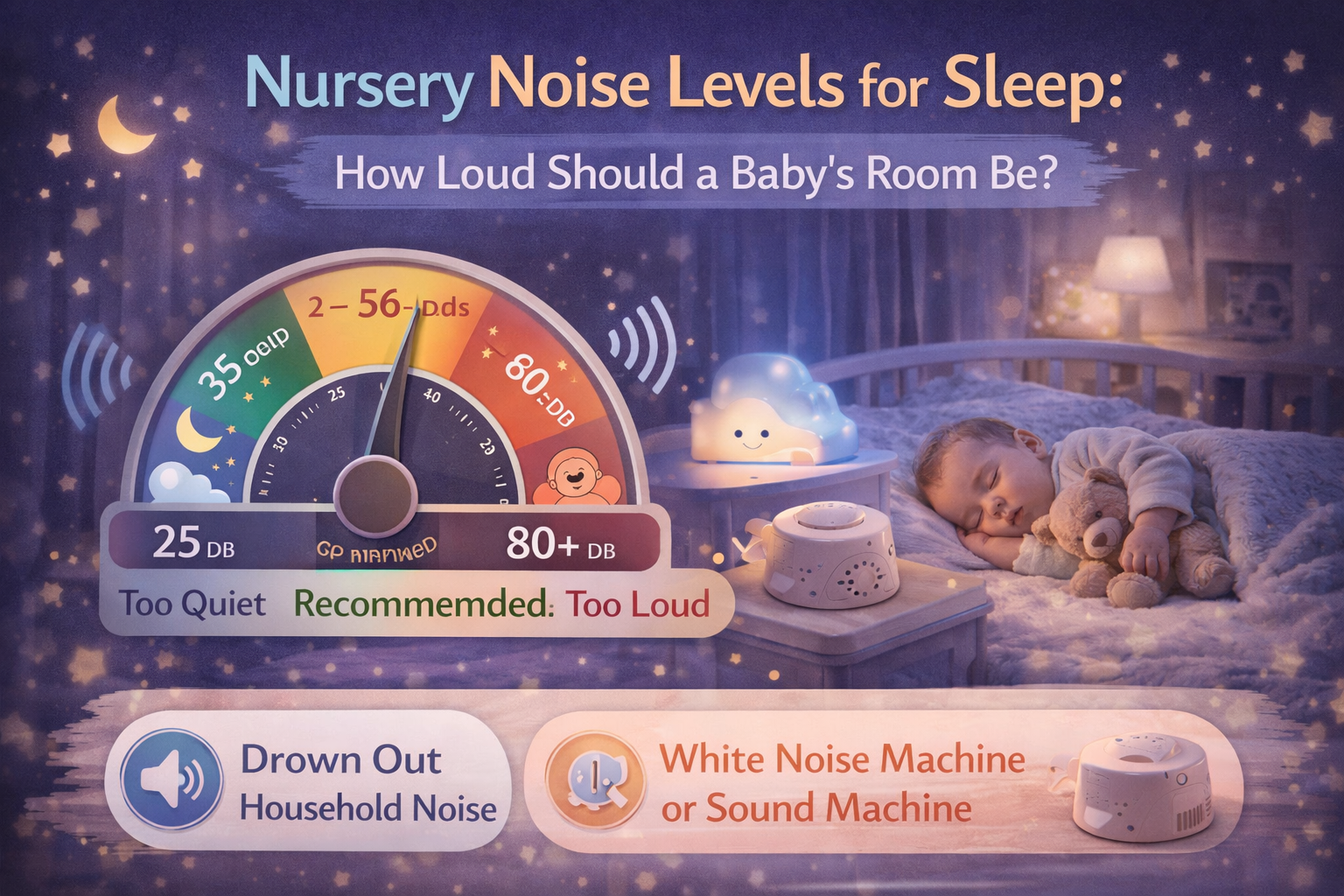
Nursery noise levels for sleep can influence how easily babies settle, how often they wake, and how restful sleep feels overall. Some babies seem able to sleep through anything, while others wake from the smallest shift in sound. Because of this, many parents wonder whether the nursery should be completely quiet, whether white noise is helpful, and what sound levels actually support better sleep.
The answer is usually not complete silence. A stable sound environment often matters more than silence itself. At Safebabylab, we often see that sudden changes in noise wake babies more often than consistent background sound. A quiet room that suddenly becomes noisy can be more disruptive than a room with gentle, steady sound.
This guide explains nursery noise levels for sleep, how sound affects babies, and how to build a calmer audio environment in the nursery.
Why Sound Affects Baby Sleep
Babies have developing nervous systems and move through light and deep sleep differently than adults. Sudden changes in sound can pull them out of light sleep and make them fully wake.
Noise affects sleep in several ways:
- abrupt sounds cause arousal
- inconsistent background noise makes settling harder
- loud environments can overstimulate babies
- predictable sound can become a sleep cue
This is why many families explore sound related tools alongside articles like does white noise help babies sleep.
Nursery Noise Levels for Sleep: What Matters Most
Nursery noise levels for sleep are not just about volume. They are about consistency, quality, and timing. A room with occasional spikes in sound may be more disruptive than a room with a gentle and stable background hum.
Helpful questions include:
- Is the room exposed to traffic noise?
- Do hallway sounds leak in easily?
- Does the home get louder during naps?
- Is there a sudden difference between bedtime and overnight sound?
Understanding the sound pattern matters more than simply labeling a room quiet or noisy.
Should the Nursery Be Completely Silent?
Not necessarily. Many babies do well with a gentle and consistent background sound. Complete silence can make small noises feel bigger. A door closing, a dog barking, or footsteps in the hallway may be enough to interrupt sleep.
A stable sound layer often helps reduce the impact of these sudden noises.
At Safebabylab, we usually encourage parents to think in terms of sound control rather than silence. The goal is a calmer, more predictable sound environment.
White Noise and Nursery Sound
White noise is popular because it masks sudden household sounds and creates a consistent sleep cue. It does not work for every family in the same way, but many babies respond well to it when it is used correctly.
Good white noise practice includes:
- keeping volume moderate
- placing the machine away from the crib
- using steady sound, not changing sounds constantly
- keeping the setup consistent
This links naturally to does white noise help babies sleep and helps support longer sleep stretches for babies who wake easily from environmental noise.
Common Noise Sources That Disrupt Sleep
Nursery sleep may be disrupted by:
- televisions in nearby rooms
- hallway conversations
- kitchen activity
- barking dogs
- doors closing
- loud toys or mobile devices
Some of these are easy to reduce. Others are part of everyday life. The goal is not to eliminate every sound, but to reduce sharp and unpredictable disruptions.
How to Improve Nursery Sound Conditions
Parents can improve nursery sound conditions by:
- using white noise if helpful
- softening door closing sounds
- using rugs or curtains to reduce echo
- keeping louder household routines away from nap time
- checking whether monitors or electronics make unnecessary sound
Many parents also use a non WiFi baby monitor to better observe how sound changes affect sleep without delays or connection issues
Sound, Monitors, and Parental Observation
Some parents worry that white noise or background sound might make it harder to hear the baby. In reality, a good monitor setup usually solves this concern.
Useful links here include:
- best baby monitor without wifi
- best baby monitor long range
- complete guide to baby monitors without wifi
At Safebabylab, we often see that a stable sound environment plus a good monitor setup helps parents feel less anxious and babies sleep more consistently.
Final Thoughts
Nursery noise levels for sleep matter because babies respond strongly to changes in sound. The best nursery sound environment is not always silent. It is usually steady, controlled, and calm.
At Safebabylab, we see sound as one of the major building blocks of a healthy sleep environment. When parents reduce sudden noise and create a more predictable audio setting, babies often settle faster and wake less from environmental disruptions.
FAQ
Should a baby sleep in a silent room?
Not always. Many babies sleep better with steady background sound than with complete silence.
Is white noise better than silence?
For many babies, yes, especially if the home has sudden noises that interrupt sleep.
Can household noise ruin naps?
Yes. Sharp or unpredictable noise can shorten naps or make settling harder.
How loud should white noise be in a nursery?
It should be moderate and gentle, not overpowering or placed too close to the crib.
Can baby monitors still work well with white noise?
Yes. A good baby monitor should still pick up important sounds clearly.