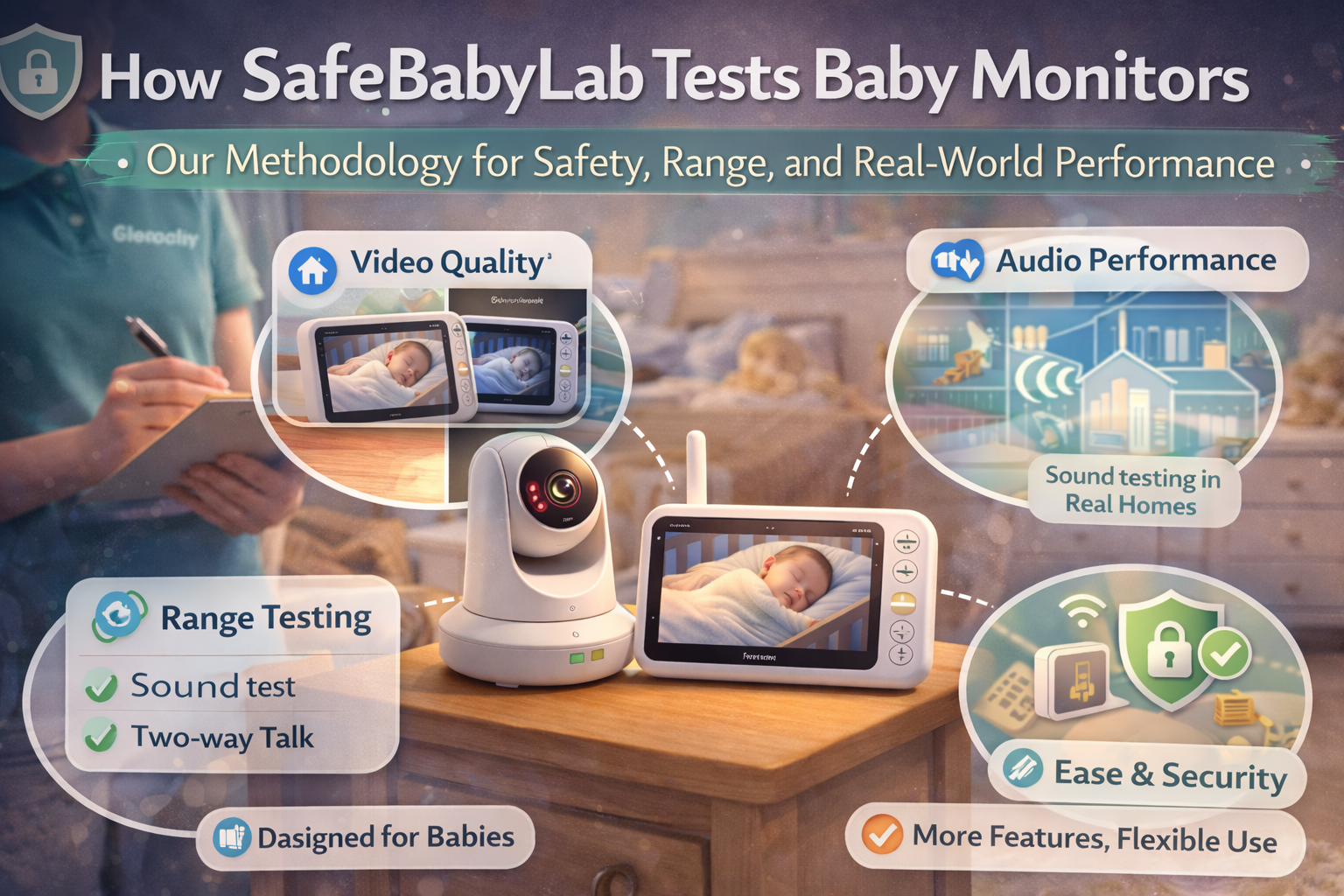
How we test baby monitors at safeBabyLab : Our Methodology for Safety, Range, and Real-World Performance
Choosing a baby monitor is one of the most important decisions new parents make when preparing a nursery. A good monitor can provide peace of mind, help parents respond quickly to their baby, and make nighttime care much easier. At SafeBabyLab, our goal is to help parents make informed decisions by explaining how baby monitors work, what features matter most, and how different models compare in real life.
This page explains how SafeBabyLab evaluates and analyzes baby monitors, including the factors that matter most for safety, reliability, and ease of use. Our goal is to provide clear, honest, and research-based guidance so parents can confidently choose a monitor that fits their home and their baby’s needs.
If you are new to baby monitoring technology, we also recommend reading our Complete Guide to Baby Monitors Without WiFi, which explains the main types of monitors and when each type works best.
Why Testing Baby Monitors Matters for Parents
Not all baby monitors perform the same. Some provide clear video and long-range signals, while others struggle with connectivity, short battery life, or poor nighttime visibility. Because parents often rely on monitors during sleep, nap time, and when the baby is in another room, reliability and safety are extremely important.
When evaluating monitors, we focus on factors that directly impact everyday use, including:
• signal reliability
• video and audio clarity
• range inside real homes
• battery performance
• privacy and security
• ease of use during nighttime care
These elements determine whether a monitor simply works in ideal conditions or whether it performs well in real homes with walls, furniture, and wireless interference.
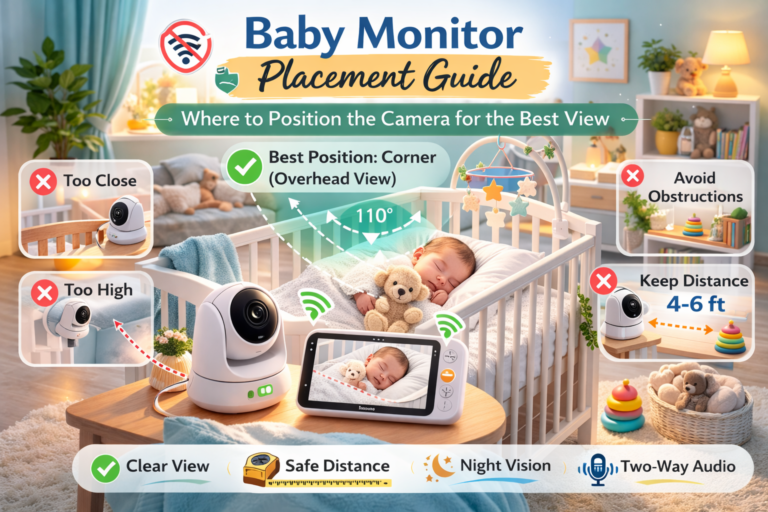
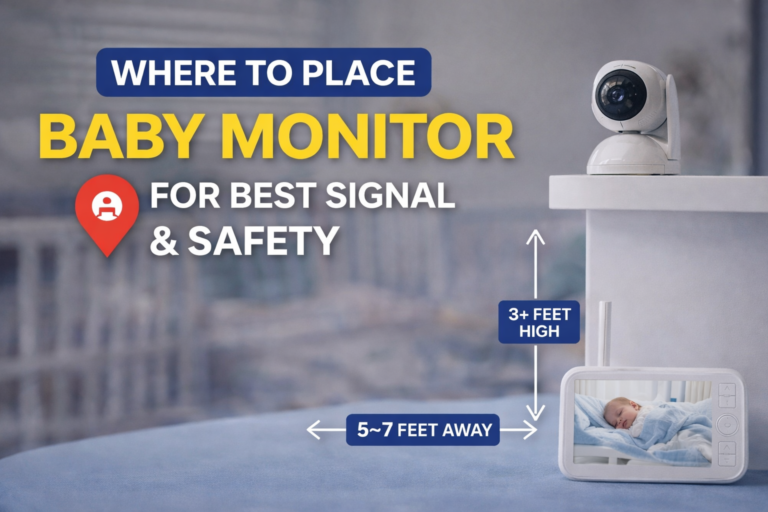
Understanding these factors can help parents choose equipment that supports safer sleep and better nighttime monitoring. For example, proper camera placement is just as important as camera quality. Our baby monitor placement guide explains how positioning affects both visibility and signal strength.
Our Approach to Evaluating Baby Monitors
SafeBabyLab does not focus on marketing claims. Instead, we analyze baby monitors based on practical factors that matter to parents during everyday use.
Our methodology combines:
• product specifications and manufacturer documentation
• real-world usage scenarios typical of family homes
• comparison of features across multiple models
• safety and privacy considerations recommended by pediatric organizations
This approach helps us identify both strengths and potential limitations of each monitor type.
In addition to product features, we also evaluate how monitors integrate into the broader nursery environment. Factors such as lighting, crib placement, and room layout can influence how effectively a monitor works. These environmental considerations are discussed further in our baby monitor camera guide.
Key Factors We Evaluate in Baby Monitors
When reviewing baby monitors, we focus on several core categories that influence reliability, usability, and safety.
Video Quality
Clear video is essential for quickly checking whether a baby is sleeping peacefully or needs attention.
We evaluate:
• camera resolution
• frame rate
• low-light performance
• clarity during night vision mode
• viewing angles
Night vision is particularly important because many parents rely on monitors during nighttime hours. Infrared night vision allows the camera to display clear images without bright lights that could disturb sleep.
Poor night vision can make it difficult to see breathing movements or determine whether a baby is awake or simply shifting during sleep.
Audio Clarity
Audio monitoring remains one of the most critical functions of any baby monitor. Even when video is available, parents often rely on sound alerts to know when their baby wakes up.
We examine:
• microphone sensitivity
• background noise filtering
• audio delay
• speaker clarity on the parent unit
A reliable monitor should pick up small sounds, such as rustling or quiet fussing, without amplifying normal environmental noise.
Parents who prefer simpler setups may consider audio-only monitors. Our How Baby Monitors Work article explains the differences between audio and video systems and when each type may be appropriate.
Signal Range and Reliability
One of the most common problems parents encounter is poor signal coverage within the home.
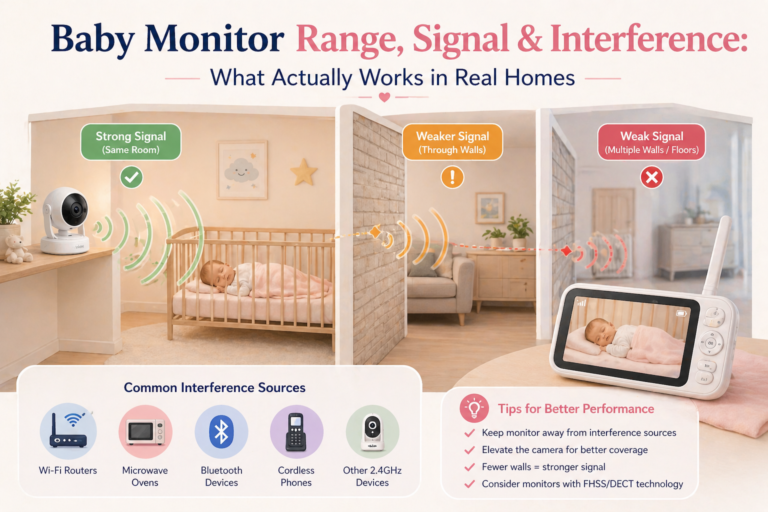
Manufacturers often advertise ranges of several hundred or even thousands of feet, but these measurements are usually taken outdoors without walls or interference.
We analyze how monitors perform in typical home conditions that include:
• interior walls
• multiple floors
• appliances and WiFi networks
• furniture and building materials
Range reliability determines whether parents can confidently move around the home while still receiving a stable signal.
Long-range monitoring is especially important in larger homes or multi-level houses.
Battery Life
Battery performance determines how long the parent unit or mobile device can operate without charging.
During evaluation, we consider:
• battery capacity
• screen power consumption
• standby time
• charging speed
Parents often rely on monitors during long overnight periods, so consistent battery performance helps prevent interruptions during sleep.
A monitor that runs out of power in the middle of the night can defeat the purpose of monitoring entirely.
Ease of Use
Parents often operate baby monitors while tired, holding a baby, or in low lighting conditions. Because of this, intuitive controls and simple interfaces are extremely valuable.
We examine:
• button layout and menu navigation
• ease of pairing the camera and parent unit
• setup time
• screen readability in dark rooms
A monitor should work smoothly without requiring complicated adjustments every time it is used.
Privacy and Security
Security is a major concern for many parents, especially with WiFi-connected monitors.
Some monitors transmit signals directly between the camera and parent unit, while others rely on internet connections.
We evaluate:
• encryption standards
• network requirements
• account security features
• potential privacy risks
Parents concerned about hacking or internet security often choose monitors that do not rely on WiFi. Our Do Baby Monitors Emit Radiation article also explains common safety concerns related to wireless devices in the nursery.
Understanding WiFi vs Non-WiFi Monitors
One of the biggest decisions parents face is whether to choose a WiFi monitor or a dedicated closed-circuit system.
Each option has advantages depending on the family’s needs.
WiFi Baby Monitors
WiFi monitors connect to smartphones and allow remote viewing through mobile apps.
Advantages may include:
• viewing from anywhere
• cloud recording features
• integration with smart home systems
However, they depend on stable internet connections and require proper network security.
Non-WiFi Baby Monitors
Non-WiFi monitors use direct radio signals between the camera and the parent unit.
Many parents prefer these systems because they:
• work without internet
• are simple to operate
• avoid potential hacking risks
These systems are often recommended for families who want reliable monitoring without relying on network connectivity.
Our Complete Guide to Baby Monitors Without WiFi explains why many parents prefer these monitors for privacy and simplicity.
Common Mistakes Parents Make When Choosing a Baby Monitor
Many parents select a monitor based only on price or brand recognition. However, several important factors can affect how well the monitor works in daily use.
Common mistakes include:
Choosing a Monitor With Insufficient Range
Homes with thick walls or multiple floors may require stronger signal systems than basic monitors provide.
Ignoring Camera Placement
Even high-quality monitors may provide poor visibility if the camera is placed incorrectly. Our baby monitor placement guide explains how to position cameras safely and effectively.
Overlooking Security Settings
WiFi monitors require proper password protection and network security to prevent unauthorized access.
Prioritizing Features Over Reliability
Extra features such as temperature sensors, motion alerts, or remote pan controls can be useful, but signal reliability and audio clarity are far more important.
What Parents Should Focus on First
When selecting a baby monitor, three factors matter most for most families:
- Reliable signal inside the home
- Clear nighttime visibility
- Simple, dependable operation
Parents who prioritize these elements usually end up with a monitor that performs consistently during everyday use.
Additional features can improve convenience, but they should not replace the core monitoring functions.
FAQ
Are baby monitors safe for newborns?
Yes. When used correctly, baby monitors are safe tools that help parents supervise infants while they sleep in a separate crib or room.
However, monitors should always complement safe sleep practices such as placing babies on their backs and using a firm mattress without loose bedding.
How far should a baby monitor camera be from the crib?
Most safety guidelines recommend placing cameras approximately three to six feet away from the crib. This distance provides a clear view while preventing cords or mounting hardware from reaching the sleeping area.
Do baby monitors emit radiation?
All wireless devices emit small amounts of radio frequency energy. However, typical baby monitor signals fall well within international safety guidelines. Parents who prefer lower wireless exposure may choose non-WiFi monitors.
Do I need a baby monitor if my baby sleeps in the same room?
Many parents use monitors even when room-sharing, especially if the baby sleeps in a separate crib across the room or if parents want audio alerts during naps.
What is the best type of baby monitor?
The best monitor depends on each family’s needs. Some parents prefer simple non-WiFi monitors for reliability, while others prefer WiFi models that allow remote viewing when away from home.
Our Goal at SafeBabyLab
At SafeBabyLab, our mission is to help parents understand baby monitoring technology and choose solutions that support safer sleep and easier nighttime care.
By focusing on practical factors such as signal reliability, visibility, and security, we aim to provide clear guidance that parents can trust.
Baby monitors are tools designed to support parenting, not replace attentive caregiving. When used correctly alongside safe sleep practices, they can provide reassurance and help parents respond quickly when their baby needs them.
If you are exploring different types of monitors, start with our Complete Guide to Baby Monitors Without WiFi, where we explain the major categories and help parents choose the right option for their nursery.