Baby Monitor Placement Guide: Where to Position the Camera for the Best View
Baby monitor placement guide information is essential for parents who want to monitor their baby safely and clearly throughout the night. A baby monitor camera can only provide useful information if it is positioned correctly. Poor placement can block the view of the crib, reduce signal strength, or create safety risks. Correct placement allows parents to see movement, monitor sleep positions, and respond quickly if the baby wakes.
Many parents focus on choosing the right monitor model, but positioning the camera properly is just as important. As explained in our complete guide to baby monitors without wifi, monitoring devices work best when the environment and layout support clear communication between the baby unit and the parent unit.
This baby monitor placement guide explains how to position the camera safely, how placement affects signal strength, and how to create the best viewing angle for monitoring your baby.
Why Baby Monitor Placement Matters
The position of a baby monitor camera affects several aspects of monitoring quality. Even a high quality monitor can produce poor results if the camera angle is incorrect.
Correct placement helps parents achieve:
- a clear view of the entire crib
- stable signal transmission
- safe distance between equipment and the baby
- reliable night vision performance
Poor placement may create blind spots or reduce the reliability of the signal. In some cases, incorrect placement may also create safety hazards if cables or equipment are within reach of the baby.
Understanding the correct placement methods helps parents avoid these problems.
Baby Monitor Placement Guide for the Best Viewing Angle
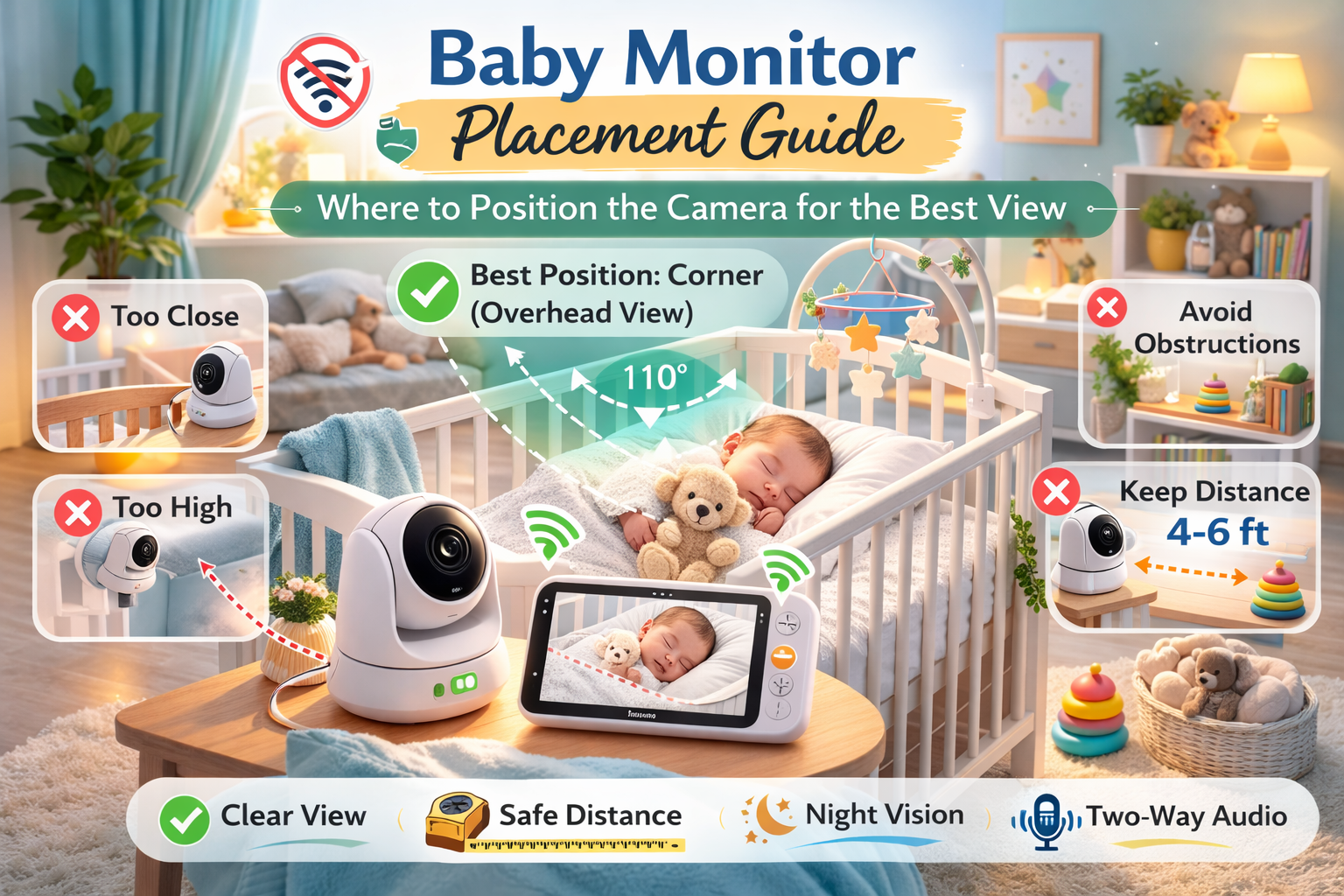
Baby monitor placement guide recommendations usually focus on camera angle and distance from the crib. The best position typically places the camera slightly above crib height and angled downward.
This position provides a clear view of:
- the baby’s entire sleep surface
- head and body movement
- breathing motion
- changes in sleep position
Mounting the camera too low can limit visibility, while placing it too high may make it difficult to see small movements.
Parents often mount cameras on the wall opposite the crib to capture the entire sleeping area.
When positioned correctly, the monitor can display the full crib without requiring constant adjustment.
Safe Distance Between Camera and Crib
Safety is the most important consideration when installing monitoring equipment.
The camera should always remain far enough from the crib to prevent the baby from reaching cables or equipment.
Recommended safety practices include:
- keeping cables well out of reach
- avoiding placement directly on the crib rail
- mounting cameras securely on walls or furniture
Many experts recommend positioning the camera at least three feet away from the crib.
This distance ensures the baby cannot grab the device or its cords while still allowing a clear view.
Parents who follow safe positioning guidelines also improve signal reliability.
Best Wall Locations for Baby Monitor Cameras
The wall location chosen for the camera affects both visibility and signal strength.
The most common placement options include:
Opposite Wall Placement
Mounting the camera on the wall opposite the crib often provides the clearest view.
This angle allows the camera to capture the entire mattress and surrounding space.
Corner Placement
Some parents place cameras in room corners to achieve wider viewing angles.
This approach can work well in larger nurseries.
High Shelf Placement
Placing the monitor on a high shelf may also work, provided the camera angle remains stable and the device cannot fall.
Regardless of the location, the camera should remain stable and securely positioned.
Avoid These Common Placement Mistakes
Many parents unintentionally place baby monitors in positions that reduce monitoring effectiveness.
Common mistakes include:
- placing the camera too close to the crib
- positioning the camera directly above bright lights
- mounting the monitor too low
- placing the camera behind crib bars
These mistakes can create distorted images, blocked views, or glare in night vision mode.
Learning about baby monitor placement mistakes most parents make often helps parents improve monitoring visibility significantly.
Small adjustments in camera placement can make a large difference.
How Placement Affects Signal Strength
Camera placement also influences how well the monitor signal travels through the home.
Signals may weaken when they pass through:
- thick walls
- concrete floors
- metal structures
- large appliances
Placing the baby unit in an open location with fewer obstacles can improve signal reliability.
Parents living in larger homes often choose devices designed for extended coverage. Our best baby monitor long range guide explores models that maintain stable signals across multiple rooms and floors.
Signal strength depends on both monitor quality and placement.
Ideal Height for Baby Monitor Cameras
Height is another important factor in camera positioning.
A slightly elevated position often provides the best viewing results.
Typical height recommendations include:
- placing the camera 6 to 8 feet above the floor
- angling the lens downward toward the crib
- ensuring the full mattress area remains visible
This angle allows parents to observe both movement and sleep position.
Higher placement also reduces the chance that the baby can reach the camera or cables.
Stable mounting ensures the camera remains fixed in position.
Night Vision Performance and Camera Position
Night vision is an essential feature for monitoring babies during sleep. Most baby monitors use infrared technology to display images in low light environments.
Proper placement improves night vision clarity.
Helpful tips include:
- avoiding direct light sources near the camera
- keeping reflective surfaces away from the lens
- maintaining a clear view of the crib mattress
Lighting conditions also influence video quality. As explained in nursery lighting for baby sleep, dim warm lighting supports sleep without interfering with monitor visibility.
Balanced lighting helps cameras produce clearer nighttime images.
Placement for Multiple Room Monitoring
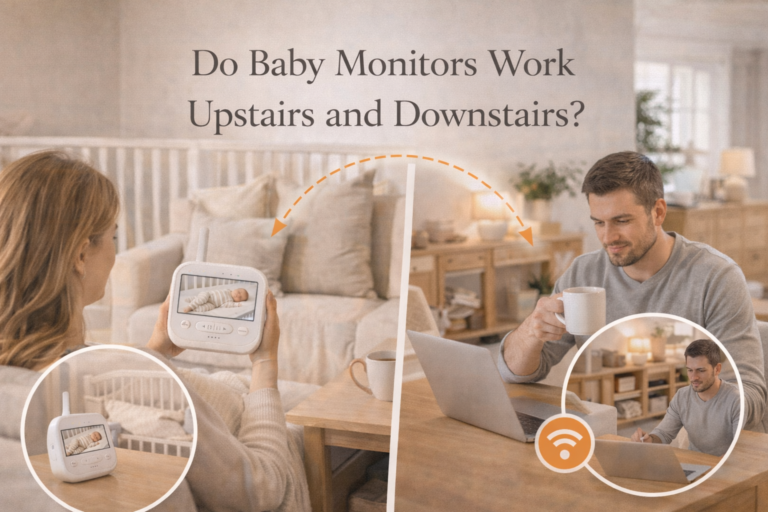
Some families use baby monitors while moving throughout different parts of the house. In these situations, camera placement should support stable signals across the home.
Helpful strategies include:
- placing the camera away from thick walls
- avoiding corners that block signal paths
- positioning the baby unit near open areas
Parents who rely on extended coverage devices described in best baby monitor long range often achieve stronger signals when the baby unit sits in an unobstructed location.
Testing monitor range during setup helps confirm reliable coverage.
Testing Your Baby Monitor Setup
After installing the camera, parents should test the monitoring system from different areas of the house.
Testing usually includes:
- checking visibility from the parent monitor
- walking through multiple rooms while observing signal strength
- adjusting the camera angle if necessary
- confirming night vision clarity in dark conditions
Testing ensures the monitor works reliably before relying on it overnight.
Even small camera adjustments can improve both image quality and signal strength.
Creating a Calm Sleep Environment Around the Camera
Monitoring equipment should not disturb the baby’s sleep environment.
Parents should avoid placing the camera near:
- bright lights
- noisy electronics
- moving objects
Keeping the area around the crib simple and calm helps babies sleep more peacefully.
Environmental factors such as sound stability discussed in does white noise help babies sleep also contribute to better sleep patterns.
The monitor should support observation without adding stimulation.
Long Term Monitoring Tips
As babies grow and become more active, monitor placement may need adjustments.
Parents may reposition cameras when babies begin:
- rolling
- crawling
- standing in the crib
Maintaining a clear view of the crib remains important throughout early development.
Regularly checking camera placement ensures continued safety and monitoring effectiveness.
Final Thoughts
A proper baby monitor placement guide helps parents set up monitoring systems that provide clear visibility, strong signal strength, and safe equipment positioning. The right placement allows parents to observe their baby comfortably while maintaining a calm and stable sleep environment.
By positioning the camera above crib height, keeping cables out of reach, and maintaining clear viewing angles, parents can maximize the effectiveness of their baby monitor. Combined with thoughtful nursery design and environmental awareness, proper placement ensures monitoring remains both safe and reliable.
Frequently Asked Questions
Where should a baby monitor be placed in a nursery?
The camera should be mounted above crib height and angled downward to capture the entire sleeping area.
How far should a baby monitor be from the crib?
Most experts recommend keeping the monitor at least three feet away from the crib to prevent reach hazards.
Can a baby monitor be attached to the crib?
It is safer to mount the camera on a wall or stable surface rather than attaching it directly to the crib.
Why is my baby monitor camera blurry at night?
Night vision quality can be affected by lighting conditions, reflective surfaces, or incorrect camera angles.
Does placement affect baby monitor signal strength?
Yes. Walls, floors, and obstacles between the baby unit and parent unit can reduce signal strength.