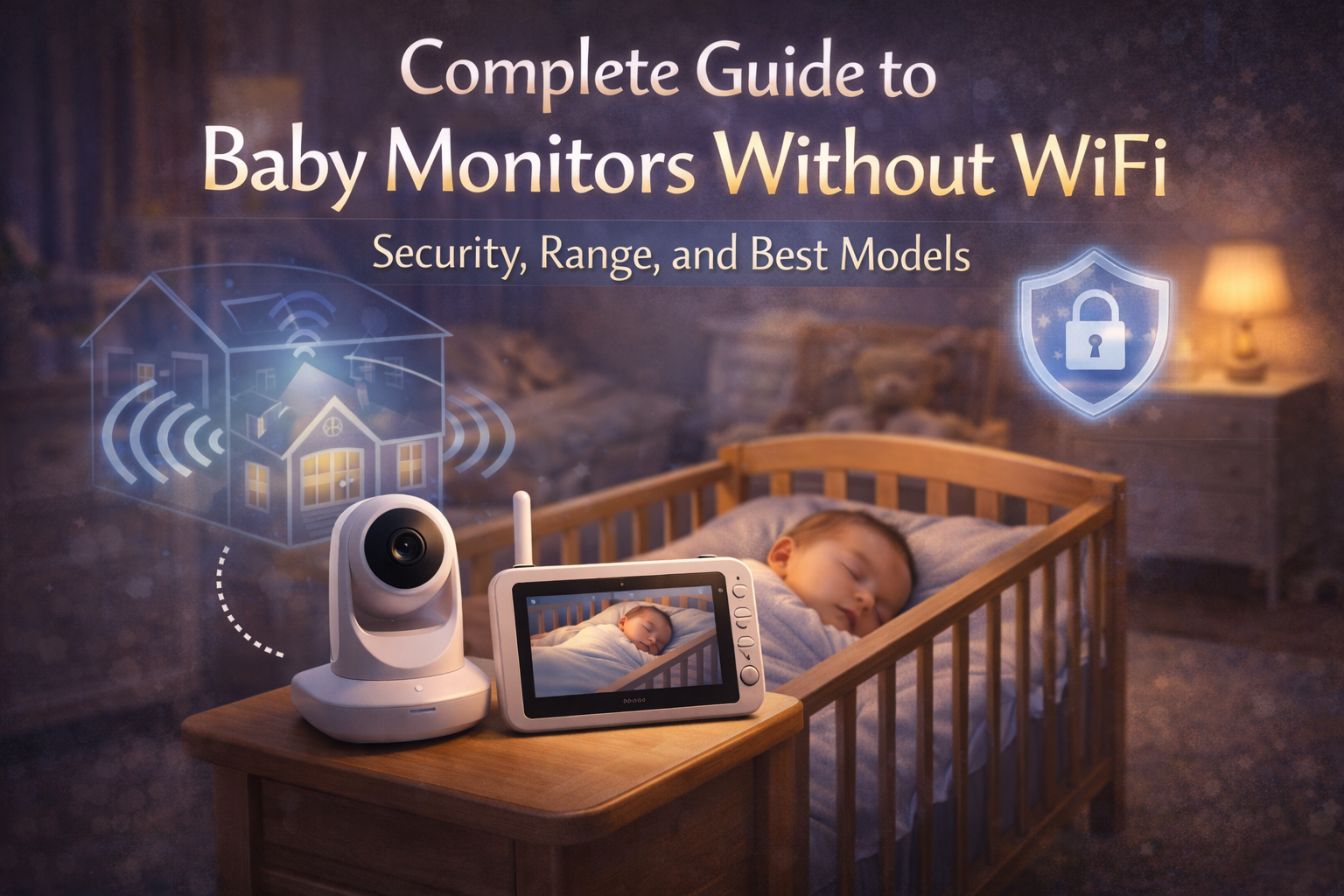
Complete Guide to Baby Monitors Without WiFi: Security, Range, and Best Models
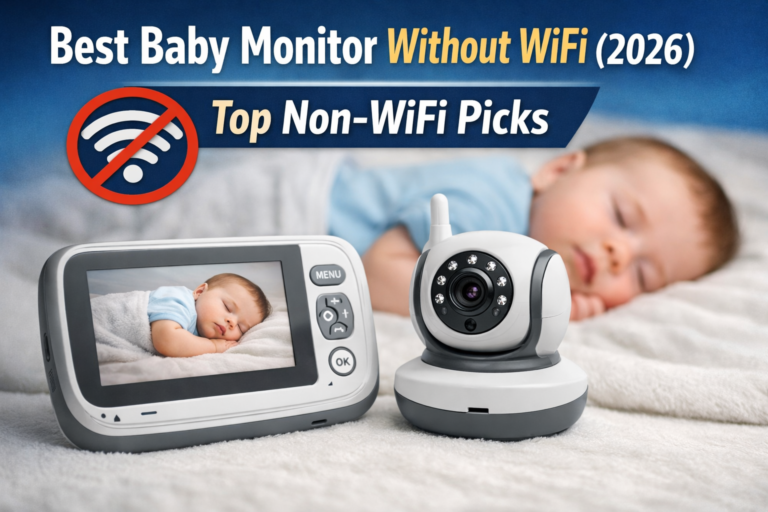
Baby monitors without wifi have become one of the most popular choices for parents who want reliable monitoring without relying on internet connections. While many modern baby monitors connect to apps and cloud services, a large number of families prefer devices that work independently from the internet. These monitors provide direct communication between the baby unit and the parent unit, creating a private and stable monitoring system.
Parents often choose baby monitors without wifi because they prioritize privacy, consistent signal reliability, and simple setup. Internet connected devices may offer remote viewing features, but they also depend on network stability and can introduce security concerns. Non WiFi monitors remove these risks by operating through dedicated radio frequencies instead of home internet networks.
Understanding how these monitors work helps parents decide whether they are the right choice for their family. As explained in our baby sleep environment explained guide, a calm and stable environment plays a major role in sleep quality. Monitoring tools are designed to help parents observe sleep patterns without disturbing that environment.
This complete guide explains how baby monitors without wifi function, why many parents prefer them, how range and security work, and what features matter most when choosing a model.
Why Parents Choose Baby Monitors Without WiFi
Parents today have more monitoring options than ever before. Some baby monitors connect through mobile apps and cloud platforms, while others rely on direct communication between two devices.
Baby monitors without wifi appeal to many families because they provide a simple and secure solution. Instead of streaming video through internet servers, the camera unit sends a signal directly to the parent monitor using radio frequencies.
This approach offers several advantages:
- private signal transmission
- stable connection inside the home
- no dependence on internet speed
- faster setup with fewer technical steps
Parents who prefer straightforward technology often find these systems easier to use.
How Baby Monitors Without WiFi Work
Baby monitors without wifi typically use radio communication technology such as FHSS. This stands for Frequency Hopping Spread Spectrum. It allows devices to switch frequencies rapidly, preventing interference and improving connection stability.
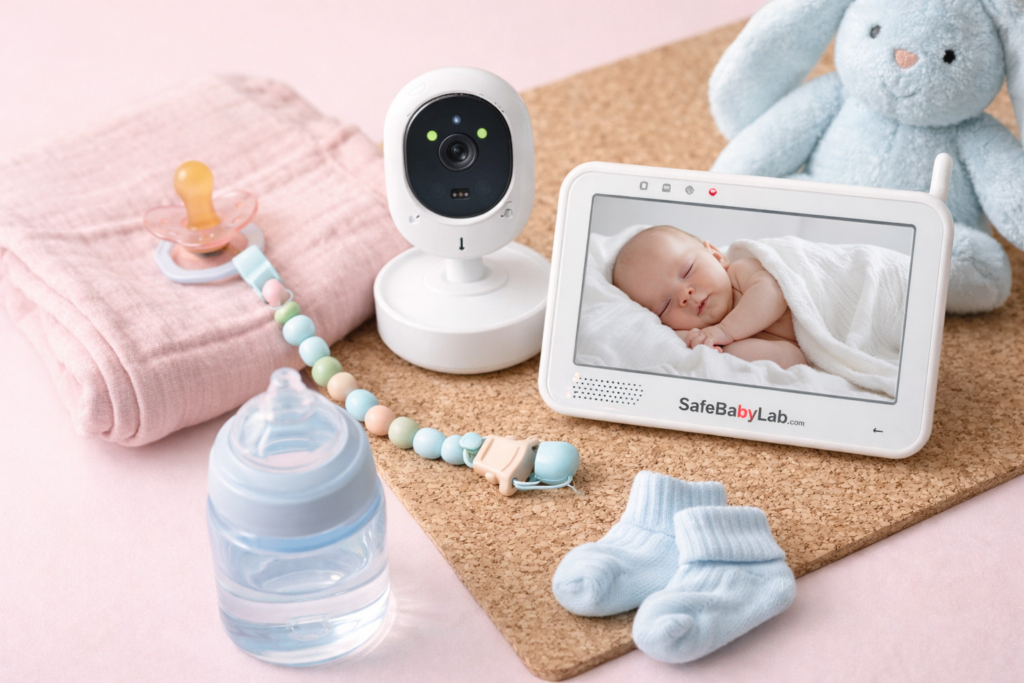
The system usually includes two main components:
- Baby unit
The camera or audio device placed near the crib. - Parent unit
A handheld monitor with a screen or speaker used by caregivers.
The baby unit captures video and sound and sends the signal directly to the parent unit. Because the system does not rely on internet networks, the signal remains local and private.
Parents who use monitoring setups described in best baby monitor long range often rely on this technology because it provides stable signals across larger homes.
Security Advantages of Non WiFi Baby Monitors
One of the most common concerns parents express about smart baby monitors is online security. Internet connected cameras sometimes rely on cloud services, passwords, and mobile apps.
Baby monitors without wifi avoid many of these concerns because they operate on closed communication systems.
Security benefits include:
- no internet streaming
- no external server connections
- reduced hacking risk
- private communication between devices
For families focused on privacy, these monitors provide peace of mind.
Baby Monitors Without WiFi vs WiFi Monitors
Understanding the difference between monitor types helps parents choose the best option for their situation.
WiFi Baby Monitors
WiFi monitors connect to home networks and allow viewing through smartphones or apps.
Advantages:
- remote viewing outside the home
- app notifications
- cloud storage features
Limitations:
- dependent on internet stability
- potential security concerns
- more complicated setup
Non WiFi Baby Monitors
Baby monitors without wifi operate through direct signal transmission.
Advantages:
- stronger local reliability
- enhanced privacy
- easy setup
- consistent connection
Limitations:
- monitoring limited to signal range
- fewer smartphone integrations
Parents often choose based on whether they prioritize convenience or privacy.
Understanding Monitor Range
Range is one of the most important specifications for non WiFi baby monitors. It determines how far the parent unit can move away from the baby unit while maintaining a signal.
Many modern monitors advertise ranges between 600 and 1000 feet in open environments. However, walls, furniture, and building materials can reduce this distance.
Parents living in larger homes often look for devices designed specifically for extended coverage. Our best baby monitor long range guide explores models that maintain reliable signals across multiple rooms or outdoor areas.
Factors that influence range include:
- wall thickness
- floor levels
- electronic interference
- monitor antenna quality
Understanding these factors helps parents choose the right device for their home layout.
Video Quality in Non WiFi Baby Monitors
Video clarity has improved significantly in modern baby monitors without wifi. Many models now offer high resolution screens that allow parents to observe sleep behavior clearly.
Typical features include:
- HD video resolution
- night vision capabilities
- zoom functions
- wide viewing angles
Night vision is particularly useful because babies spend many hours sleeping in dark environments. Infrared technology allows cameras to capture images without visible light that might disturb sleep.
Parents designing nurseries based on nursery lighting for baby sleep often rely on night vision monitors to maintain low light conditions while still observing the baby.
Audio Monitoring and Two Way Communication
Many baby monitors include two way audio features that allow parents to speak to their baby through the parent unit.
This feature can be helpful for:
- soothing babies without entering the room
- communicating with older infants
- calming babies who wake briefly
Clear audio monitoring also allows parents to detect subtle sounds such as coughing, movement, or crying.
Battery Life and Portability
Battery life plays a major role in monitor usability. Parent units typically include rechargeable batteries designed to last through overnight monitoring.
Typical battery life ranges from:
- 8 to 12 hours for video monitoring
- longer for audio only monitoring
Portable monitors allow parents to move around the house while maintaining connection with the baby unit.
This flexibility becomes useful during household tasks or evening routines.
Screen Size and Parent Unit Displays
The parent unit screen is the primary interface used to monitor the baby. Larger screens allow clearer viewing of movement and sleep positions.
Common screen sizes include:
- 3.5 inch displays
- 4.3 inch displays
- 5 inch displays
Larger screens are often easier to view at night or from a distance.
However, smaller screens may extend battery life.
Parents should balance viewing comfort with portability when choosing a monitor.
Monitor Placement for Best Visibility
Placement of the baby unit camera affects how well parents can observe the crib area.
Recommended placement includes:
- mounting above crib height
- positioning opposite the crib
- maintaining a wide angle view
- keeping cables out of reach
Parents who adjust camera angles after learning baby monitor placement mistakes most parents make often notice clearer monitoring coverage.
Proper placement also improves signal reliability.
When Non WiFi Monitors Work Best
Baby monitors without wifi work particularly well in certain situations.
Examples include:
- families focused on privacy
- homes with unreliable internet
- parents who prefer simple devices
- households avoiding smartphone apps
These monitors provide consistent monitoring without additional technological complexity.
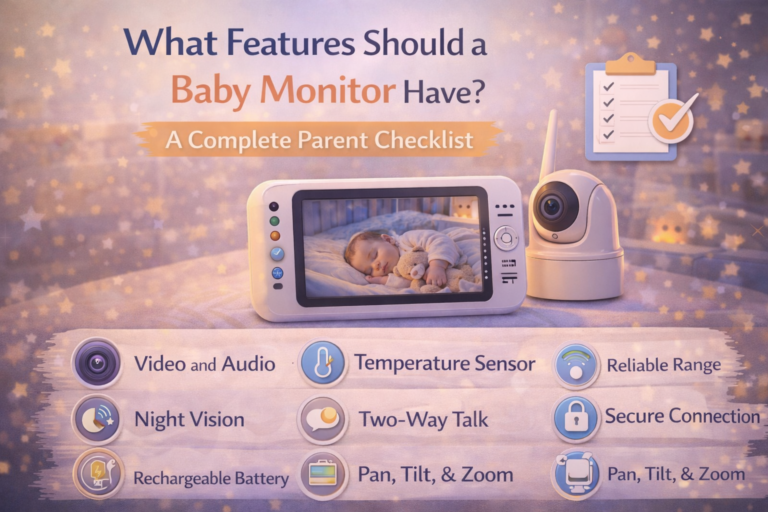
Common Features to Look For
When comparing monitors, parents should evaluate several important features.
Key considerations include:
- signal range
- video clarity
- night vision quality
- battery life
- audio sensitivity
- screen size
Additional features such as temperature monitoring or lullabies may also appear in some models.
Parents should focus primarily on reliability rather than extra features.
How Baby Monitors Support Sleep Observation
Baby monitors help parents observe sleep patterns and environmental influences without entering the nursery.
Monitoring can reveal:
- sleep movement patterns
- waking cycles
- environmental disturbances
- breathing sounds
Combined with factors discussed in baby room humidity for sleep, parents can better understand how environmental conditions affect nighttime rest.
Observation often leads to small adjustments that improve sleep quality.
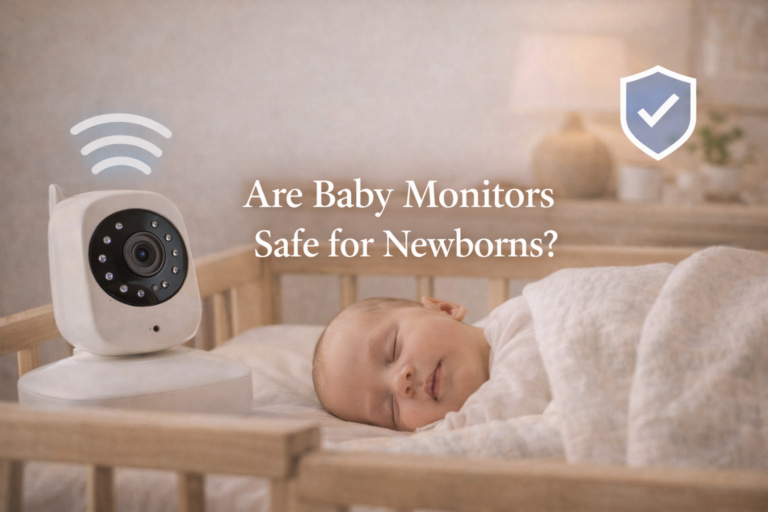
Are Baby Monitors Without WiFi Safe?
Yes. When used correctly, these monitors are considered safe and reliable. They operate on regulated radio frequencies similar to many household devices.
Safety guidelines include:
- placing cables outside crib reach
- maintaining safe camera distance
- avoiding direct monitor placement inside the crib
Following manufacturer instructions ensures proper usage.
Final Thoughts
Baby monitors without wifi remain one of the most trusted solutions for parents who prioritize privacy, reliability, and simple operation. By transmitting signals directly between devices, these monitors provide consistent monitoring without relying on internet networks.
For many families, the balance between security, signal stability, and ease of use makes non WiFi monitors an ideal choice. Combined with thoughtful nursery design and environmental awareness, these monitors allow parents to observe sleep safely while maintaining a calm sleep environment.
Understanding how these systems work helps parents choose a monitoring solution that supports both safety and peace of mind.
Frequently Asked Questions
Are baby monitors without WiFi safer?
Many parents believe so because they do not rely on internet networks or cloud services.
How far do non WiFi baby monitors reach?
Most models range from 600 to 1000 feet in open environments, though walls can reduce distance.
Do baby monitors without WiFi have video?
Yes. Many include video screens with night vision and zoom functions.
Can non WiFi baby monitors be hacked?
Because they do not connect to the internet, the risk is significantly lower than with WiFi cameras.
Are these monitors difficult to set up?
No. Most systems work immediately after powering on both units.