Does White Noise Help Babies Sleep? Benefits, Safety, and Expert Guidance
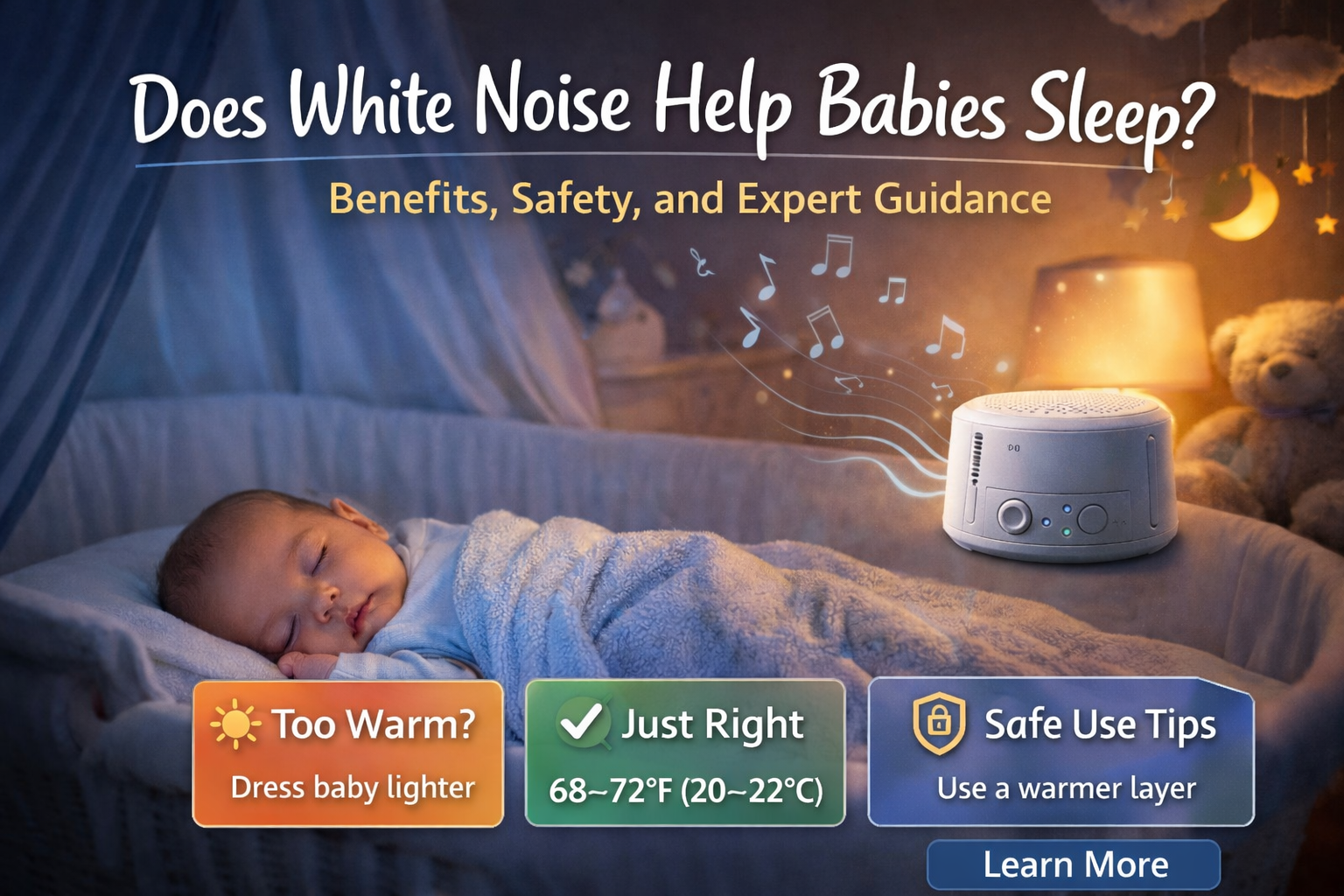
Does white noise help babies sleep is one of the most common questions new parents ask when trying to improve nighttime routines. Many babies struggle with sudden awakenings caused by environmental sounds, and parents often look for simple solutions that create calmer sleep conditions. White noise has become popular because it mimics familiar sounds babies experienced before birth and can help create a more consistent sleep environment.
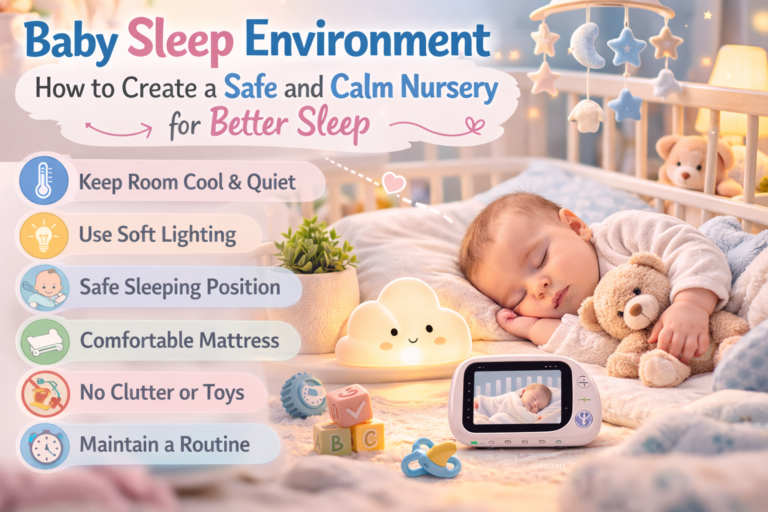
As explained in our baby sleep environment explained guide, sleep quality depends heavily on surrounding conditions such as temperature, lighting, and sound stability. White noise works by reducing sudden sound changes that may interrupt sleep cycles.
This article explains how white noise affects baby sleep, when it helps, and how to use it safely.
Why Babies Respond Well to White Noise
Before birth, babies constantly hear rhythmic internal sounds such as heartbeat and blood flow. Silence after birth can feel unfamiliar rather than comforting.
White noise creates a steady background sound that masks unpredictable noises like doors closing, conversations, or household movement. Instead of reacting to every sudden sound, babies remain in deeper sleep stages.
Parents often notice fewer awakenings when environmental consistency improves, especially when combined with monitoring setups discussed in best baby monitor without wifi, where sleep patterns become easier to observe overnight.
Does White Noise Help Babies Sleep Scientifically?
Research suggests consistent background sound can help infants fall asleep faster because it reduces sensory changes that trigger alertness.
White noise may help by:
- Masking sudden environmental noise
- Creating predictable auditory surroundings
- Supporting sleep association cues
- Encouraging longer sleep stretches
However, white noise is not a replacement for proper sleep routines or a safe sleep setup. It works best as one part of a balanced environment.
Does White Noise Help Babies Sleep Better During Night Wakings
Many babies wake briefly between sleep cycles. Sudden silence or unexpected noise can fully wake them instead of allowing them to resettle.
White noise maintains continuity between sleep cycles. Because the sound remains constant, babies are less likely to notice minor environmental changes.
Parents monitoring nighttime activity often observe smoother transitions between sleep phases when sound conditions remain stable, similar to patterns explained in baby monitor placement mistakes most parents make, where environmental consistency improves sleep behavior.
How Loud Should White Noise Be for Babies?
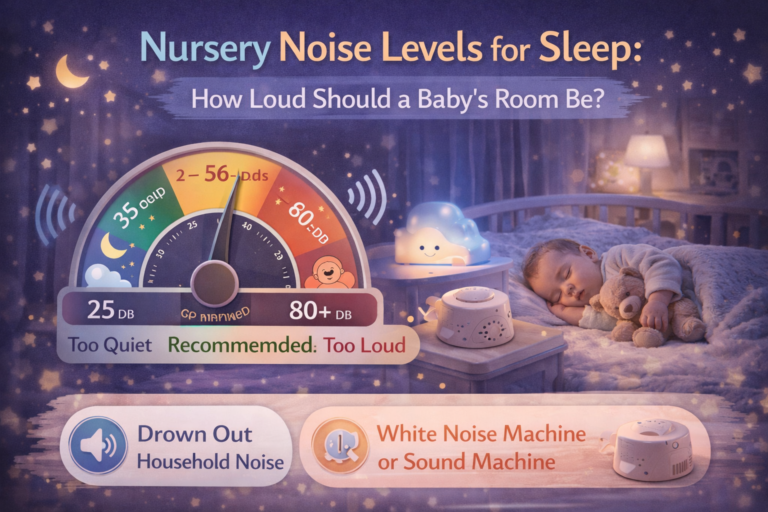
Volume is one of the most important safety considerations.
Recommended guidelines include:
- Keep sound below approximately 50 decibels
- Place the device several feet away from the crib
- Avoid positioning directly next to the baby’s head
White noise should blend into the background rather than dominate the room.
If adults must raise their voices to talk over the sound, it is likely too loud.
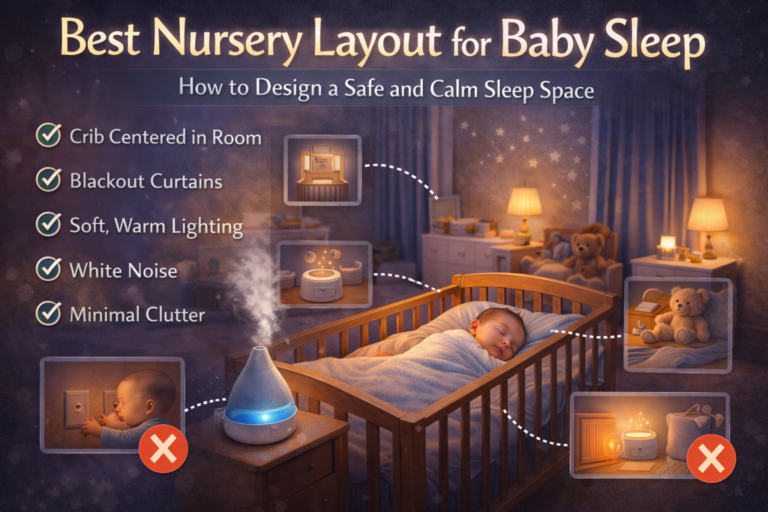
Best Placement for White Noise Devices
Placement affects both effectiveness and safety.
Ideal positioning:
- Across the room rather than next to the crib
- Away from direct airflow or bedding
- Positioned to distribute sound evenly
Proper placement creates consistent sound coverage without overstimulation.
When White Noise May Not Help
White noise is helpful for many babies but not all.
Situations where it may be less effective include:
- Babies sensitive to continuous sound
- Excessively loud machines
- Inconsistent usage patterns
- Poor overall sleep environment
Sleep improvements usually occur when white noise supports an already balanced environment rather than replacing healthy sleep habits.
Can Babies Become Dependent on White Noise?
Parents often worry about long term dependence. In most cases, white noise simply becomes a familiar sleep cue similar to dim lighting or bedtime routines.
If parents choose to stop using white noise later, gradual volume reduction typically allows babies to adapt without difficulty.
Consistency matters more than permanence.
White Noise as Part of a Complete Sleep Environment
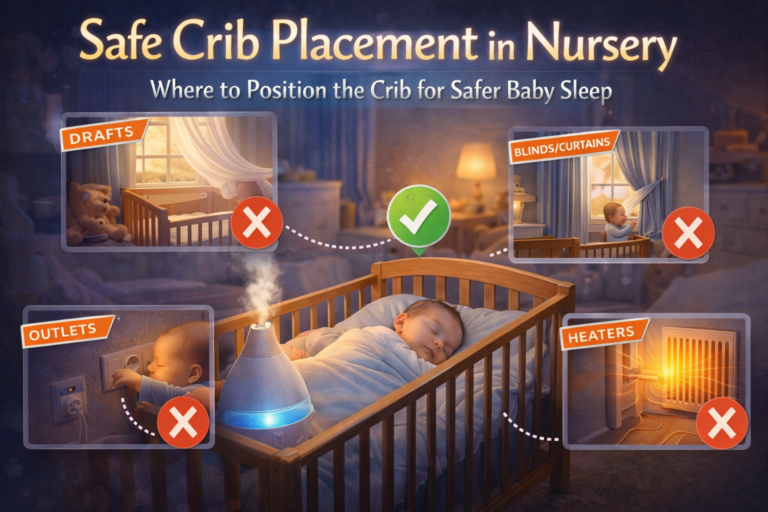
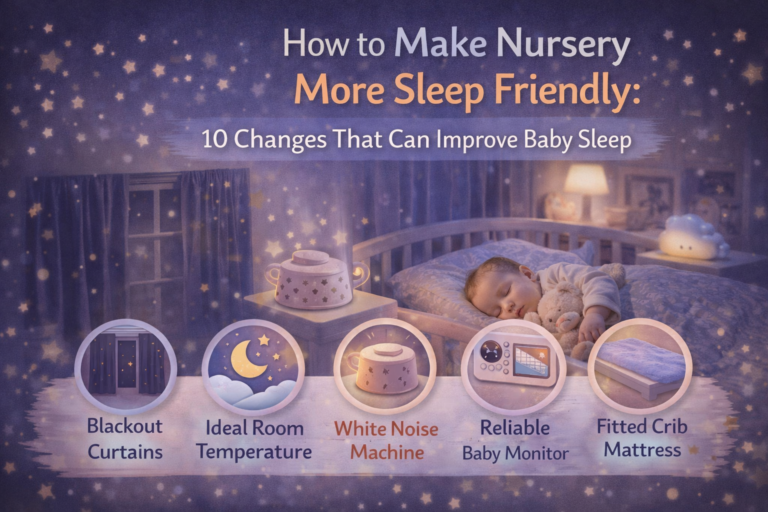
White noise works best when combined with other environmental factors such as proper temperature, lighting, and safe crib placement.
A stable environment reduces overstimulation and helps babies transition smoothly between sleep cycles. Monitoring tools help parents observe patterns, but environmental adjustments create the foundation for better rest.
Understanding how sound interacts with temperature and lighting helps parents create predictable sleep conditions rather than relying on a single solution.
Final Thoughts
Does white noise help babies sleep depends largely on how it is used. When applied safely and consistently, white noise can reduce sleep disruptions, mask sudden sounds, and support longer rest periods.
Used as part of a well-designed sleep environment, white noise becomes a simple tool that helps babies feel secure and relaxed during sleep. Parents who focus on environmental stability often notice calmer nights and more predictable sleep patterns over time.
FAQ
Is white noise safe for newborns?
Yes, when used at moderate volume and placed at a safe distance from the crib.
How long should white noise stay on during sleep?
Many parents keep white noise playing continuously through sleep to maintain sound consistency.
Can white noise damage a baby’s hearing?
Not when volume remains low and devices are positioned away from the crib.
Should white noise be used for naps too?
Using the same sound environment for naps and nighttime sleep can strengthen sleep associations.
When should parents stop using white noise?
There is no required age. Parents can gradually reduce usage once sleep patterns stabilize.