Ideal Baby Room Temperature for Sleep: Safe Ranges and Practical Tips
Temperature is one of the most important factors influencing how safely and comfortably a baby sleeps. While parents often focus on sleep routines or feeding schedules, the physical environment plays an equally important role in nighttime rest. Even small temperature changes can affect how easily a baby falls asleep and how often they wake during the night.
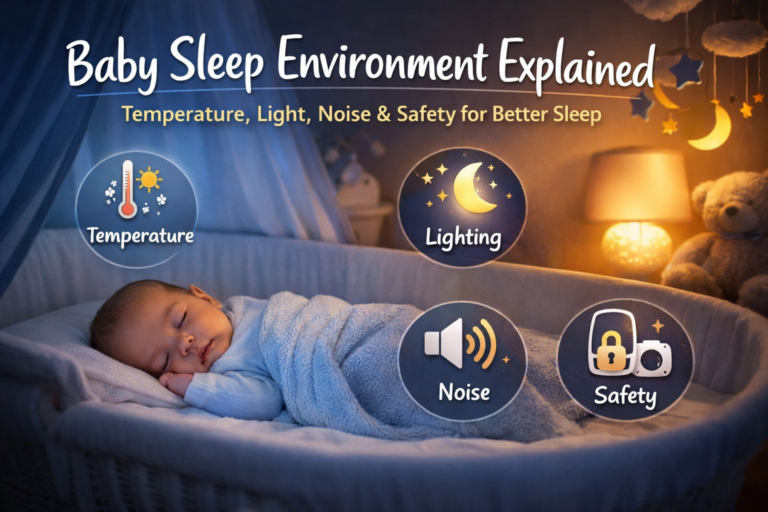
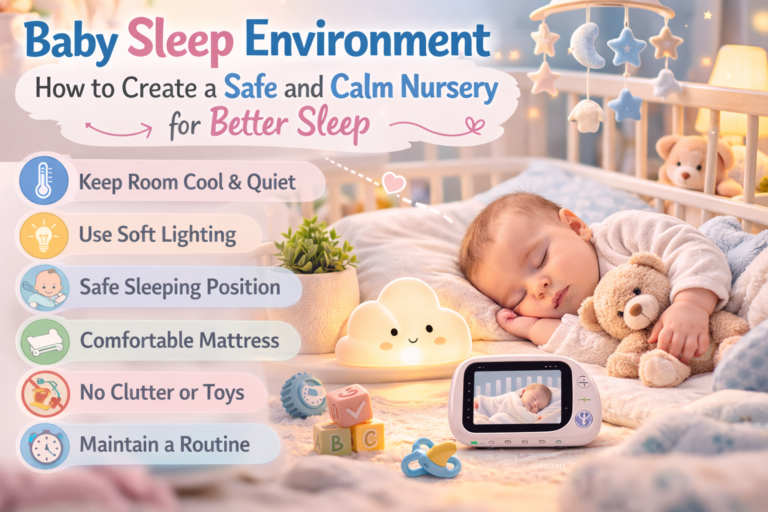
A well-balanced sleep environment, explained in our baby sleep environment explained guide, helps babies regulate comfort naturally. Monitoring tools allow parents to observe sleep patterns, but proper temperature management prevents many sleep disruptions before they begin.
This guide explains the safest temperature range for baby sleep, how to recognize discomfort, and practical ways to maintain a stable nursery environment.
What Is the Ideal Baby Room Temperature?
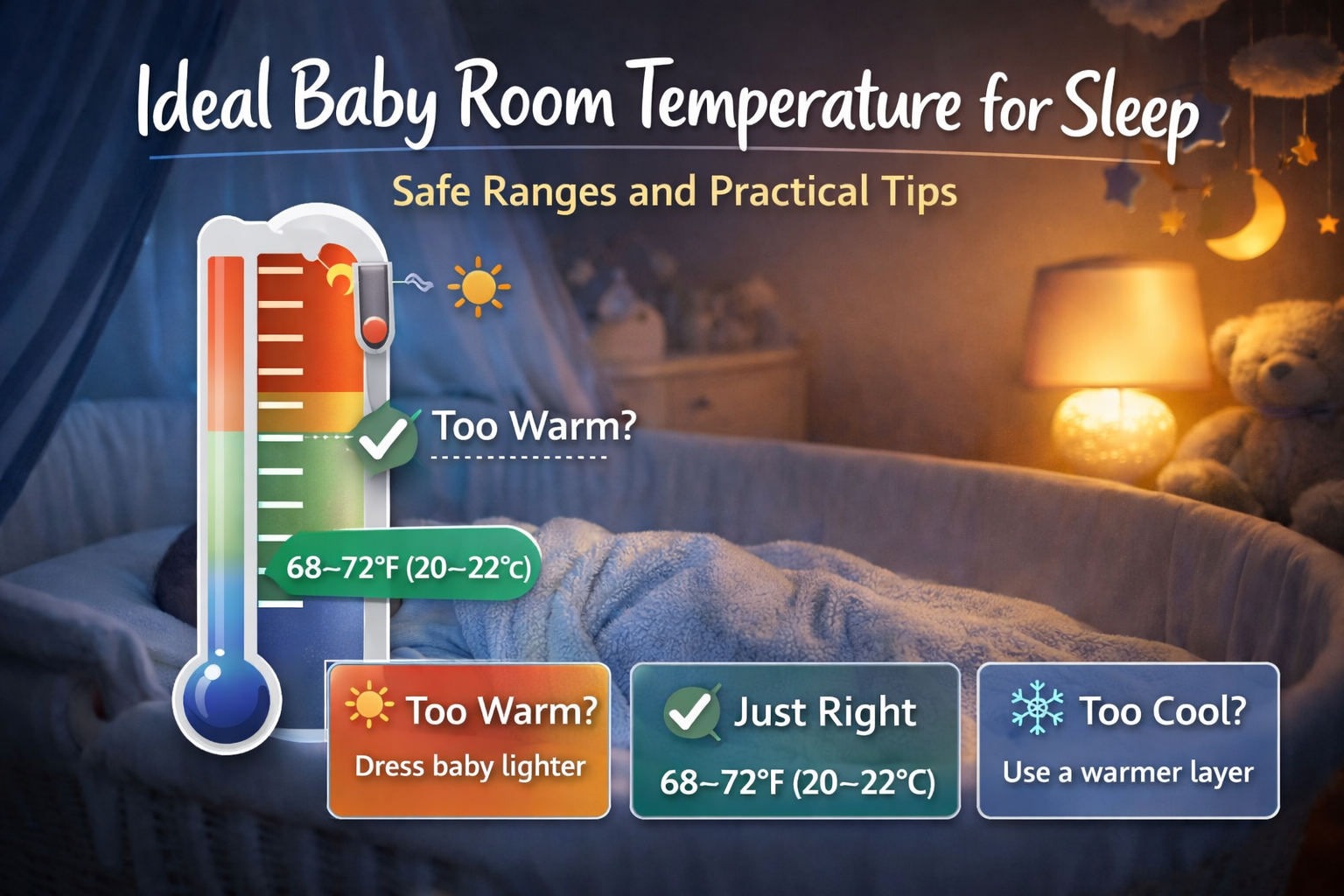
Most pediatric sleep recommendations suggest keeping a baby’s room between 68°F and 72°F (20°C to 22°C).
This temperature range supports safe sleep because babies cannot regulate body heat as efficiently as adults. Rooms that feel comfortable for adults may still be too warm for infants.
A slightly cooler room is generally safer than a warmer one. Overheating has been associated with restless sleep and increased safety concerns, which is why maintaining consistent temperature matters more than achieving perfect warmth.
Parents often notice through setups discussed in best baby monitor without wifi that babies move more frequently when rooms become too warm during the night.
Why Babies Are Sensitive to Temperature Changes
Newborns and young infants have developing nervous systems and limited ability to adjust body temperature. Unlike adults, they cannot easily remove blankets or change positions to cool down.
Several factors increase sensitivity:
- Smaller body size
- Faster metabolism
- Limited sweating ability
- Dependence on caregivers for adjustment
Because of this, environmental stability becomes essential for uninterrupted sleep.
Signs a Baby Is Too Warm While Sleeping
Overheating is more common than parents expect, especially in heated homes during colder months.
Common signs include:
- Sweaty neck or back
- Damp hair
- Flushed cheeks
- Restless movements
- Frequent waking
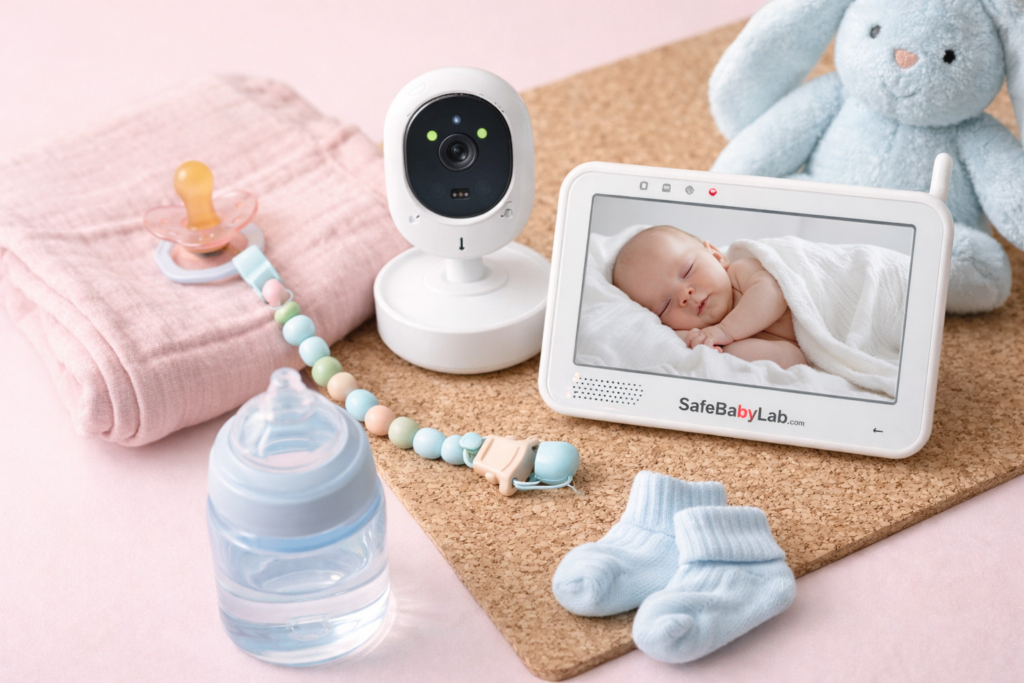
Parents sometimes notice these behaviors when reviewing nighttime activity through monitors, particularly when learning baby monitor placement mistakes most parents make, since camera positioning can reveal sleep discomfort patterns.
If overheating occurs, reduce layers rather than lowering temperature dramatically.
Signs a Baby May Be Too Cold
While overheating is the bigger concern, rooms that are too cold can also disrupt sleep.
Possible signs include:
- Cool chest or back
- Increased startle reflex
- Short sleep cycles
- Difficulty settling
Hands and feet often feel cooler naturally, so they are not reliable indicators of overall comfort.
How to Measure Nursery Temperature Correctly
Thermostats located in hallways or other rooms may not reflect the actual nursery temperature. Airflow, sunlight, and insulation differences can create variations within the home.
Helpful approaches include:
- Using a room thermometer near the crib
- Avoiding direct placement next to vents
- Checking temperature at baby mattress height
Many parents combine environmental awareness with monitoring tools described in do baby monitors work through walls to understand how room conditions affect sleep behavior.
Dressing Babies for Different Room Temperatures
Instead of adjusting blankets, experts recommend adjusting clothing layers.
General guidance:
- Lightweight sleepwear for warmer rooms
- One additional breathable layer for cooler conditions
- Avoid heavy blankets or loose bedding
Sleep sacks often provide consistent warmth without overheating risks.
The goal is stable comfort rather than excessive warmth.
Seasonal Temperature Challenges
Winter
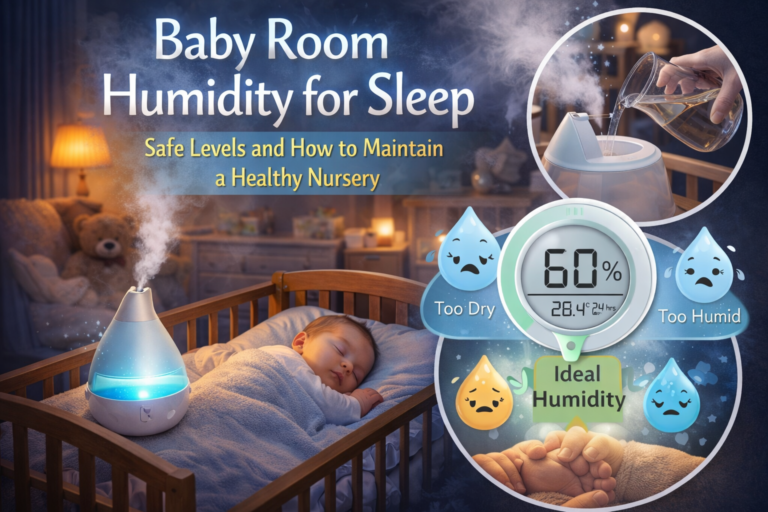
Heating systems can dry the air and create uneven warmth. Maintaining moderate heating and proper humidity improves comfort.
Summer
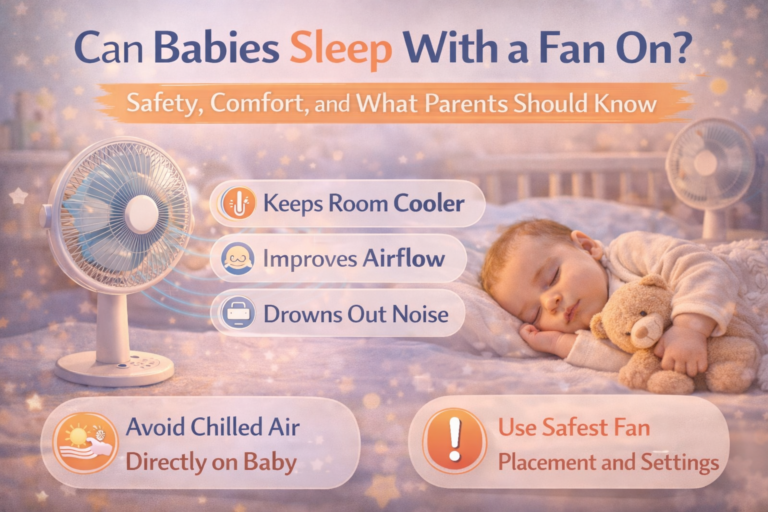
Warm nights may require fans or airflow adjustments. Fans should circulate air indirectly and never blow directly toward the crib.
Consistency matters more than seasonal perfection.
Common Temperature Mistakes Parents Make
Many sleep difficulties come from small environmental misjudgments.
Frequent mistakes include:
- Overdressing babies at night
- Raising temperature after nighttime waking
- Using thick blankets instead of layered clothing
- Ignoring temperature fluctuations during early morning hours
Correcting these habits often leads to longer sleep stretches without changing routines.
How Temperature Works Together With Baby Monitoring
Baby monitors provide reassurance, but environmental adjustments improve sleep outcomes. Monitoring helps parents notice patterns, while proper room conditions reduce disturbances.
When temperature remains stable, babies tend to enter deeper sleep cycles and wake less frequently. Monitoring then becomes a confirmation tool rather than a constant necessity.
Creating a Consistent Sleep Climate
A stable sleep climate supports predictable rest patterns.
Helpful habits include:
- Maintaining the same nighttime temperature range
- Checking room conditions before bedtime
- Avoiding sudden thermostat changes overnight
- Using breathable bedding materials
Small adjustments made consistently often produce noticeable improvements within days.
Final Thoughts
The ideal baby room temperature for sleep is not about making the nursery warm or cold. It is about maintaining a stable environment that supports safe and comfortable sleep.
By keeping temperatures between 68°F and 72°F, dressing babies appropriately, and observing sleep patterns carefully, parents create conditions that encourage deeper rest and fewer nighttime disruptions.
Combined with thoughtful monitoring and a balanced sleep environment, temperature management becomes one of the simplest ways to improve baby sleep naturally.
Frequently Asked Questions
What temperature is safest for a newborn to sleep?
Most experts recommend 68°F to 72°F (20°C to 22°C) to reduce overheating risk and maintain comfort.
Is it better for a baby’s room to be cooler or warmer?
A slightly cooler room is safer than a warm one. Overheating is more likely to disturb sleep than mild coolness.
Should babies wear hats while sleeping indoors?
No. Hats can trap heat and increase overheating risk during sleep.
Can a fan help babies sleep safely?
Yes, indirect airflow may improve air circulation, but the fan should not blow directly onto the baby.
How do I know if my baby is comfortable at night?
Check the baby’s chest or back for warmth and observe sleep behavior rather than relying on hands or feet temperature.