Baby Monitor Volume Levels: How Loud Is Too Loud?
Baby monitor volume levels seem like a simple setting until you’re a parent running on three hours of sleep. Many families start with the monitor volume turned up high because they’re afraid of missing crying. That makes sense, especially in the newborn stage.
But after a few nights, parents often realize something unexpected: the baby monitor itself is keeping them awake.
Newborns are noisy sleepers. They grunt, squeak, cough, and wiggle constantly. Through a monitor speaker, those normal sounds can feel amplified, almost like the baby is in the room with you. Some parents wake up dozens of times per night, not because the baby needs them, but because the monitor makes every sound impossible to ignore.
This leads to a very real question: How loud should a baby monitor be? And can it be too loud?
This article explains how to set volume levels in a way that protects your sleep, keeps you responsive, and avoids unnecessary stress.
Why Baby Monitor Volume Feels So Intense
Baby monitors are designed to pick up quiet sounds. Many amplify audio so parents can hear soft fussing.
That means volume doesn’t behave like a normal speaker. Even at medium settings, newborn sounds can feel loud.
Parents also experience heightened sensitivity at night. When you’re tired, even small noises can feel alarming.
This is why volume settings that feel fine during the day can feel overwhelming at 2 a.m.
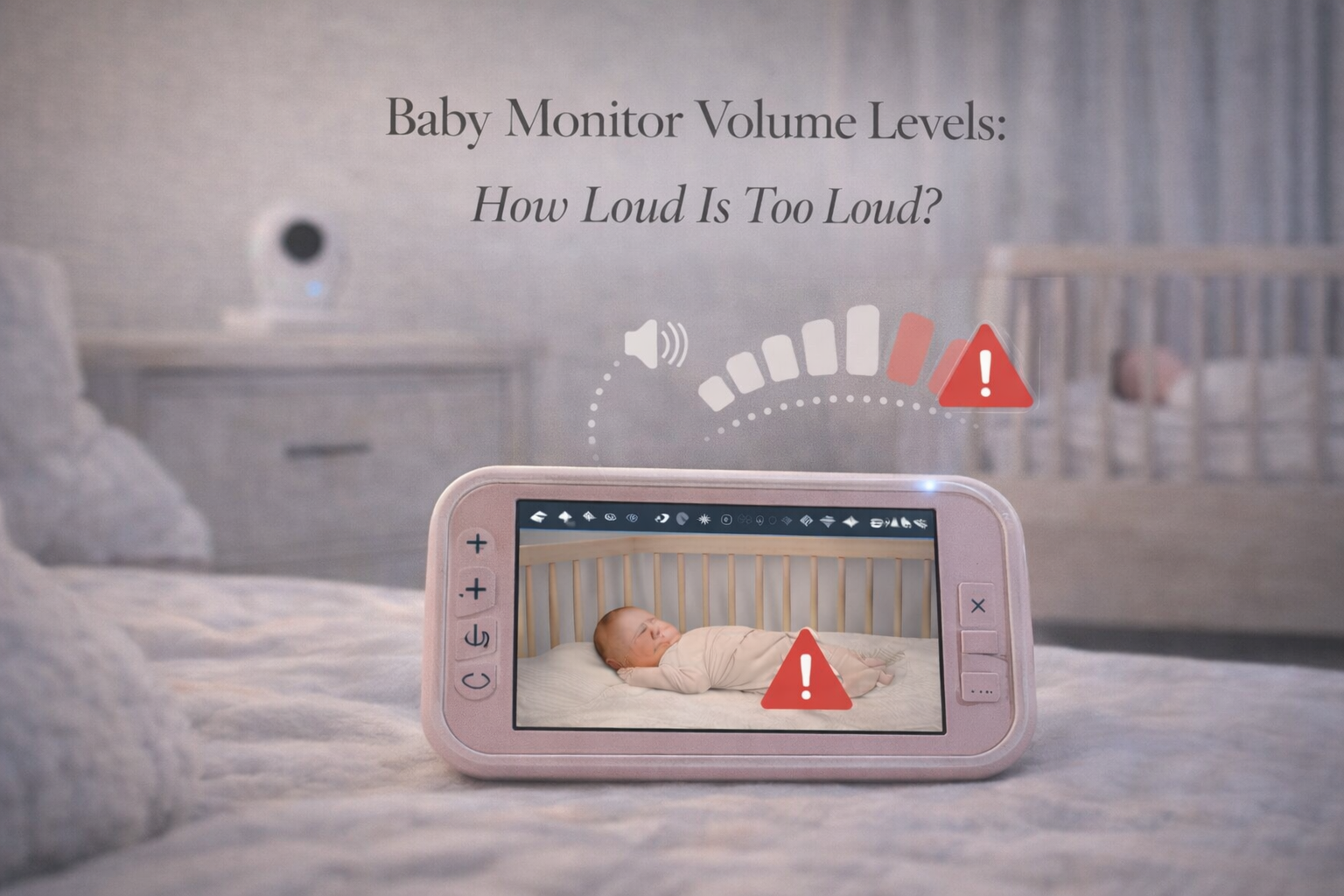
How Loud Is Too Loud?
There is no perfect universal setting, but there are practical guidelines.
A monitor is too loud if:
- it wakes you up repeatedly from normal sleep noises
- you feel tense or irritated hearing constant grunting
- you wake up before your baby is truly awake
- you feel like you can’t relax at night
A monitor is too quiet if:
- you can’t hear crying clearly
- you miss wake-ups
- you only notice the baby when they are fully screaming
The best volume is usually the lowest level that still allows you to hear real crying.
The Newborn Noise Problem
Many parents don’t realize how noisy newborns are.
Newborn sleep includes:
- active sleep phases
- grunting
- squeaking
- heavy breathing
- sudden movement
- brief cries that stop quickly
This is normal. But if the monitor is loud, parents may interpret these sounds as distress.
This can create a cycle of unnecessary checking, which leads to less sleep.
Your pillar page Baby Sleep & Night Care: A Practical Guide for New Parents is the perfect internal link here because it helps parents understand what newborn sounds are normal and when to respond.
Should You Use VOX Mode to Reduce Noise?
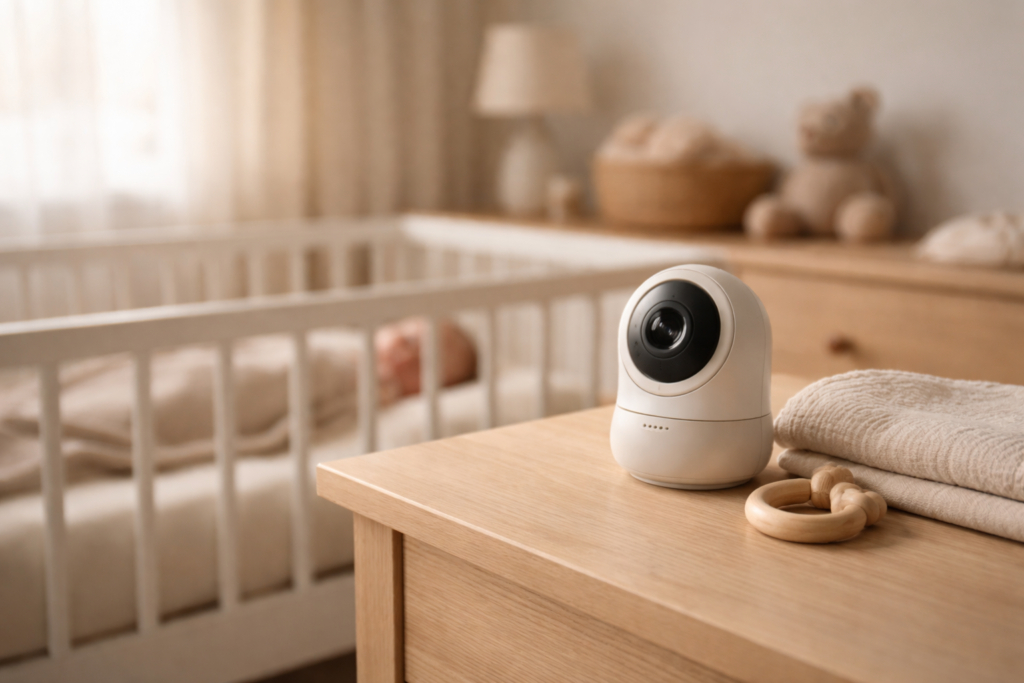
VOX mode can be extremely helpful.
In VOX mode, the monitor activates only when sound reaches a threshold.
This reduces constant noise and helps parents sleep better.
However, VOX must be adjusted correctly. If sensitivity is too low, the monitor might not activate for quiet fussing.
This connects directly with your post Can Baby Monitors Miss Crying? What Happens in Real Use, because volume and VOX sensitivity are major reasons parents worry about missed crying.
Can Baby Monitor Volume Be Harmful?
Parents sometimes worry that loud monitor volume could harm their baby. Usually, the sound output is in the parent unit, not in the nursery.
The baby unit microphone captures sound. The parent unit speaker plays it.
So the baby is not exposed to the loud volume unless the parent unit is inside the nursery, which it should not be.
However, loud monitor volume can affect parents by increasing stress and reducing sleep quality.
Over time, that exhaustion matters. It can make parents less patient and more anxious.
Best Practical Volume Strategy for Most Parents
A balanced setup often looks like this:
- volume set to medium
- VOX mode enabled
- sensitivity set high enough for crying
- vibration enabled (if available)
- screen brightness low
This gives parents awareness without constant overstimulation.
Final Thoughts
Baby monitor volume levels matter more than parents expect. A monitor that’s too loud can destroy parent sleep and increase anxiety. A monitor that’s too quiet can reduce confidence.
The goal is not to hear every grunt. The goal is to hear when your baby truly needs you. With the right volume and sensitivity settings, a monitor becomes a support tool instead of a sleep disruptor.
FAQ
What is the best baby monitor volume setting?
Most parents do best with a medium volume level, high enough to hear crying but low enough to ignore normal newborn grunting.
Should I keep my baby monitor on full volume?
Usually no. Full volume often causes unnecessary wake-ups from normal sleep sounds.
Does VOX mode help reduce monitor noise?
Yes. VOX mode keeps the monitor quiet until the baby makes a louder sound, helping parents sleep better.
Can baby monitor volume affect parent sleep?
Yes. Loud monitor volume is a common cause of parent sleep disruption, especially during the newborn stage.
How do I know if my monitor volume is too low?
If you don’t hear crying clearly or notice wake-ups late, the volume is likely too low.