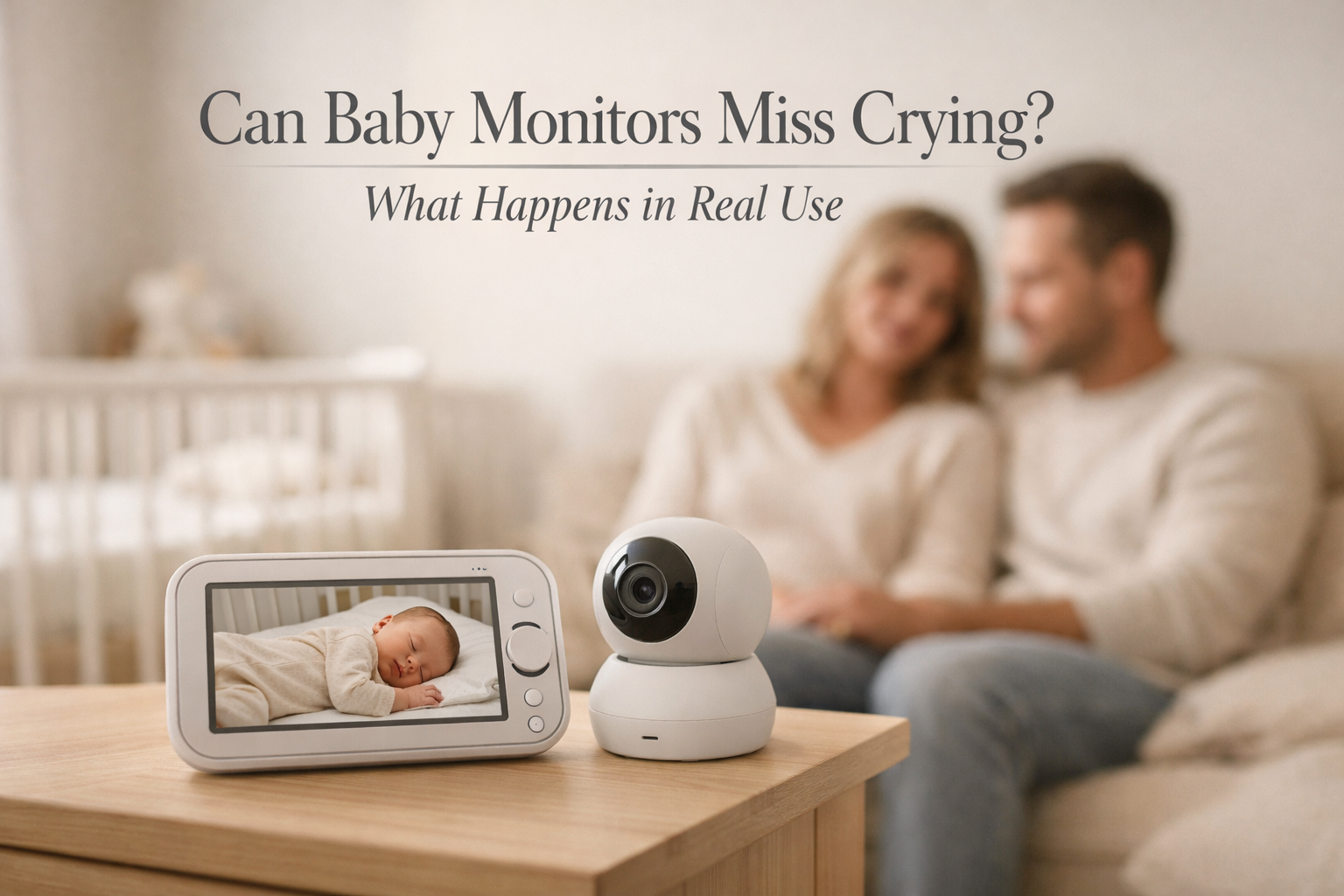
Can Baby Monitors Miss Crying? What Happens in Real Use
Can baby monitors miss crying? It’s a question that hits a very specific nerve for new parents. When you’re exhausted, half-asleep, and relying on a monitor to alert you if your baby needs you, the idea that it might not pick up crying can feel deeply unsettling.
Most parents buy a baby monitor expecting one thing above all else: reliability. They don’t need perfect video quality or fancy tracking features if the monitor can’t consistently do its core job letting them hear their baby.
The reassuring truth is that most baby monitors are designed to pick up crying well. But yes, there are real situations where a monitor can miss crying, delay alerts, or fail to transmit sound clearly. And those situations are more common than most product listings admit.
This article explains when and why baby monitors may miss crying, how often it happens in real homes, and what parents can do to prevent it.
Why Parents Worry About Missing Crying (And Why It’s Valid)
Newborn crying isn’t always loud. Sometimes it starts as soft fussing, quiet whimpering, or small grunts that gradually build into full crying. Many parents don’t realize how quiet early-stage crying can be until they’re not standing next to the crib.
That’s exactly where baby monitors come in. Parents often rely on them while:
- sleeping in another room
- showering
- cooking
- doing laundry
- caring for an older child
- stepping outside briefly
If the monitor doesn’t catch those first sounds, parents worry they’ll respond too late.
That worry is valid, especially during the early months when feeding schedules, reflux, or sleep transitions can make babies wake suddenly.
The goal of a monitor isn’t to replace parenting instincts. It’s to provide an extra layer of awareness. But that only works if the monitor is set up correctly.
Can Baby Monitors Miss Crying? The Real Answer
Yes, baby monitors can miss crying but it’s usually due to settings, signal issues, or environmental factors rather than the monitor being “bad.”
In real-world use, missed crying typically happens in these situations:
- sound sensitivity is set too low
- the monitor is in VOX mode and doesn’t trigger properly
- the microphone is blocked or poorly positioned
- background noise masks crying
- signal drops or interference occur
- WiFi lag delays notifications
- the parent unit volume is too low or muted
Most of these problems are preventable.
But parents should understand that a monitor is not a guaranteed alarm system. It’s a tool that performs best when properly configured.
How Baby Monitors Detect Crying (And Why It Sometimes Fails)
Baby monitors don’t “recognize” crying the way humans do. Most standard monitors simply detect sound volume levels. Some advanced models claim to detect crying specifically, but many are still relying on volume patterns.
This matters because babies don’t cry in a consistent way.
A newborn might:
- fuss quietly
- breathe loudly
- grunt
- cough
- cry briefly, then stop
- cry softly under a blanket
- turn their face into the mattress side
If a baby’s crying is muffled or quiet, the monitor may not pick it up strongly unless sensitivity is high.
Monitors are also affected by room acoustics. A small nursery with hard surfaces might amplify sound, while a carpeted room with heavy curtains may absorb sound.
This is why two families can own the same monitor and have completely different experiences.
VOX Mode: The #1 Reason Baby Monitors Miss Crying
One of the most common features in modern monitors is VOX mode, sometimes called “sound activation.”
In VOX mode, the monitor stays quiet and the screen stays off until sound reaches a certain threshold. When sound crosses that threshold, the parent unit turns on.
This is meant to save battery and reduce unnecessary noise. It’s a useful feature, but it comes with trade-offs.
If VOX sensitivity is set too low, the monitor may not activate until the baby is already crying loudly.
Some parents assume their baby monitor is broken when the real issue is simply that VOX is not tuned correctly.
If you use VOX mode, you should test it intentionally. Stand by the crib, make quiet baby-like sounds, and see when the monitor activates. Then increase sensitivity until it triggers reliably.
For newborns, higher sensitivity is usually better especially at night.
Can a Baby Monitor Miss Crying Because of Background Noise?
Yes. Background noise is another common reason monitors fail to alert parents quickly.
If the nursery has constant noise, the monitor may struggle to detect changes. Common noise sources include:
- white noise machines
- fans or humidifiers
- air conditioning
- rain sounds
- street traffic
- older siblings talking nearby
White noise is a particularly important factor. Many families use it to help babies sleep, but if the sound machine is placed too close to the baby monitor microphone, it can drown out softer crying.
Some monitors will still pick up crying over white noise, but the alert may be delayed, especially in VOX mode.
A good rule is to keep the sound machine near the crib but keep the baby monitor microphone slightly farther away so it can pick up crying more clearly.
WiFi Baby Monitors and Missed Crying: The Notification Delay Problem
WiFi baby monitors introduce a different type of risk: delay.
Even if the camera detects sound instantly, the signal must travel through your WiFi network, through the app, and to your phone. If your WiFi is weak or your phone is in sleep mode, notifications can be delayed.
Some parents assume WiFi monitors provide better performance because they’re “smart,” but smart features don’t always mean faster alerts.
Common issues include:
- phone notification settings blocking alerts
- app running in the background and getting paused
- WiFi congestion causing lag
- poor WiFi coverage in the nursery
- delayed push notifications
This is why some parents report hearing crying later than expected with WiFi monitors, especially if their phone is on silent or in Do Not Disturb mode.
WiFi monitors can be excellent, but they require careful setup and testing.
If you want a broader breakdown of monitor types and how they behave, your pillar page Baby Monitors: The Complete Guide for Parents is a natural internal link here because it explains the real differences between WiFi and non-WiFi monitoring.
Can Signal Loss Cause a Baby Monitor to Miss Crying?
Yes, and this is where missed crying becomes a true reliability concern.
If your monitor disconnects, freezes, or loses audio transmission, it can absolutely miss crying. Parents might not realize the connection dropped until they check the screen.
This is especially common when parents move the parent unit farther away for example, into a backyard, garage, or far bedroom.
Signal drops happen more often than most parents expect, which is why your earlier cluster post How Often Do Baby Monitors Lose Signal (And Why) supports this topic perfectly.
If signal reliability is your biggest concern, this is also where non-WiFi monitors often shine. They don’t rely on router stability, and many provide more predictable audio alerts.
Parents who want maximum reliability often choose a non-WiFi monitor for this exact reason, which makes your money page Best Baby Monitor Without WiFi highly relevant to include here.
Microphone Placement: A Simple Mistake That Causes Big Problems
Many parents don’t realize how much microphone placement matters.
If the baby monitor microphone is:
- pointed away from the crib
- blocked by furniture
- placed too far from the baby
- placed near a sound machine
- positioned behind curtains
…then crying may sound quieter than it really is.
Some cameras also have microphones designed primarily for “room audio,” not close-range crying detection. That means placement becomes even more important.
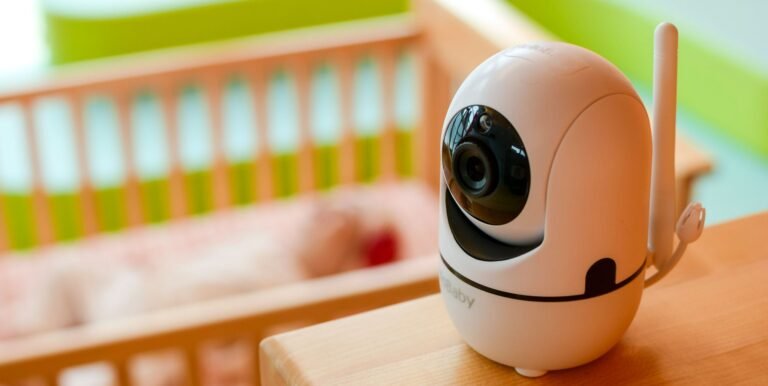
A good setup usually involves placing the camera high on a wall, angled toward the crib, with a clear line of sound.
If the monitor is placed on a shelf across the room, it may still pick up crying, but it might miss early fussing.
Can Baby Monitors Miss Crying if Volume Is Low or Muted?
This may sound obvious, but it’s one of the most common real-world causes.
Parents often lower the monitor volume because newborn sounds are constant. Babies grunt, squeak, and move loudly in their sleep. Over time, parents get tired of the noise and reduce the volume.
If the volume is too low, you might not hear quiet crying until it becomes intense.
Some parents also accidentally mute the monitor. Others leave the parent unit on silent because they assume the vibration alert will work but not all monitors vibrate reliably.
WiFi monitors create additional risk because phone notification settings may block sound alerts entirely.
If you’re relying on your phone, double-check:
- volume settings
- notification permissions
- silent mode
- Do Not Disturb exceptions
- whether the app can run in background
Many parents assume their phone will alert them automatically, but modern phones aggressively limit background notifications unless configured properly.
What About “Cry Detection” Features?
Some premium monitors advertise AI-based cry detection. These features can be helpful, but they’re not perfect.
Cry detection systems can:
- misinterpret white noise as crying
- fail to detect quiet fussing
- miss crying if sound is muffled
- trigger false alerts from barking dogs or TV audio
They may improve convenience, but they should not replace basic monitoring.
If you use cry detection, it’s still important to test it with your baby’s real sound patterns. Some babies cry sharply. Others cry quietly and gradually.
Newborn behavior is not consistent enough to rely fully on an algorithm.
How to Prevent a Baby Monitor From Missing Crying
Parents can significantly reduce the risk of missed crying with a few practical steps.
Increase sound sensitivity
If your monitor offers sensitivity settings, start high and adjust downward only if needed.
For newborns, high sensitivity is usually appropriate because their early crying cues are often subtle.
Avoid placing the monitor near white noise machines
Keep the sound machine close to the crib, but not directly next to the monitor microphone.
Test your setup at night
Nighttime conditions are different. Your house is quieter, and the monitor behaves differently.
Test VOX activation by playing baby crying sounds softly (even from a phone speaker) and seeing how quickly the monitor responds.
Use continuous monitoring mode if needed
Some monitors allow you to disable VOX and keep the audio feed always on. This increases battery usage, but it can reduce the chance of missed alerts.
Ensure signal reliability
If your monitor frequently disconnects, address range issues immediately.
For WiFi monitors, improve WiFi coverage in the nursery. For non-WiFi monitors, reposition the camera higher or adjust the parent unit location.
Keep volume at a safe level
It’s okay to lower the volume to reduce stress, but don’t reduce it so much that you only hear full crying.
Some parents find that medium volume with vibration alerts works well, but it depends on the monitor.
Does Missing Crying Mean Baby Monitors Are Unsafe?
Not necessarily.
A baby monitor is not a medical device. It’s a convenience tool designed to help parents hear and see their baby from another room. Most monitors work well when set up correctly.
But parents should understand the limitations. No monitor can guarantee perfect detection in every scenario, especially in homes with interference or heavy noise.
The safest approach is to use the monitor as one layer of support combined with safe sleep practices, good nighttime routines, and a realistic understanding of newborn behavior.
If you’re trying to build confidence around newborn nights, your pillar article Baby Sleep & Night Care: A Practical Guide for New Parents is a strong internal link here because it helps parents manage the emotional side of nighttime monitoring and avoid burnout.
Final Thoughts
So, can baby monitors miss crying? Yes, but most of the time it’s preventable.
Missed crying is usually caused by VOX settings, low sensitivity, poor microphone placement, background noise, or signal drops. When parents take time to test their monitor in real conditions and adjust the setup, reliability improves dramatically.
The goal isn’t perfect monitoring. It’s dependable awareness that allows parents to rest, respond when needed, and feel confident that they’re not missing the moments that matter.
FAQ
Can baby monitors miss crying in VOX mode?
Yes. VOX mode activates only when sound reaches a certain level. If sensitivity is set too low, the monitor may not activate until the baby is crying loudly.
Do WiFi baby monitors miss crying more often?
WiFi monitors may not “miss” crying, but they can have delayed notifications due to weak WiFi, app background restrictions, or phone notification settings.
Can white noise cause a baby monitor to miss crying?
Yes. White noise machines placed too close to the monitor microphone can mask softer crying and delay alerts.
How do I make my baby monitor more sensitive to crying?
Increase sound sensitivity in settings, move the monitor closer (while keeping safe distance), avoid placing it near white noise machines, and test VOX activation.
Is it normal for a baby monitor to delay sound alerts?
Some delay can be normal, especially with WiFi monitors. However, long delays may indicate poor WiFi coverage, interference, or incorrect settings.