How to Reduce Noise in a Baby’s Room (Without Making It Too Quiet)
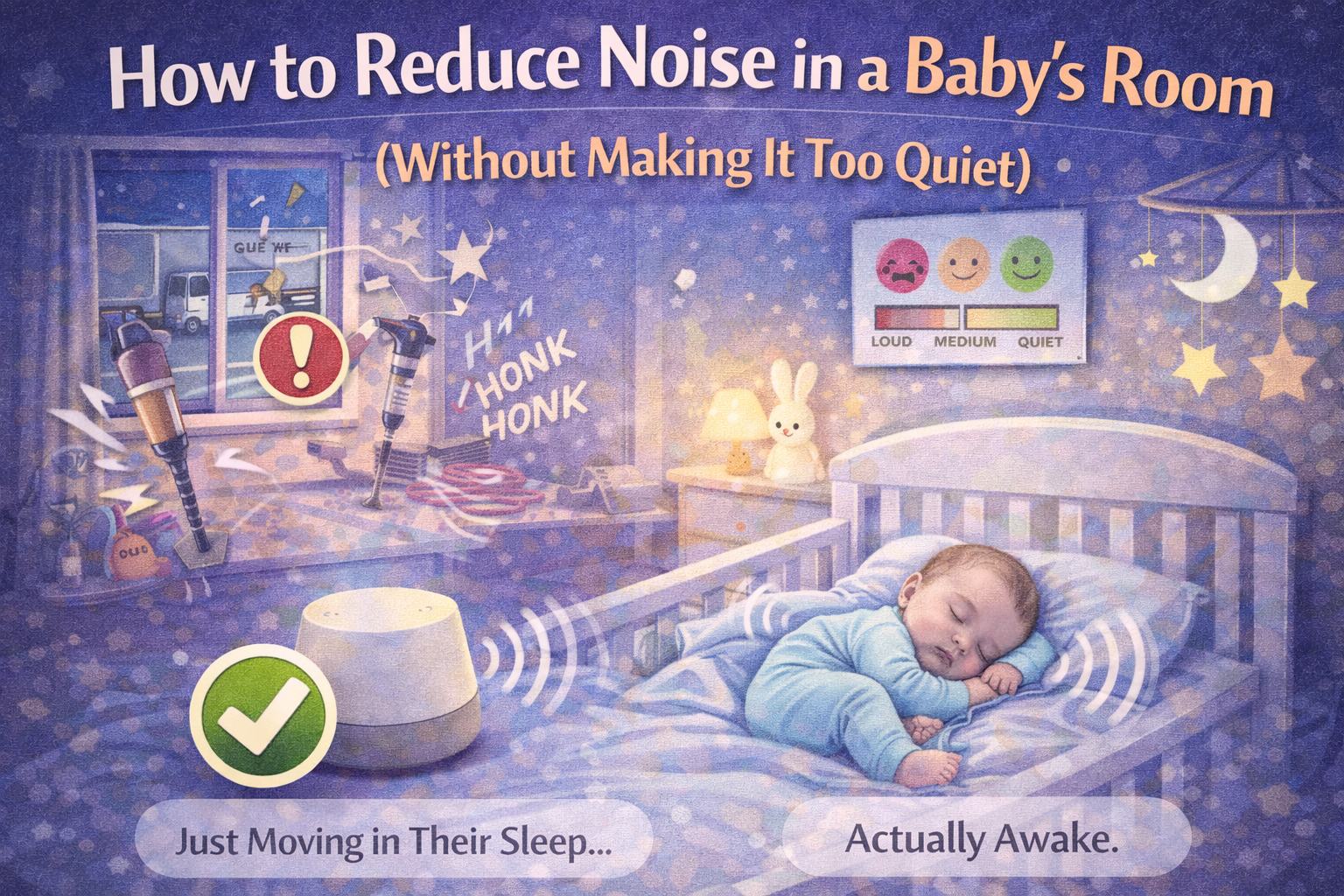
How to reduce noise in a baby’s room is something most parents start thinking about the first time a door slam, loud voice, or passing car wakes the baby up. The instinct is often to try to make the room completely silent. But total silence is not only unrealistic—it’s often not even helpful.
What actually works best is a calm, consistent sound environment that protects your baby from sudden noise, not one that removes every sound.
Let’s look at what really disturbs baby sleep, what helps, and how to fix the most common noise problems in real homes.
Why Total Silence Is Not the Goal
Babies do not need complete silence to sleep.
In fact:
- A baby who only sleeps in perfect silence:
- Wakes up more easily
- Becomes more sensitive to normal household sounds
What usually wakes babies is not:
- Constant background noise
But: - Sudden, sharp changes in sound
Examples:
- A door slamming
- Someone dropping something
- A loud laugh or shout
- A dog barking suddenly
The goal is not silence.
The goal is reducing sharp, unpredictable noise.
The Two Types of Noise That Matter
It helps to think of noise in two categories:
1. Constant background noise
This includes:
- Distant traffic
- A fan
- A quiet white noise machine
- Low household hum
This type of sound:
- Is usually not a problem
- Can actually help mask sudden noises
2. Sudden, sharp noise
This includes:
- Doors closing
- Voices in the hallway
- Dishes clanking
- Something falling on the floor
This is the kind of noise:
That actually wakes babies up.
Most of your effort should go into reducing or softening these sounds.
Start With the Door and the Hallway
A lot of noise enters the baby’s room through:
- The door
- The gap under the door
- The hallway outside
Simple improvements:
- Close the door gently and always the same way
- Add a soft door stopper or slow-close mechanism
- Place a rolled towel or draft blocker under the door
This alone often makes a noticeable difference.
Soft Surfaces Make a Big Difference
Hard surfaces reflect sound.
Soft surfaces absorb it.
If the baby’s room has:
- Bare floors
- Empty walls
- Very little furniture
It will:
- Echo more
- Let noise travel more easily
Things that help:
- A rug or carpet
- Curtains or thicker blinds
- Fabric wall decorations
- Upholstered furniture
You don’t need to redesign the room.
Even a few soft elements can reduce how “sharp” sounds feel.
What About White Noise?
White noise (or similar steady sounds) can be very helpful.
It works because:
- It creates a consistent sound layer
- It masks sudden changes in noise
- It makes outside sounds less noticeable
Important points:
- Keep the volume moderate
- The sound should be:
- In the background
- Not the main focus in the room
White noise is not magic, but in many homes it:
Makes sleep more stable and less fragile.
Windows Are Another Big Noise Source
If the room faces:
- A street
- A courtyard
- Or a noisy area
Then:
- Thicker curtains can help
- Making sure windows seal properly helps
- Even moving the crib to a wall farther from the window can make a difference
You don’t need full soundproofing.
You just want to reduce the impact of the loudest outside sounds.
How to Think About Household Noise
You do not need to:
- Whisper
- Walk on tiptoes
- Freeze your entire household when the baby sleeps
In fact, some normal daily noise is good.
The goal is:
- Avoid:
- Sudden loud events near the baby’s room
- But:
- Keep normal life going at a reasonable level
Babies who get used to a normal level of background noise:
Often sleep better in the long run.
Common Mistakes Parents Make
- Trying to make the room completely silent
- Getting angry at every small sound in the house
- Ignoring echoes and hard surfaces in the room
- Using white noise too loudly
- Not addressing the door and hallway noise
How This Connects to Monitoring
If you’re using a baby monitor:
- A calmer sound environment:
- Makes it easier to hear real waking or crying
- Reduces false alarms caused by random noise
It also:
- Makes night checks less stressful
- And sleep more predictable
A Simple, Practical Checklist
If noise is a problem, start here:
- Soften the door noise
- Add at least one soft surface (rug, curtain, fabric)
- Consider gentle white noise
- Check where the biggest outside or hallway noise comes from
- Adjust the crib position if needed
Do these before trying anything more complicated.
So, How Do You Reduce Noise in a Baby’s Room?
You don’t try to remove all sound.
You:
- Reduce sharp, sudden noises
- Soften how sound travels through the room
- And create a stable, predictable background sound environment
That’s what actually helps babies sleep better.
Final Thoughts
A baby’s room doesn’t need to be silent.
It needs to be calm and predictable.
If you focus on:
- Softening sudden noise
- And avoiding big sound surprises
You’ll usually see much better and more stable sleep—without turning your home into a library.
How can I reduce noise in my baby’s room?
Focus on reducing sudden, sharp noises, adding soft surfaces, and using gentle white noise to create a stable sound environment.
Is complete silence better for baby sleep?
No. Babies usually sleep better with some consistent background noise than in total silence.
Does white noise help babies sleep?
Often yes. It can mask sudden sounds and make sleep more stable if used at a moderate volume.
What noise is most likely to wake a baby?
Sudden, sharp noises like doors closing, loud voices, or objects falling usually cause the most disruption.